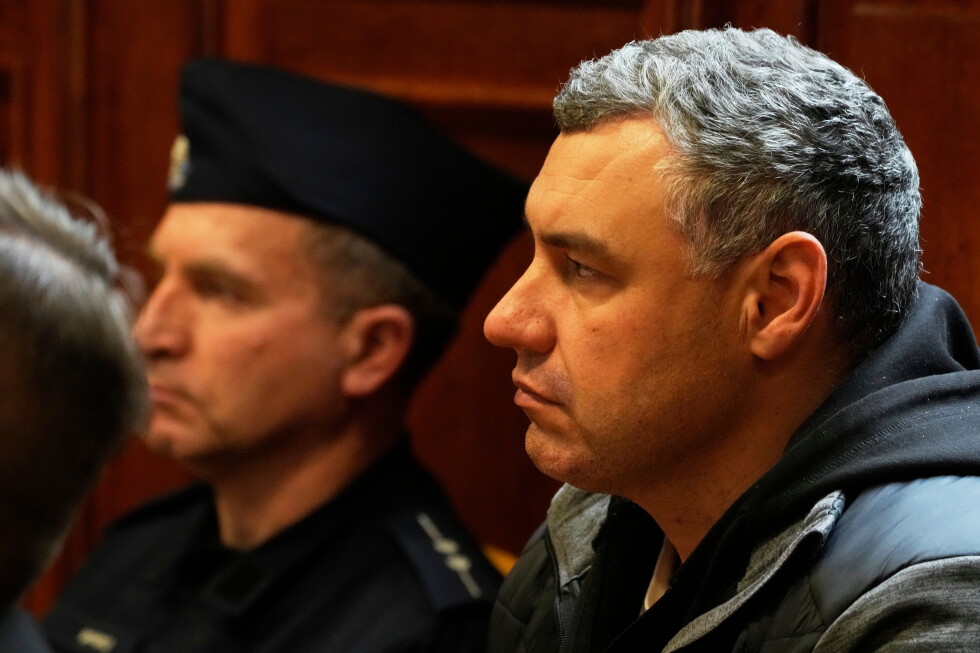
In a significant new development in the long-running investigation into the 2022 Baltic Sea Nord Stream pipeline bombings, German federal authorities have confirmed a Ukrainian man accused of involvement in the attack has been taken into custody in Croatia under a European arrest warrant. The suspect, identified by Polish authorities as Volodymyr Zhuravlov (referred to only as Vladimir Z. in German federal prosecutors’ official statement), is a trained scuba diver alleged to be part of the sabotage group that placed explosive devices on both Nord Stream 1 and Nord Stream 2 pipelines near Denmark’s Bornholm Island ahead of the September 26, 2022 blasts.
The undersea explosions occurred at a moment of already extreme geopolitical tension following Russia’s full-scale invasion of Ukraine, compounding stress across the continent as European nations were already moving to cut their reliance on Russian fossil fuels. Per the German federal prosecutor’s charging document, Zhuravlov faces serious allegations including conspiracy to carry out explosive attacks, anti-constitutional sabotage, and deliberate destruction of critical infrastructure. He was apprehended in the coastal Croatian city of Pula, and will be extradited to Germany to appear before an investigative judge at the Federal Court of Justice once the transfer process is finalized.
This arrest marks a second time Zhuravlov has been detained in connection with the case: he was first taken into custody in Poland last year, but a Polish court ultimately rejected Germany’s extradition request, leading to his release. Poland has long maintained strong opposition to the Nord Stream projects, viewing the pipelines as a tool for Russia to gain political and economic influence over Europe, and Polish Prime Minister Donald Tusk stated at the time that extraditing Zhuravlov would not serve Poland’s national interest.
It remains unclear exactly why Zhuravlov chose to leave Poland after his release, despite the active European warrant remaining in effect. His Polish legal representative, Tymoteusz Paprocki, told the Associated Press that Zhuravlov was aware the Polish court’s ruling only applied within Poland’s borders, adding that even the suspect’s wife expressed shock at his detainment in Croatia.
German officials have welcomed the latest arrest as a key step forward in untangling the full details of the attack. “We’re simply glad that the federal prosecutor’s office is making progress in these investigations, because it is important that the bombing of the pipelines be clarified as well,” German Justice Ministry spokesperson Nicholas Limmer told reporters in Berlin.
This arrest comes one month after German federal prosecutors filed formal charges against a second Ukrainian suspect, a former Ukrainian army officer identified only as Serhii K., in connection with the same bombing. Serhii K. was apprehended in August 2025 during a raid on a family vacation bungalow in an Italian village, where he surrendered peacefully to law enforcement. He was extradited to Germany in November 2025, and faces charges including explosives offenses, property damage, disruption of public services, and accessory to war crimes for targeting civilian critical infrastructure.
Investigative records show the group of suspects allegedly used a chartered yacht that departed from the German port of Rostock to carry out the operation, renting the vessel through intermediaries using forged identification documents. The 2022 blasts heavily damaged Nord Stream 1, which had served as Russia’s primary natural gas export route to Germany before Moscow cut off all supplies in August 2022 just weeks before the attack. The explosions also damaged Nord Stream 2, a second pipeline that never entered commercial operation after Germany suspended its certification process in the lead-up to Russia’s full-scale invasion of Ukraine.
The Nord Stream attacks have remained a flashpoint of global geopolitical dispute since they occurred. Russia has repeatedly accused the United States of orchestrating the blasts, a claim that Washington has flatly denied. For years before the attack, the United States and many of its allies openly criticized the Nord Stream projects, warning they would increase European dependence on Russian energy and expand Moscow’s geopolitical leverage across the continent.