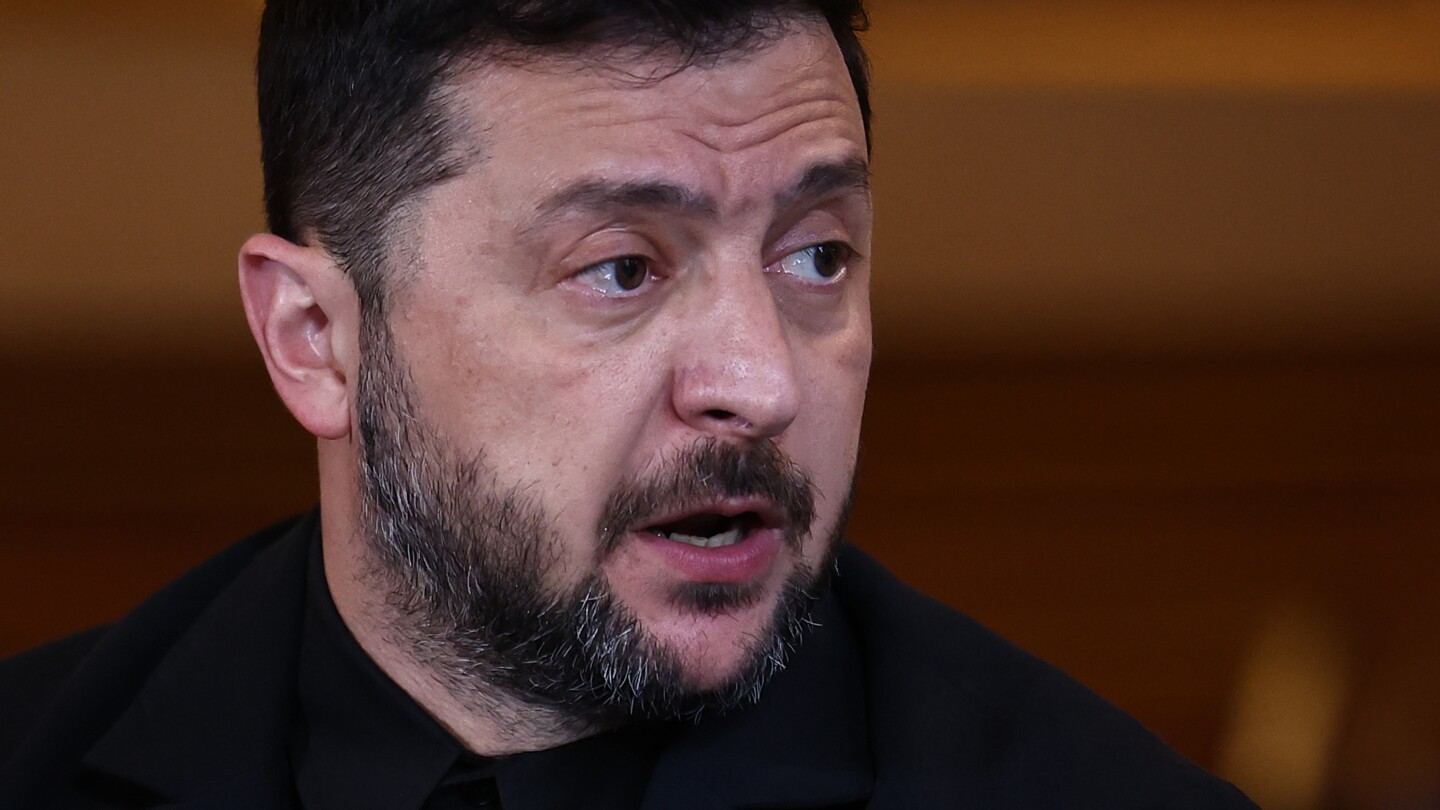
In a significant development in the ongoing conflict, Ukrainian President Volodymyr Zelenskyy announced that Ukraine’s targeted long-range strikes on Russian oil refineries have successfully reduced Moscow’s oil refining capacity by 20%. Speaking to the media on Monday, Zelenskyy emphasized that over 90% of these deep strikes were executed using Ukrainian-made long-range weapons. He highlighted the urgent need for additional foreign financial assistance to bolster domestic production of these critical armaments. ‘We must remain relentless in our efforts,’ Zelenskyy stated, underscoring the importance of sustained pressure on Russia’s energy infrastructure. Oil exports are a cornerstone of Russia’s economy, funding its prolonged invasion of Ukraine. In tandem with Ukraine’s military actions, the U.S. and the European Union have imposed new sanctions aimed at curtailing Moscow’s oil and gas export revenues. Despite renewed peace initiatives led by the U.S., the war shows no signs of abating after nearly four years. The Kremlin’s refusal to compromise has prompted U.S. President Donald Trump to escalate measures, including sanctions against Russian oil giants Rosneft and Lukoil, set to take effect on November 21. Zelenskyy speculated that Trump might leverage these sanctions as a diplomatic tool in future negotiations with Russia. Meanwhile, Ukraine continues to fortify its defenses, with Zelenskyy revealing that the country has captured 2,200 Russian prisoners of war in the eastern region this year. Additionally, Ukraine is engaging in talks with Sweden, France, and the U.S. to enhance its combat aviation capabilities, with a request for a fleet of 250 new aircraft. As winter approaches, Ukraine has secured 70% of the $2 billion needed for gas imports to sustain heating systems amid Russia’s intensified attacks on energy infrastructure. Furthermore, Ukraine is ramping up production of interceptors to counter Russian drone assaults, aiming to produce 500-800 units daily by next month.
Ukraine’s long-range strikes cut Russia’s oil refining capacity by 20%, Zelenskyy says