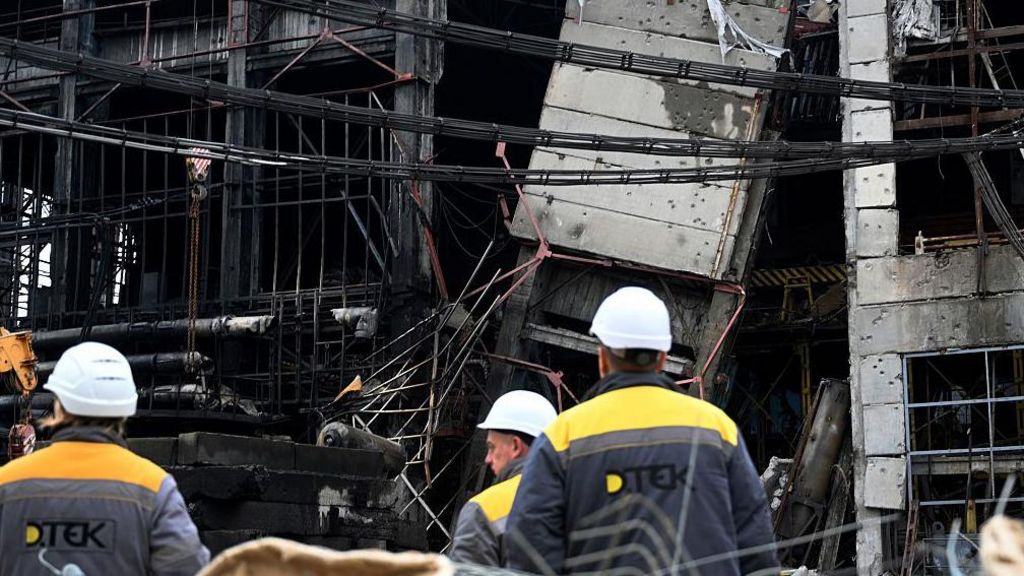
Ukraine’s energy infrastructure faces a state of perpetual crisis as systematic Russian attacks cripple the national power grid, leaving millions in darkness during freezing winter conditions. DTEK, the country’s largest energy provider serving 5.6 million Ukrainians, struggles to maintain basic electricity delivery amid relentless assaults that target critical energy facilities with drones, cruise missiles, and ballistic weapons.
The situation has become so severe that nationwide electricity rationing has been implemented, with most households receiving only a few hours of power daily. The southern city of Odesa experienced a three-day complete blackout this week following coordinated Russian strikes, exacerbating the humanitarian crisis as temperatures continue to drop.
President Volodymyr Zelensky addressed the Dutch parliament, emphasizing that Russia has weaponized winter cold as a dangerous tactical advantage. ‘Every night Ukrainian parents hold their children in basements and shelters hoping our air defense will hold,’ he stated, highlighting the dire circumstances facing civilians.
The energy crisis has spawned remarkable community resilience. In Odesa, resident Yana, who maintains limited power, has opened her home to neighbors needing to charge phones and access washing facilities. Across Ukraine, the constant hum of generators has become more prevalent than air raid sirens, with citizens relying on power banks as essential survival tools.
Kyiv resident Tetiana describes the new daily routine: ‘The first thing I do in the morning is check my phone to find out the daily schedule for when my power will be switched on.’ Like many Ukrainians, she has invested in multiple power banks that must be constantly charged during brief electricity windows.
Approximately 50% of Ukraine’s energy comes from three nuclear facilities in central and western regions, but the transmission network has sustained catastrophic damage. DTEK, operating about ten primarily coal-fired power stations, reports that some facilities are attacked every three to four days. CEO Maxim Timchenko acknowledges, ‘I don’t remember a single day when I had no reports about some damage to our grid.’
The company faces monumental challenges in sourcing replacement parts, now requiring European-wide searches for equipment previously available domestically. Repair costs have skyrocketed to $166 million this year alone for damaged thermal plants and coal facilities. Despite these obstacles, Timchenko remains resolute: ‘We will not give up. We have a responsibility to millions of mothers to have power and heat.’
The human cost continues to mount, with eight DTEK engineers killed while attempting to maintain power in the fiercely contested Donbas region, where employees ‘risk their lives daily’ to provide essential services.