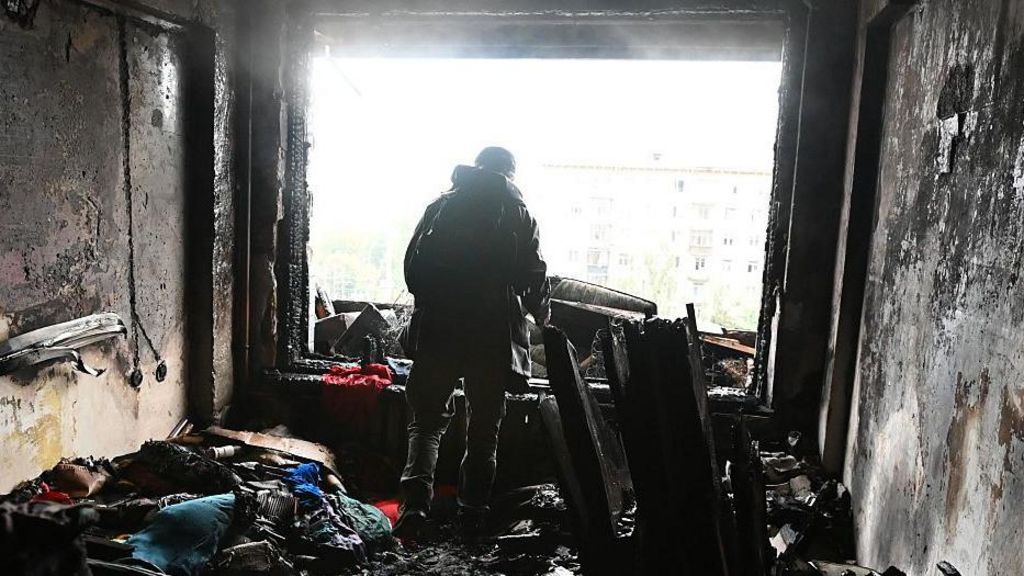
Ukraine is grappling with widespread power outages following a relentless barrage of Russian missile and drone attacks targeting its energy infrastructure. This marks the fourth consecutive winter of blackouts since Russia’s full-scale invasion began in February 2022. The Ukrainian Energy Ministry reported that nearly all regions, except for the war-torn Donetsk and the already struggling Chernihiv, are affected. Emergency measures have been implemented to manage the crisis, with grid operator Ukrenergo urging citizens to conserve electricity. Temperatures are expected to drop to 3°C, exacerbating the humanitarian impact.
In addition to energy infrastructure, Russia has intensified strikes on Ukraine’s railways, while Ukraine has retaliated with drone attacks on Russian oil refineries and depots. A significant fire at the Marine Oil Terminal in Feodosia, Crimea, has been burning for three days after a Ukrainian drone strike, disrupting fuel supplies crucial for Russian military operations. These attacks have reduced Russian fuel exports to their lowest levels since the war began, according to the International Energy Agency.
Ukrainian President Volodymyr Zelensky accused Moscow of aiming to ‘create chaos and apply psychological pressure’ through these strikes. Kyiv has sought long-range weapons from Western allies to target military installations deeper within Russia, though concerns over escalation have tempered support. Meanwhile, NATO countries have pledged additional military aid, with Germany committing $500 million and other nations collectively promising $1 billion.
Despite these efforts, military aid to Ukraine has declined by 43% compared to the first half of the year, according to the Kiel Institute. As the war drags on, the humanitarian and economic toll continues to mount, with civilians bearing the brunt of the crisis.