Fresh cross-border attacks dominated headlines in the Russia-Ukraine war Tuesday, as Ukraine’s air force announced it had intercepted five Russian ballistic missiles fired in an overnight wave of strikes—the first time Kyiv has claimed such an intercept in nearly two weeks, a milestone amid growing gaps in the country’s air defense capabilities.
The overnight assault, which included both missiles and drones, still managed to penetrate Ukrainian defenses and strike targets in the capital Kyiv, leaving material damage in its wake. Kyiv Mayor Vitali Klitschko confirmed the attack sparked fires at two city storage facilities and damaged a nearby local school. Unlike slower drones or cruise missiles, ballistic missiles travel at much higher speeds, making them far harder for air defense systems to track and intercept. Ukrainian defense officials indicated that the successful interceptions were almost certainly carried out by the U.S.-manufactured Patriot surface-to-air missile system, the Western-supplied defense platform widely recognized as the most effective tool currently available to counter ballistic missile threats. However, stockpiles of Patriot ammunition have been severely strained recently, compounded by rising global defense demand tied to the ongoing conflict between Israel and Iran.
In official statements released after the attack, Russia’s Defense Ministry confirmed it carried out the strikes, saying the operation targeted Ukrainian military production sites in Kyiv that manufacture long-range missiles and drones. The attack aligns with a new Russian strategy to disrupt Ukraine’s sustained long-range campaign targeting Russian oil infrastructure deep within Russian territory, a campaign that has caused widespread critical fuel shortages across Russia, stoked public discontent, and slowed Russian military advances along the front line in eastern and southern Ukraine, according to Western military analysts.
Ukrainian air force officials released a full breakdown of the overnight attack: one additional Russian ballistic missile and 25 Russian attack drones managed to evade interception and hit 17 separate locations across Ukraine, while falling defensive debris from intercepted missiles caused secondary damage in 10 other regions.
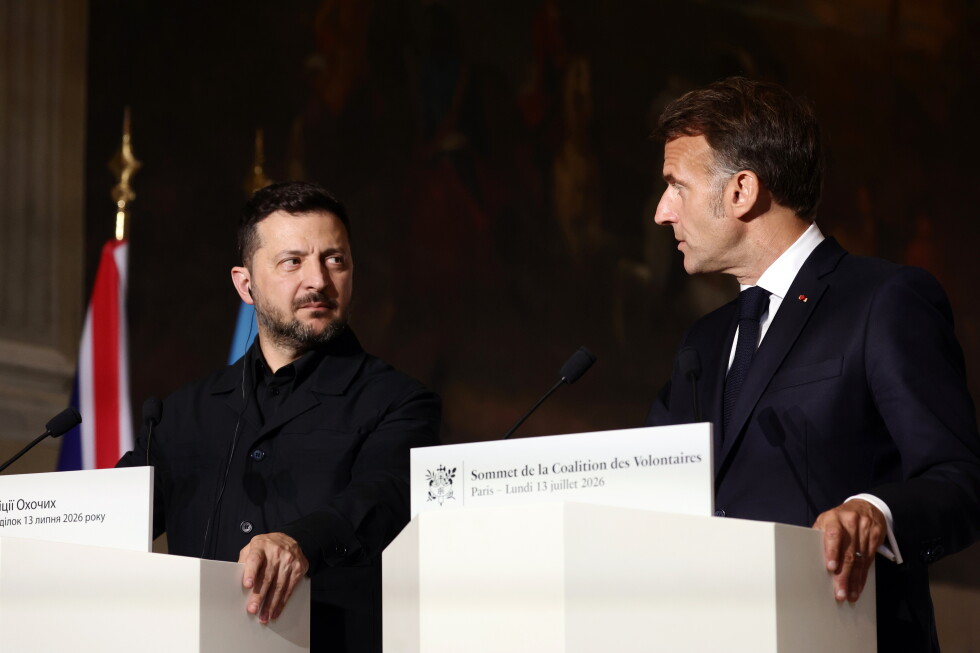
The exchange of attacks comes as Kyiv moves to shore up its fragmented air defense networks ahead of the approaching winter, a season that has seen Russia launch systematic large-scale strikes on Ukraine’s energy grid in both 2022 and 2023, leaving millions without power or heating for extended periods. On Monday, Kyiv secured a major international boost when nine partner countries joined a new pan-European coalition focused on expanding collective ballistic missile defense capabilities, with Ukraine as a core member. Ukrainian President Volodymyr Zelenskyy, who was in Paris Tuesday attending France’s annual Bastille Day celebrations, told reporters the coalition and Ukraine’s international partners could develop a mass-produced, low-cost anti-ballistic missile system within the next 12 months.
Last week, during the NATO summit, former U.S. President Donald Trump announced the U.S. would grant Ukraine a manufacturing license to produce Patriot systems domestically. But defense analysts note the Patriot system is a complex, high-cost weapons platform already facing global supply shortages and extended production timelines, meaning any Ukrainian-manufactured Patriots will not be ready for deployment for at least several years.
For its part, Ukraine continued its long-range strikes on Russian energy infrastructure this week, in parallel to Russia’s attack on Kyiv. Local authorities in Russia’s southern Krasnodar region confirmed a Ukrainian attack sparked a large fire at the Afipsky Oil Refinery, which was eventually contained by emergency response teams. Unconfirmed local media reports also claimed a second oil refinery in Salavat, a city in Russia’s Bashkortostan region located roughly 1,400 kilometers from the Ukrainian border, was also hit in the strike. Radiy Khabirov, the head of Bashkortostan, confirmed an industrial zone in Salavat had come under attack but declined to confirm what targets were struck.
Russia’s Defense Ministry claimed its own air defense systems intercepted 288 Ukrainian drones launched overnight across multiple Russian regions, as well as over the illegally annexed Crimean Peninsula and the Azov and Black Seas.