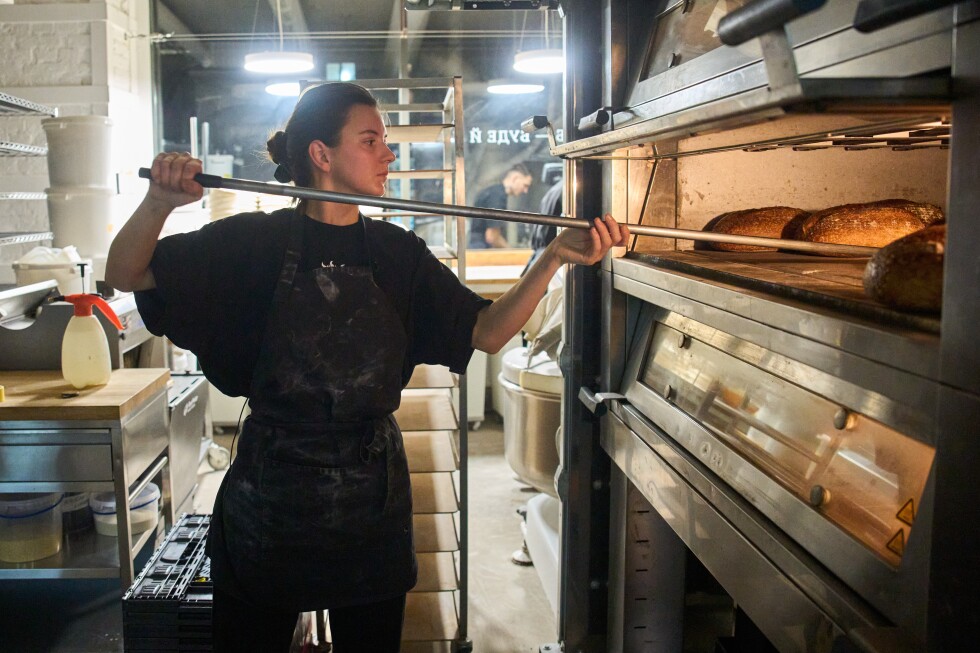
KYIV, Ukraine — In the historic Podil district of Kyiv, the pre-dawn darkness is intermittently pierced by the warm glow of Spelta bakery-bistro, where head baker Oleksandr Kutsenko, 31, skillfully shapes dough amidst frequent power interruptions. Each time the lights fade and ovens power down, Kutsenko activates a large rectangular generator—a ritual repeated endlessly to sustain operations against Russia’s targeted assaults on Ukraine’s energy infrastructure.
Olha Hrynchuk, 28, co-founder of Spelta, reflects that operating without generators has become inconceivable for Ukrainian businesses. Her bakery, established ten months after Russia’s full-scale invasion in 2022, has never experienced ‘normal’ working conditions. The generator alone consumes roughly 700 hryvnias ($16) worth of fuel hourly, running 10–12 hours daily amid unpredictable blackouts.
The challenges extend far beyond power scarcity. Businesses nationwide grapple with acute labor shortages due to mobilization and wartime migration, declining consumer purchasing power, complex logistics, and heightened security risks. For many, survival has become a day-to-day calculation.
Olha Nasonova, head of the Restaurants of Ukraine analytical center, confirms the industry is navigating its most difficult period in two decades. Small cafés and family-run establishments are particularly vulnerable. The ‘Best Way to Cup’ coffee project, for instance, faced a permanent closure threat after attacks shattered windows and doors last August. Co-founder Yana Bilym, 33, invested heavily in repairs, only to confront further infrastructure collapse—water supply cuts and failed sewage systems—forcing a temporary shutdown.
Some businesses have transformed into community lifelines. Designated ‘Points of Invincibility,’ they offer warmth, electricity for charging devices, and hot tea during curfews. Tetiana Abramova, 61, founder of clothing manufacturer Rito Group, acquired a 35-kilowatt generator and wood-fired boiler to maintain heat, light, and production continuity. Yet operating on generators is 15–20% costlier than grid electricity, elevating production costs by about 15%. Customer numbers have dropped nearly 40%, compelling a shift toward online sales to attract new clients.
According to a Kyiv School of Economics forecast, energy system attacks pose the most severe short-term risk to Ukraine’s GDP. Output losses could range between 1–3% depending on business adaptation and outage duration. Abramova, having spent nearly 100,000 hryvnias ($2,300) over two months on generator maintenance, summarizes the prevailing sentiment: ‘The main goal is not to be the most efficient, but to survive.’