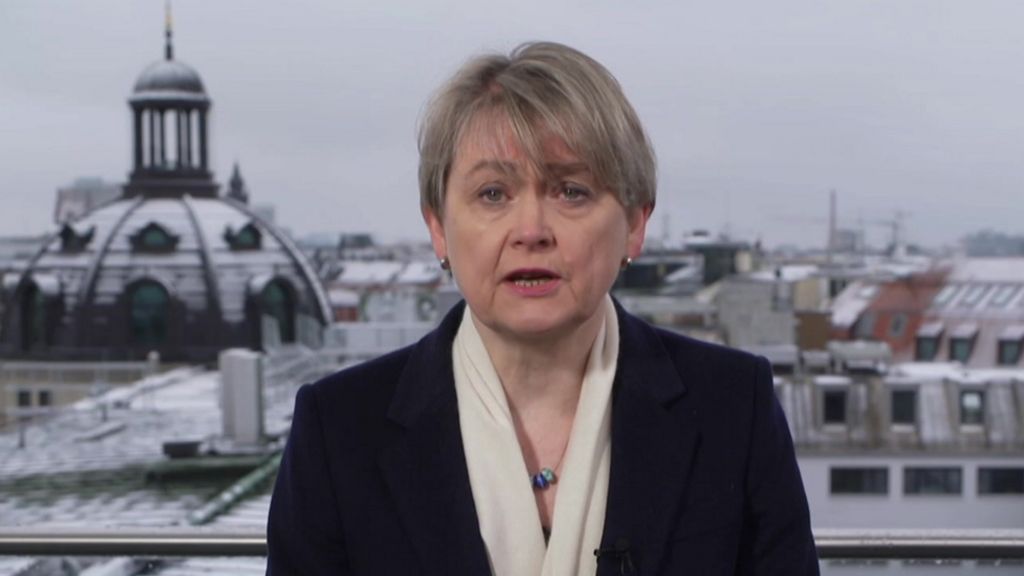
British Foreign Secretary Yvette Cooper has declared that the United Kingdom will pursue coordinated international action following conclusive evidence that Russian dissident Alexei Navalny was murdered using an exotic frog-based toxin. The announcement came during the Munich Security Conference where Cooper emphasized that European laboratories from five nations have definitively identified the poison responsible for Navalny’s death two years ago in a Siberian penal colony.
Speaking from a snow-covered Munich rooftop on the BBC’s Sunday with Laura Kuenssberg programme, Cooper stated that the Russian government alone possessed the “means, motive and opportunity” to deploy the obscure biological agent derived from Ecuadorian dart frogs. The confirmation, obtained through analysis of smuggled biological samples, represents a “clear breach” of international chemical weapons conventions according to the Foreign Secretary.
Cooper outlined Britain’s intention to escalate pressure on Moscow through continued sanctions coordination and formal reporting to the Organisation for the Prohibition of Chemical Weapons. She framed the poisoning as part of broader Russian aggression that requires united Western response, particularly noting the approaching fourth anniversary of Ukraine’s invasion.
The diplomatic offensive occurs alongside Prime Minister Keir Starmer’s participation at the security conference, where both British leaders have emphasized European preparedness against Russian threats. Cooper characterized these efforts as continuing Navalny’s mission to “tell the truth, spread the truth” about Putin’s regime, which she described as “the most dangerous weapon of all.”
Moscow’s London embassy issued a scathing rebuttal, dismissing the findings as “feeble-mindedness of Western fabulists” and accusing critics of engaging in “necro-propaganda.” Russian officials repeatedly questioned the scientific plausibility of the frog poison narrative while maintaining Navalny died of natural causes.
The emerging divide was further highlighted by Conservative shadow foreign secretary Dame Priti Patel, who separately warned of an expanding “axis of authoritarianism” comprising Russia, China, North Korea and Iran. Despite these challenges, Patel reaffirmed America’s status as Europe’s “natural ally” in confronting global threats.