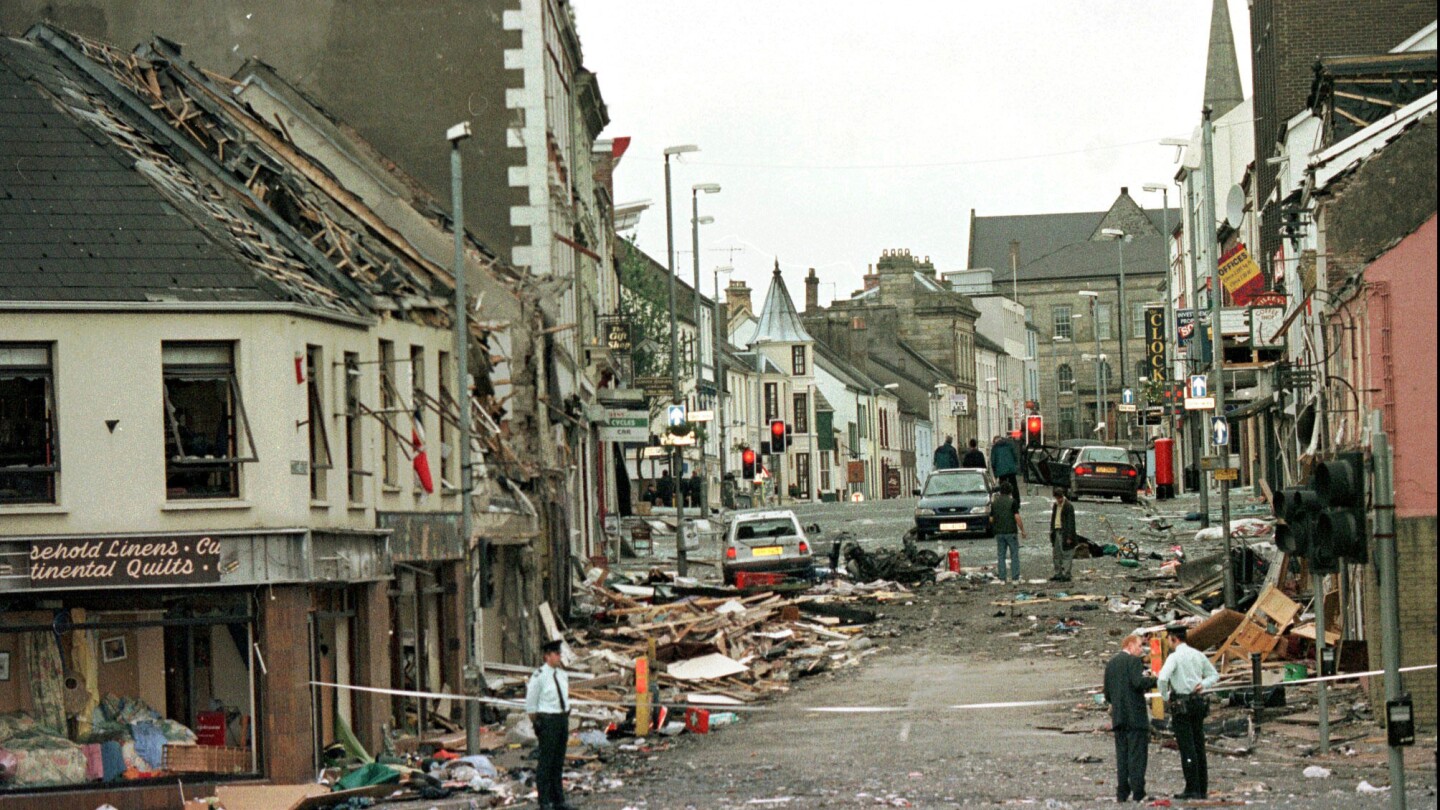
As the ceasefire in the two-year Gaza war holds, the international community looks to the Northern Ireland peace process of the 1990s for insights into resolving seemingly intractable conflicts. Key figures from that era, including former British Prime Minister Tony Blair and his former chief of staff Jonathan Powell, have re-emerged in discussions about Gaza’s future. British Prime Minister Keir Starmer has emphasized the UK’s readiness to assist in disarming Hamas, drawing parallels to the disarmament of the Irish Republican Army (IRA) during the Northern Ireland peace process. The IRA’s eventual agreement to decommission weapons, overseen by an international commission, was a pivotal moment in the 1998 Good Friday Agreement, which largely ended decades of violence known as ‘the Troubles.’ However, experts caution that while there are parallels between the two conflicts, the scale of devastation and complexity in Gaza is far greater. The Trump-backed plan for Gaza focuses narrowly on Hamas’ disarmament but fails to address broader issues like Palestinian statehood, which is widely seen as essential for lasting peace. The Northern Ireland experience highlights the importance of inclusivity and patience in peacebuilding, though achieving a similar consensus in the Middle East remains a monumental challenge. Despite its successes, the Northern Ireland peace process was not without setbacks, including occasional dissident attacks and the collapse of its power-sharing government. Experts argue that excluding Hamas from future political processes could hinder progress, as inclusivity was a cornerstone of Northern Ireland’s success. As key players like Blair and Powell return to the spotlight, their experience in conflict resolution may offer valuable lessons, though the path to peace in Gaza remains fraught with uncertainty.
UK sees lessons from Northern Ireland that could aid the fragile Gaza ceasefire process