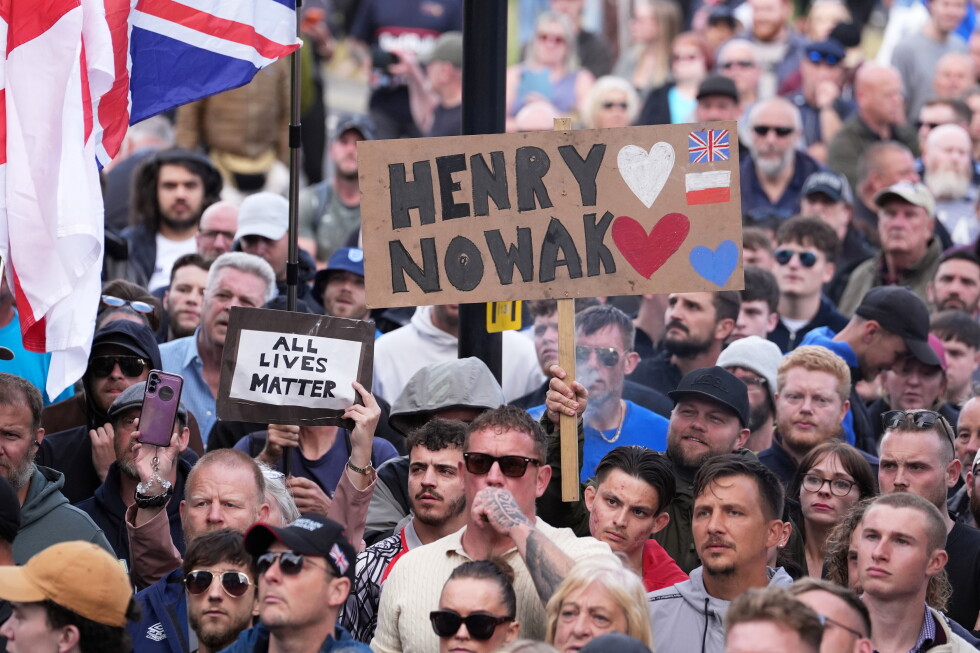
LONDON – A deeply troubling 2024 killing of an 18-year-old British university student has ignited a fierce national debate across the United Kingdom around systemic policing biases, racial division and the persistent crisis of knife violence, after body camera footage of the incident was made public this week.
Henry Nowak, a first-year student at the University of Southampton, was fatally stabbed in December 2023 during an altercation on a residential street in the southern English coastal city. This week, the case reemerged in public consciousness after his killer, 23-year-old Vickrum Digwa, was sentenced to life in prison with a minimum term of 21 years for murder, and official video of the police response was released to the public.
Court records and the newly published footage paint a disturbing picture: Responding to a call about an assault, officers arrived at the scene to find Nowak bleeding heavily, held upright by a bystander with a mouthful of blood. Digwa, a Sikh man, told officers that he had been the victim of a racist attack by Nowak, who was white, claiming Nowak had knocked off his turban and assaulted him. Officers took Digwa’s claims at face value, restrained and handcuffed Nowak as he repeatedly told them he had been stabbed and could not breathe.
In footage recorded at the scene, one officer can be heard dismissing Nowak’s pleas, saying, “Don’t think you have, mate.” By the time officers realized Nowak had sustained life-threatening stab wounds and removed his handcuffs to begin CPR, it was too late to save him.
Southampton Crown Court ultimately rejected Digwa’s claim of a racist attack entirely. Presiding Judge William Mousley ruled that Digwa had fabricated the assault narrative to mislead officers, noting that no other witness corroborated the racism allegation and that the claim was entirely inconsistent with Nowak’s known character. The judge also confirmed that Digwa used an 8-inch (21-centimeter) sheathed dagger to carry out the killing – an illegal weapon separate from the small ceremonial kirpan that Sikhs are legally permitted to carry for religious purposes. Judge Mousley emphasized that Digwa’s actions had put innocent Sikhs across the country at risk by stoking unwarranted racial tension, saying, “many Sikhs are worried about their own safety even though they have done absolutely nothing wrong.”
Digwa’s mother, 53-year-old Kiran Kaur, was also convicted of assisting an offender after attempting to hide the murder weapon, and she is scheduled to be sentenced on July 17.
In the wake of the sentencing, Prime Minister Keir Starmer told reporters he was “sickened” by the newly released footage, saying there are urgent, unanswered questions about how Digwa’s false racism allegations shaped officers’ on-scene decision-making. Mark Nowak, Henry’s father, has stressed that the case should not be exploited to stoke further division, saying he wants his son’s death to drive action for safer streets, not “further division, hatred or tension.”
Despite the family’s call for unity, the killing has already drawn polarizing reactions from across the UK political spectrum. Nigel Farage, leader of the anti-immigrant Reform UK party, seized on the incident to promote the far-right “two-tier policing” conspiracy theory, which falsely claims law enforcement routinely prioritizes ethnic minority communities over white Britons. Farage called on the public to react with “pure cold rage”, claimed the case exposed “anti-white prejudice”, and pushed the false framing that “white lives matter just as much as Black lives.”
Home Secretary Shabana Mahmood pushed back firmly against these claims, rejecting the idea of unequal policing standards for different communities and urging political leaders and the public not to allow the murder to turn communities against one another. She noted that online misinformation about the case has already led to death threats against an officer who had no involvement in the incident, saying, “Misinformation and inflammatory commentary is making a dreadful situation even worse. We must all together condemn it.”
Mahmood added that the UK government remains committed to sharply reducing the country’s persistent knife crime crisis, and called for calm while the national police watchdog, the Independent Office for Police Conduct, launches a full investigation into the conduct of the responding officers from Hampshire and Isle of Wight Constabulary. Local police officials have already issued a formal apology to the Nowak family, acknowledging that Digwa’s lies misled responding officers. Donna Jones, local Police and Crime Commissioner, said the details of the police response raise “serious concerns about police impartiality, fairness and judgment.”
Hundreds of protesters gathered outside a Southampton police station this week to demand answers over Nowak’s death. The case has also revived uncomfortable memories of the 2024 Southport stabbing attack, where widespread social media misinformation that falsely labeled the attacker as a Muslim asylum seeker sparked days of violent anti-immigrant rioting across the UK. Officials have repeatedly warned against the spread of false narratives in this case, noting that such misinformation only deepens national division and puts innocent communities at risk.
In the UK, where strict gun regulations make gun violence extremely rare, knife crime remains one of the country’s most pressing public safety challenges. While UK law generally bans carrying bladed weapons longer than 3 inches, legal exceptions are made for small ceremonial kirpans carried by practicing Sikhs – a distinction that Judge Mousley emphasized in his sentencing, noting Digwa’s illegal weapon was an unrelated item that had been improperly mixed with protected religious items.