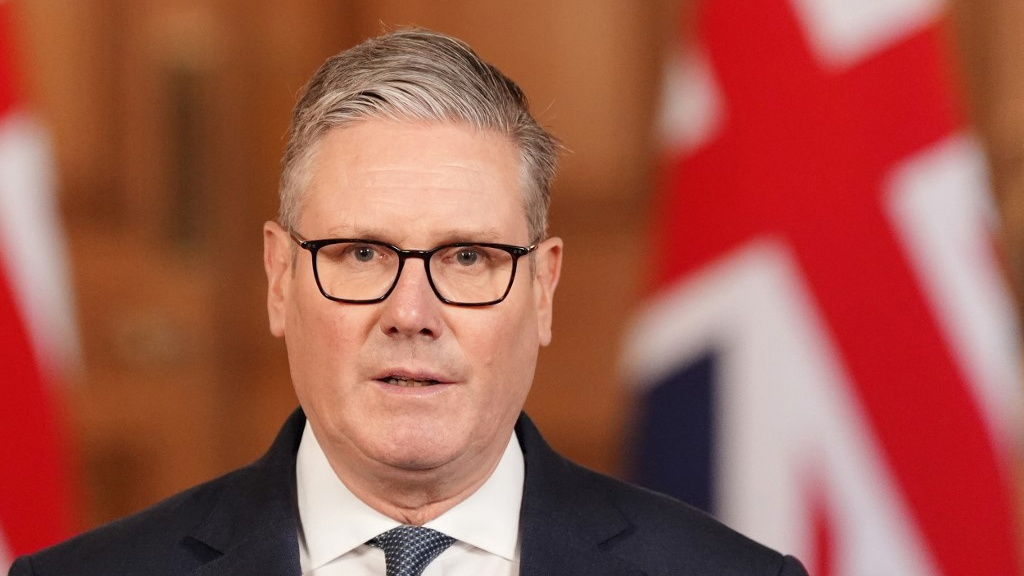
Prime Minister Keir Starmer has declared that British military assets are actively engaged in defensive operations across the Middle East to safeguard national interests and protect regional allies. The announcement followed an emergency Cobra committee session attended by senior ministers, defense chiefs, and intelligence officials.
While explicitly stating that the United Kingdom “played no role” in recent US-Israeli strikes against Iranian targets, Starmer emphasized Britain’s enhanced defensive posture. “We have a range of defensive capabilities in the region,” he stated, “which we’ve recently taken steps to strengthen. Our forces are active and British planes are in the sky today as part of coordinated regional defensive operations.”
The Prime Minister characterized Iran’s government as “utterly abhorrent” while identifying nuclear non-proliferation as Britain’s primary regional objective. “Iran must never be allowed to develop a nuclear weapon,” Starmer asserted, noting this remains a shared goal with international allies including the United States.
British military deployments include Typhoon jet squadrons stationed at Al Udeid Air Base in Qatar through a joint British-Qatari unit established in January. These advanced aircraft possess capability to intercept Iranian Shahed-136 drones. Additional UK military presence encompasses naval facilities in Bahrain and airbases across Qatar, UAE, Oman, and Cyprus.
Regional analysts highlight Britain’s delicate balancing act. Chris Doyle of the Council for the Advancement of Arab-British Understanding noted: “The biggest risk would have been for Britain to participate in a war that is illegal and that would have had unclear and unachievable objectives.” He suggested Starmer’s government remains concerned about potential Iranian retaliation affecting British supply routes through critical waterways like the Straits of Hormuz.
The disclosure follows reports that Starmer previously denied US requests to utilize British bases at Diego Garcia and RAF Fairford as launch sites for offensive operations against Iran. This decision drew criticism from opposition figures including Reform UK’s Nigel Farage and Conservative leader Kemi Badenoch, while receiving support from Green Party leader Zack Polanski who characterized potential involvement as supporting “illegal, unprovoked and brutal attack[s].”