The British government confronts escalating demands to address the humanitarian and legal crisis surrounding its nationals arbitrarily detained in northeastern Syria. This complex issue involves both citizens stripped of their citizenship and numerous young children trapped in detention facilities controlled by Kurdish authorities.
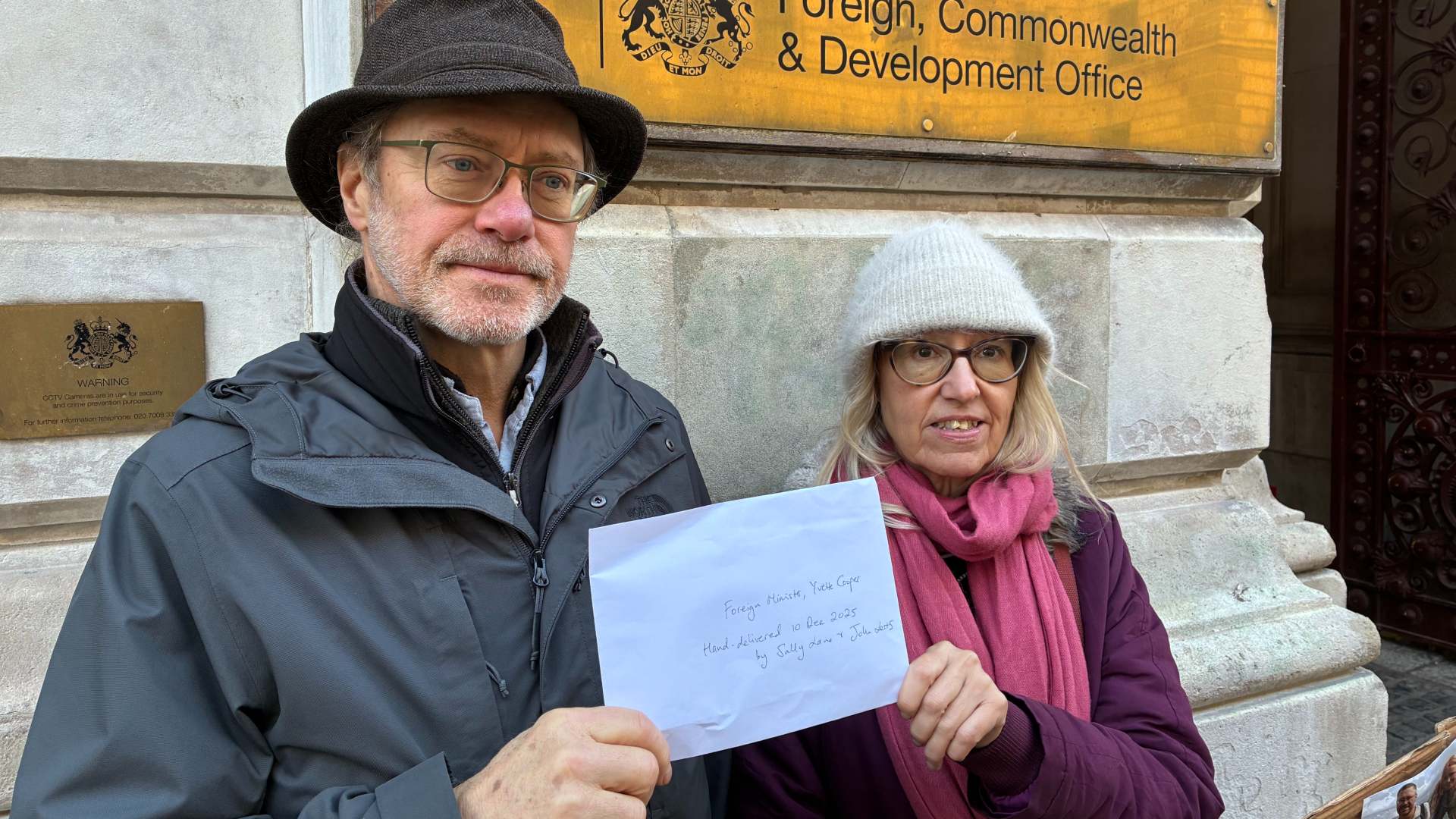
Recent protests outside London’s Foreign, Commonwealth & Development Office highlighted the growing frustration among families of detainees. Sally Lane, mother of imprisoned British-Canadian Jack Letts, articulated the urgent need for government action, stating: “I want to force the government to tell us what their plan is. They’ve fudged the issue for so long and had such a wide range of excuses.”
The protests coincide with the publication of a landmark report by the Independent Commission on UK Counter-Terrorism Law, Policy and Practice. Led by former Northern Ireland Lord Chief Justice Sir Declan Morgan, the three-year review condemned Britain’s approach as increasingly untenable and violating international human rights obligations. The report documented “inhuman, dangerous, and degrading” conditions in camps like Al-Hol and Al-Roj, where many women and children face coercion, trafficking, and exploitation.
Statistical analysis reveals Britain’s outlier status among nations. According to Rights and Security International data, the UK has repatriated merely four women and 21 children from Syria. Current estimates suggest between 55-72 British nationals remain detained, including approximately 10 men, up to 20 women, and around 40 children—mostly under age 10.
Former UN Special Rapporteur Fionnuala Ni Aolain emphasized Britain’s exceptional position: “The UK is a complete outlier, and actually with very little reasonable basis for that, given we’ve seen successful repatriation in other countries and recidivism is really low. On every single measure, the UK is out of step with its partners.”
The geopolitical landscape has shifted dramatically with the fall of Bashar al-Assad’s government and conclusion of Syria’s civil war. The transitional government under Ahmed al-Sharaa has signed agreements with Kurdish leaders to transfer camp responsibilities to Damascus within six months. This development, coupled with accelerated Iraqi repatriations and a UN conference urging member states to act, creates renewed urgency for resolution.
Security experts warn of continuing risks, including potential IS revival in unstable regions and the transformation of detention facilities into incubators for future insurgency. Human rights organizations have compared the lack of due process and arbitrary detention conditions to those at Guantanamo Bay.
The controversy surrounding citizenship-stripping powers remains particularly contentious. Critics argue this policy damages Britain’s international standing by transferring responsibility to other nations through sometimes tenuous citizenship claims, effectively creating a system of “medieval exile and banishment.”
Despite the change in government from Conservative to Labour in July 2024, policy continuity has largely prevailed. Both administrations have defended citizenship-stripping on national security grounds while maintaining ad hoc, sporadic repatriation practices.
For families like the Letts, who haven’t had contact with their son since January 2020, the situation remains desperately personal. John Letts summarized the fundamental demand: “He needs to see people. He needs medical help. We need to know he’s alive. Let’s talk to him. Is that so much to ask as a father after nine years?”