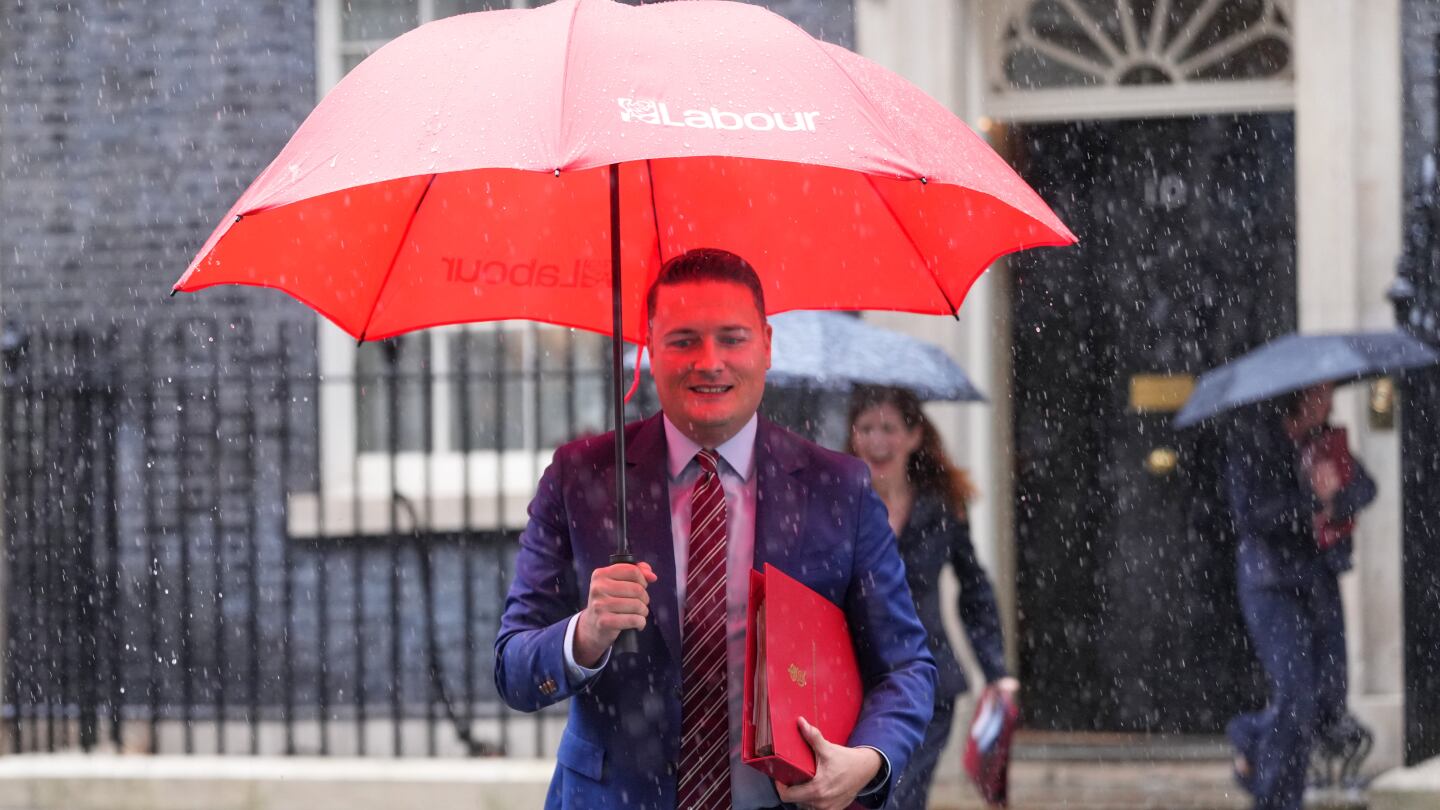
In a striking revelation of internal discord, a senior member of the British government has dismissed rumors of a plot to remove Prime Minister Keir Starmer from office. Health Secretary Wes Streeting, a prominent figure within the Labour Party, labeled such discussions as ‘self-defeating and self-destructive.’ This comes as the party grapples with plummeting poll ratings, less than 18 months after securing a landslide victory in the 2024 general election. Streeting’s comments followed reports that Starmer’s aides had preemptively addressed media speculation about a potential leadership challenge. ‘It’s totally self-defeating briefing, not least because it’s not true,’ Streeting remarked, attributing the rumors to overindulgence in reality TV drama. Despite his denial, the 42-year-old health secretary is widely regarded as a potential future leader of the party. The Labour Party’s current struggles are compounded by its lagging position behind the hard-right Reform UK party, led by Nigel Farage, though it remains ahead of the embattled Conservative Party. Lawmakers are particularly apprehensive about the upcoming budget statement on November 26, which is expected to include income tax hikes—a move that would break a key election promise. Since taking office in July 2024, Starmer’s government has faced significant challenges in fulfilling its pledges to revive economic growth, repair public services, and alleviate the cost-of-living crisis. Inflation remains persistently high, unemployment has risen, and the economic outlook remains subdued. Recent data revealed that the jobless rate climbed to 5% in the three months to September, the highest since 2016, excluding the pandemic years. Under Labour Party rules, a leadership challenge can be initiated with the support of 20% of MPs, currently equivalent to 81 members. While the UK’s parliamentary system permits a governing party to change its leader without triggering an early election, unelected prime ministers often face pressure to seek voter legitimacy. The Conservative Party’s recent history, with three prime ministers—Boris Johnson, Liz Truss, and Rishi Sunak—serving between December 2019 and July 2024, underscores the volatility of such leadership transitions.