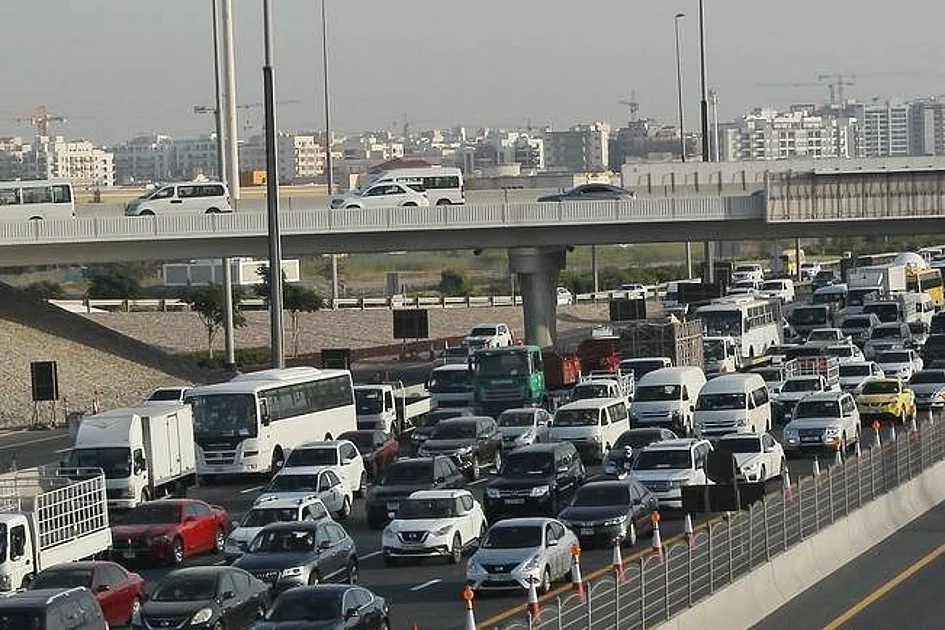
The United Arab Emirates (UAE) is taking decisive steps to address its growing traffic congestion challenges, driven by a surge in private vehicle ownership and peak-hour bottlenecks. Speaking at the UAE Government Annual Meetings in Abu Dhabi, Minister of Energy and Infrastructure Suhail Al Mazrouei highlighted the urgency of the issue, noting that vehicle numbers on UAE roads are increasing at an annual rate of over eight percent—far exceeding the global average of two percent. This trend, coupled with overlapping school and work hours, has placed significant strain on the nation’s road networks, particularly between Dubai and the Northern Emirates. Commuters in these areas reportedly lose up to 460 hours annually to traffic delays, equivalent to 60 working days. To combat this, the UAE is implementing a multi-faceted strategy that includes road expansions, enhanced public transport integration, updated policies, and advanced smart-mobility technologies. A 24-hour integrated traffic-monitoring center is already analyzing congestion patterns and proposing targeted solutions. Additionally, the Dh50-billion UAE Railway Programme, set to launch passenger services by 2026, aims to strengthen connectivity between cities and reduce reliance on private vehicles. Officials believe these measures will ensure the UAE remains ahead of rising transport infrastructure demands as its population and economic activity continue to grow.
UAE identifies top reasons for traffic jams, plans new systems to curb congestion