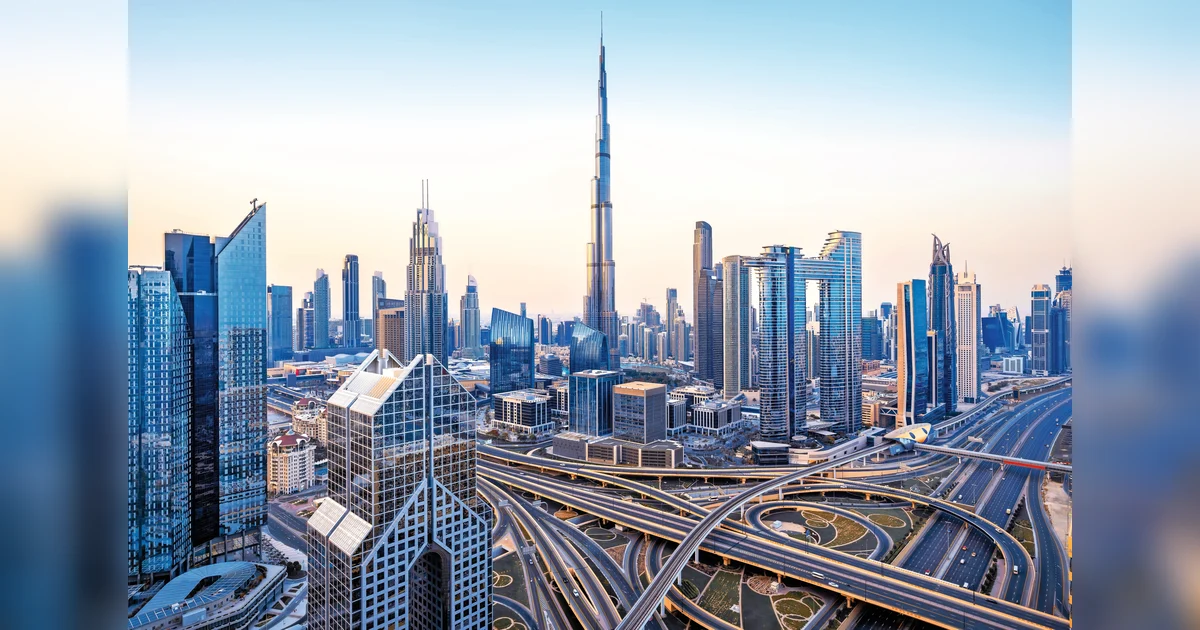
Fifty-four years following its establishment, the United Arab Emirates continues to craft one of modernity’s most extraordinary national development narratives. This federation, initially composed of youthful emirates with constrained resources in 1971, has undergone a profound metamorphosis into a globally influential hub for innovation, cultural dynamism, and sustainable progress.
The nation’s economic evolution represents a cornerstone of its success. Early leadership strategically directed initial oil revenues toward constructing essential infrastructure—encompassing transportation networks, educational institutions, healthcare facilities, and housing developments—thereby establishing a foundation for enduring prosperity. Historical economic data reveals staggering growth: since gaining independence, the UAE’s economy expanded approximately 231-fold to reach Dh1.45 trillion by 2013. Current estimates for 2025 indicate a GDP approaching $569 billion, with per capita figures exceeding $51,290 nominally and $82,000 in purchasing power parity terms, positioning the nation among global wealth leaders.
A pivotal achievement in this transformation has been economic diversification. Whereas petroleum previously constituted over 85% of national output, the non-oil sector now contributes more than 77% of real GDP according to Federal Competitiveness and Statistics Centre data. This strategic shift manifests powerfully in foreign trade, with non-oil commerce reaching Dh835 billion solely in 2025’s first quarter. Robust activity spans tourism, logistics, financial services, advanced manufacturing, and renewable energy sectors.
The UAE’s ambitions extend beyond terrestrial boundaries into space exploration. The successful arrival of the Hope Probe at Mars in 2021 marked a historic milestone, making the Emirates the first Arab nation and fifth entity globally to reach the Red Planet. The space program continues advancing ambitiously with 2025’s launch of six satellites, including the inaugural radar satellite UnionSat. Through a landmark collaboration with Thales Alenia Space, the Mohammed bin Rashid Space Center has secured permanent participation in NASA’s Gateway lunar station, facilitating Emirati astronaut involvement in future lunar missions. The scheduled 2026 Rashid Rover 2 expedition to the Moon’s far side and the Emirates Mission to the Asteroid Belt further demonstrate the nation’s commitment to establishing world-class expertise in space technology.
Concurrently, the UAE has cultivated an exceptional environment for entrepreneurship. The Global Entrepreneurship Monitor 2024-25 report ranks the nation first worldwide for the fourth consecutive year, leading high-income countries in 11 of 13 key indicators including entrepreneurial financing accessibility and supportive government policies. Complementary analysis by TASC Corporate Services awarded near-perfect scores (930/1000) for business friendliness, highlighting Golden Visas, competitive taxation, and innovation-tailored ecosystems. Approximately 70% of adults perceive strong entrepreneurial opportunities, with 78% of new entrepreneurs prioritizing social and environmental impact—evidence of a maturing, purpose-driven enterprise culture.
Central Bank projections indicate 4.4% real GDP growth for 2025, with some international agencies forecasting up to 6.2%. This optimism stems from diversified economic structures, political stability, and strategic investments in future-growth sectors including green energy, artificial intelligence, and advanced manufacturing.
Infrastructure development remains another hallmark achievement. From rudimentary desert tracks, the UAE has engineered some of the planet’s most sophisticated urban centers, transportation networks, and logistical hubs. Jebel Ali Port ranks among the world’s largest and most efficient seaports, while aviation leaders Emirates, Etihad, and Air Arabia have transformed the nation into a global crossroads. Digital infrastructure and smart city initiatives further establish the UAE as a twenty-first-century urbanization model.
Demographic expansion mirrors national development, growing from several hundred thousand residents in 1971 to approximately 10 million by 2025. This population comprises over 200 nationalities fostering a vibrant multicultural society that embodies leadership principles valuing unity through diversity.
This transformative journey honors the legacy of founding visionaries, particularly the late Sheikh Zayed bin Sultan Al Nahyan, whose conviction that “a country’s real wealth lies in its people” continues guiding national policy. As the Arab world’s second-largest economy advances from hydrocarbon dependence to hydrogen innovation, from regional trade hub to global technological leader, and from Earth to extraterrestrial exploration, its narrative of limitless possibility continues unfolding with confident ambition.