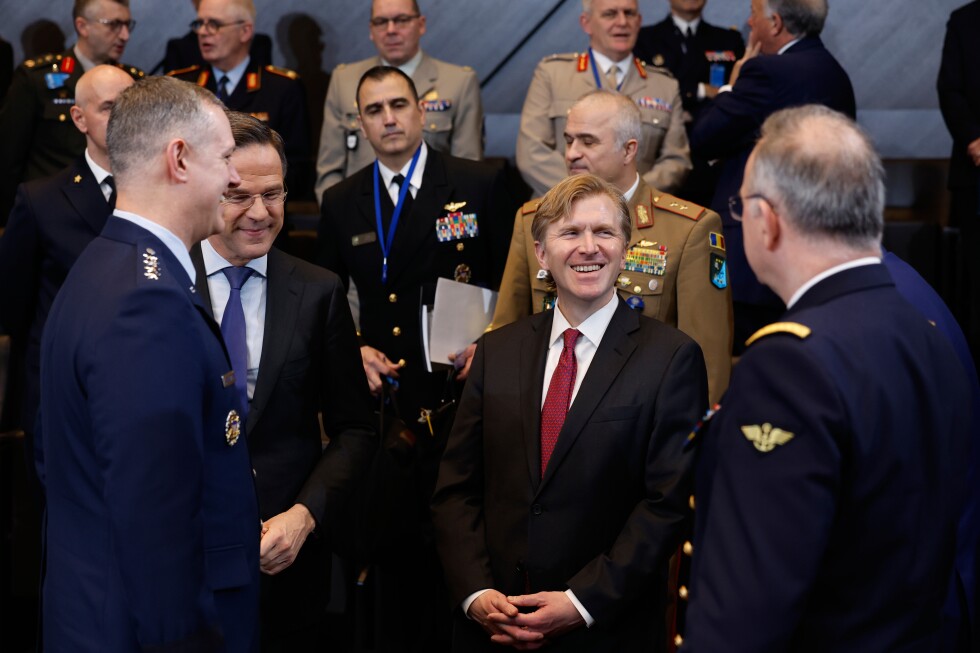
BRUSSELS — NATO’s European members demonstrated a unified front on Thursday, downplaying concerns about waning U.S. engagement after American Defense Secretary Pete Hegseth skipped the alliance’s defense ministerial meeting. This marked the second consecutive high-level absence following Secretary of State Marco Rubio’s December no-show at foreign ministers’ talks.
The pattern of substituted representation—with Under Secretary of Defense Elbridge Colby attending in Hegseth’s place—has raised questions about Washington’s commitment to the transatlantic alliance. Yet European officials maintained diplomatic composure. Icelandic Foreign Minister Þorgerður Katrín Gunnarsdóttir remarked, ‘Sadly for him, he is missing a good party,’ while German Defense Minister Boris Pistorius noted, ‘Each of us has a full agenda… it’s his decision and his duties he has to fulfill.’
This recalibration of responsibilities reflects a fundamental shift in NATO’s dynamics. Where the alliance once sought to ‘keep the Americans in, the Russians out and the Germans down,’ according to its first secretary-general, today’s reality shows Germany emerging as a major defense contributor. Following Russia’s invasion of Ukraine four years ago, Berlin committed €100 billion to military modernization.
NATO Secretary-General Mark Rutte acknowledged the changing landscape: ‘They have to take care of the whole world. This is the United States. They have always consistently pleaded for Europe doing more, Canada doing more.’ This transition sees European nations increasing conventional defense spending while the U.S. maintains nuclear deterrence guarantees.
The meeting produced concrete initiatives, including the launch of ‘Arctic Sentry’—a collective response to U.S. security concerns in the High North and a diplomatic effort to deter former President Trump’s ambitions regarding Greenland. The program will coordinate existing national exercises under NATO oversight, with participation from Denmark, France, Germany, and likely Finland and Sweden.
Meanwhile, European allies are filling gaps in Ukrainian support as U.S. military aid diminishes. The UK announced an additional £500 million in air defense packages, while Sweden pledged funds for American weapons purchases and the Netherlands committed flight simulators for F-16 training. The Ukraine Defense Contact Group, once led by the Pentagon, is now chaired by the UK and Germany.
Dutch Defense Minister Ruben Brekelmans emphasized the importance of ‘the no-surprise policy’ between NATO and the U.S., reflecting lingering concerns about unpredictable American actions. The Greenland annexation threat particularly rattled allies, with Belgian Defense Minister Theo Francken calling it ‘a crisis that was not needed’ and hoping the new Arctic security arrangement would prevent future ‘food fights over the Atlantic.’