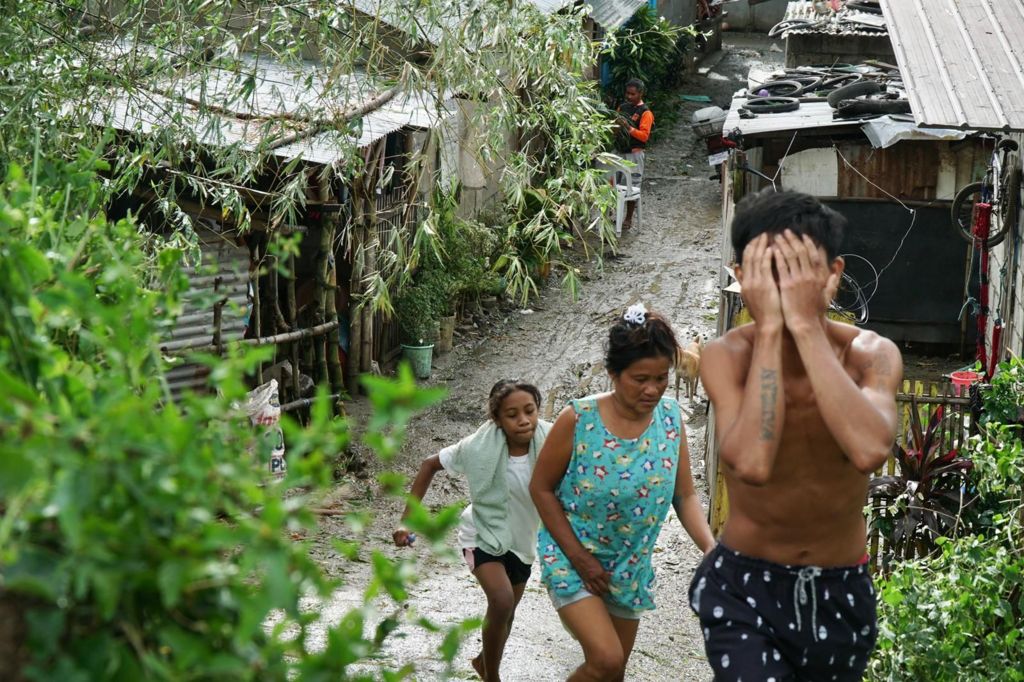
The Philippines has narrowly avoided a catastrophic disaster as Typhoon Fung-wong, once a super typhoon, weakened significantly after making landfall. The storm, which initially carried winds of 185 km/h (115 mph) and gusts of 230 km/h (143 mph), struck Aurora province in Luzon, the country’s most populous island, on Sunday evening. Despite the ferocity of the storm, the damage was less severe than anticipated, thanks to extensive preemptive measures. Approximately 1.4 million people were evacuated before the typhoon hit, and hundreds of flights were canceled. Buildings were secured, and residents in vulnerable areas were urged to move to higher ground. The Philippine government had declared a state of calamity nationwide, granting agencies enhanced powers to access emergency funds and expedite the delivery of essential goods and services. The storm’s impact was felt most acutely in low-lying and coastal areas, where flooding has isolated several communities. Power outages have affected much of Luzon, and roads and bridges have been rendered impassable by high water levels. The civil defense office reported two fatalities: one person drowned, and another woman was found dead under debris in Catbalogan City. Two others sustained injuries. The Philippines, located in a region prone to tropical cyclones, is no stranger to such natural disasters. About 20 tropical cyclones form in the area annually, with half directly affecting the country. While climate change is not believed to increase the number of cyclones, it is thought to intensify their severity, potentially leading to higher wind speeds, heavier rainfall, and increased coastal flooding. The recent back-to-back impacts of Typhoons Kalmaegi and Fung-wong have underscored the country’s vulnerability to such extreme weather events. Kalmaegi, one of the strongest typhoons this year, left at least 204 people dead in the Philippines and more than 100 missing. The storm also claimed five lives in Vietnam, where it caused widespread destruction. Despite the challenges, the Philippines’ proactive response to Typhoon Fung-wong has been credited with minimizing casualties and damage, offering a glimmer of hope in the face of increasingly unpredictable weather patterns.