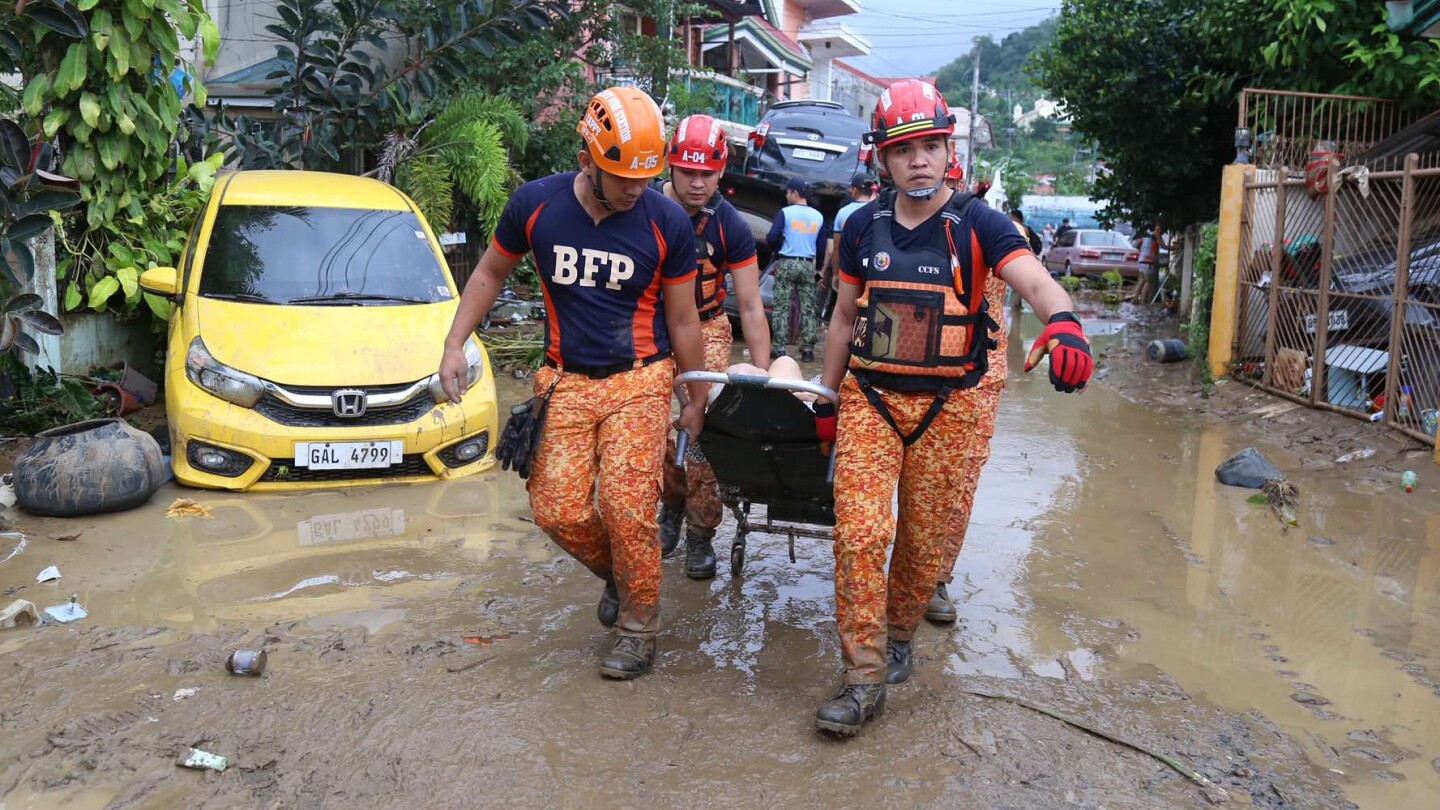
Typhoon Kalmaegi has wreaked havoc in the central Philippines, claiming at least 52 lives and leaving 13 others missing, officials reported on Wednesday. The storm triggered widespread flooding, trapping residents on rooftops and sweeping away vehicles in Cebu province, an area still recovering from a recent deadly earthquake. The disaster has compounded the challenges for a region already grappling with the aftermath of natural calamities.
In a separate tragic incident, six individuals lost their lives when a Philippine air force helicopter crashed in Agusan del Sur province on Tuesday. The aircraft was en route to deliver humanitarian aid to areas affected by Kalmaegi. The military has yet to disclose the cause of the crash.
As of early Wednesday, Kalmaegi was located over the coastal waters of Linapacan in Palawan province, packing sustained winds of 120 kph (75 mph) and gusts reaching 150 kph (93 mph). The typhoon is expected to move into the South China Sea later in the day.
Cebu, a densely populated province with over 2.4 million residents, bore the brunt of the storm. Flash floods caused rivers and waterways to overflow, engulfing residential areas and forcing desperate residents to seek refuge on their roofs. The Philippine Red Cross reported receiving numerous distress calls, but rescue operations were delayed until floodwaters receded to ensure the safety of emergency personnel.
In response to the crisis, Cebu declared a state of calamity, enabling authorities to expedite emergency funding. The province is still recovering from a 6.9 magnitude earthquake on September 30, which claimed 79 lives and displaced thousands.
Other fatalities were reported in Southern Leyte and Bohol provinces, where an elderly villager drowned in floodwaters and another resident was struck by a fallen tree. Before Kalmaegi’s landfall, over 387,000 people evacuated from eastern and central provinces, heeding warnings of torrential rains, destructive winds, and storm surges up to three meters (nearly 10 feet) high.
The typhoon disrupted transportation, grounding interisland ferries and fishing boats, stranding over 3,500 passengers and cargo truck drivers at nearly 100 seaports. Additionally, 186 domestic flights were canceled.
The Philippines, one of the world’s most disaster-prone countries, faces approximately 20 typhoons and storms annually, alongside frequent earthquakes and volcanic activity. The resilience of its people continues to be tested as they confront the dual challenges of recovery and preparedness in the face of relentless natural disasters.