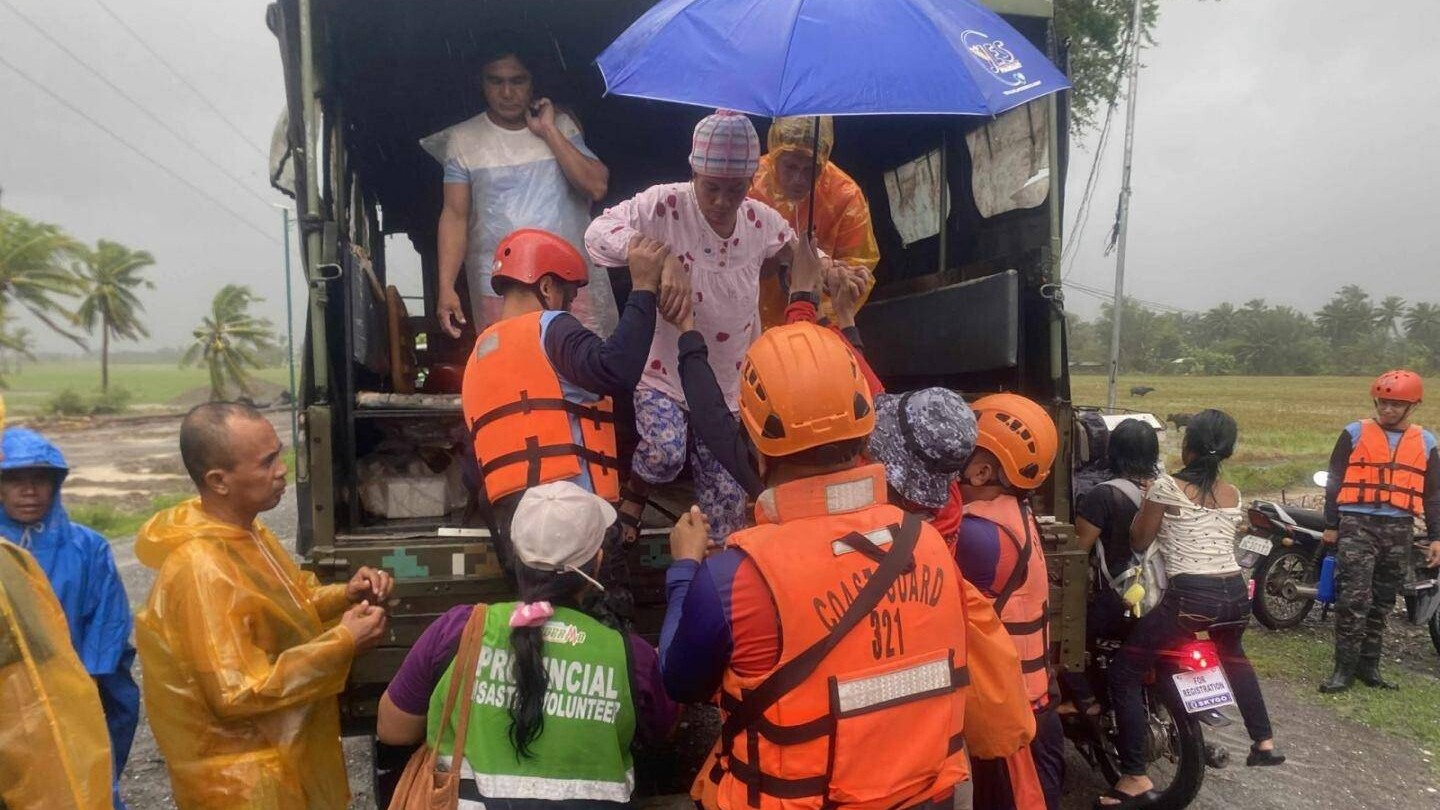
Typhoon Fung-wong, a powerful super typhoon, wreaked havoc across the northern Philippines, causing widespread flooding, landslides, and power outages before moving toward Taiwan on Monday. The storm, with sustained winds of up to 185 kph (115 mph) and gusts reaching 230 kph (143 mph), made landfall in Aurora province on Sunday night. It weakened as it traversed mountainous regions and agricultural plains, eventually exiting into the South China Sea. The disaster claimed at least two lives—one due to flash floods in Catanduanes and another from a collapsed house in Catbalogan city—and displaced over 1.4 million people, with 318,000 still in evacuation centers. The typhoon compounded the devastation left by Typhoon Kalmaegi, which had earlier killed 224 people in central provinces and impacted Vietnam. Philippine President Ferdinand Marcos Jr. declared a state of emergency, while authorities closed schools, government offices, and canceled hundreds of flights and maritime operations. The Philippines, one of the world’s most disaster-prone nations, faces frequent typhoons, earthquakes, and volcanic activity, highlighting the urgent need for robust disaster preparedness and response.
Typhoon Fung-wong blows away from the Philippines, leaving 2 dead and 1.4 million displaced