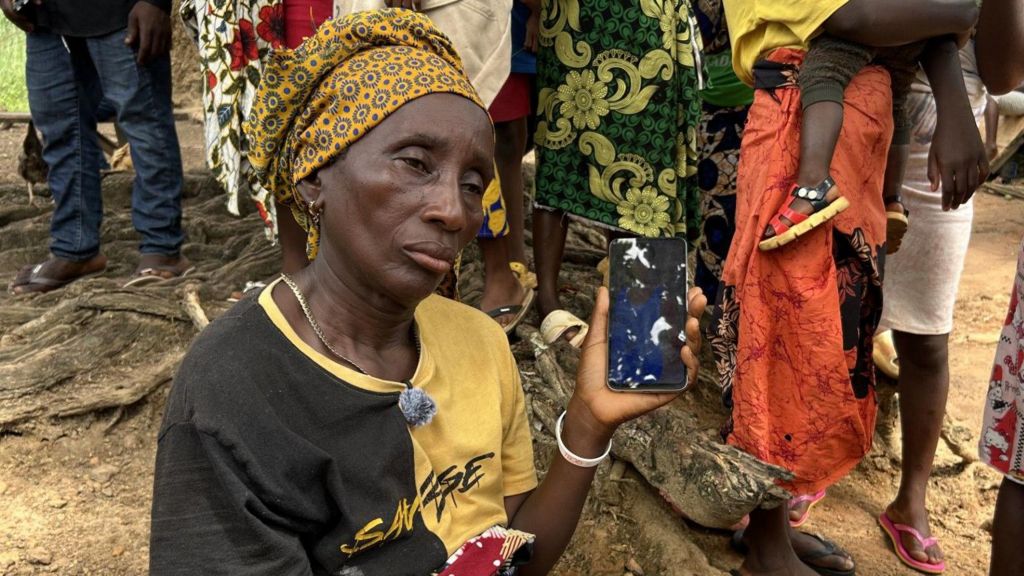
A profound sense of grief permeates the village of Nyimbadu in Sierra Leone’s Eastern Province, where two teenage boys—16-year-old Mohamed Bangura and 17-year-old Yayah Jenneh—were laid to rest after perishing in a collapsed gold mine. The makeshift excavation pit they were digging crumbled upon them, cutting short their lives in a tragic incident that underscores a growing humanitarian crisis.
This marks the third fatal mining accident in the region within four years, claiming at least five young lives. The phenomenon reflects a disturbing trend where increasing numbers of children are abandoning education to engage in perilous artisanal mining operations. As diamond reserves diminish throughout Eastern Province, informal gold mining has expanded dramatically, creating hazardous pits reaching depths of 4 meters (13 feet) with minimal structural support.
Namina Jenneh, Yayah’s widowed mother, now faces the impossible task of providing for her five remaining children alone. Though she herself worked in the mines and introduced her son to the practice, she never anticipated his final journey to the fatal site. “He didn’t tell me he was going to that site—if I had known I would have stopped him,” she lamented, scrolling through photographs of her bright-eyed son on her damaged mobile phone.
The economic desperation fueling this crisis is palpable. Most families in Nyimbadu survive through small-scale farming and petty trading, with few alternative income sources. Seventeen-year-old Komba Sesay, who dreams of becoming a lawyer, now spends his days sifting river sediment for gold to afford his high school examinations. His typical weekly earnings of $3.50 fall significantly below Sierra Leone’s minimum wage, yet rare discoveries yielding $35 keep hope alive amidst the danger.
The educational system suffers doubly as teachers likewise abandon classrooms for mining sites, their government salaries proving insufficient compared to potential mining windfalls. Roosevelt Bundo, headteacher at Gbogboafeh Aladura Junior Secondary School, confirms this troubling exodus affects both students and educators.
While Information Minister Chernor Bah emphasizes the government’s commitment to education—citing 8.9% of GDP allocated to educational initiatives including teacher support and school-feeding programs—implementation struggles against harsh economic realities. Charities and activists work to extract children from mines and reintegrate them into schools, but without viable economic alternatives, the gravitational pull of potential mining income remains overwhelming.
As mining camps evolve into full-fledged towns, the human cost continues to mount. Local child protection activist Sahr Ansumana summarizes the desperate plea of communities: “We need help. Not prayers. Not promises. Help.”