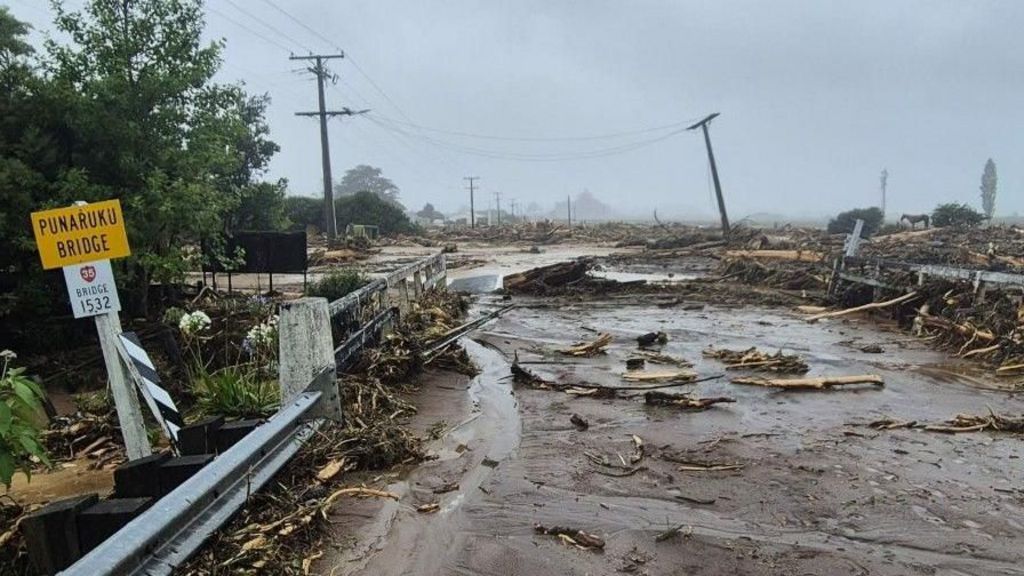
New Zealand’s North Island confronts a devastating natural disaster as catastrophic landslides triggered by unprecedented rainfall have claimed multiple lives, with several individuals still unaccounted for. The tragedy unfolded at two primary locations: Welcome Bay, where two fatalities were confirmed, and the popular Mount Maunganui campground, where rescue teams continue searching through debris with specialized equipment and sniffer dogs.
Authorities describe the campground search operation as occurring in a ‘complex and high-risk environment,’ with Urban Search and Rescue deputy commander Megan Stiffler emphasizing their commitment to achieving the ‘best possible outcome while keeping everyone safe.’ Despite continuous efforts through the night, officials report no signs of life detected in the rubble.
The geological instability at Mount Maunganui—an extinct volcano considered sacred by Māori people and frequently described as a ‘slice of paradise’—has been exacerbated by extreme weather conditions. The region received approximately three months’ worth of precipitation within a single day, resulting in widespread flooding, power outages affecting thousands, and additional evacuations due to fears of further landslides.
Eyewitness accounts paint a harrowing picture of the disaster’s immediate aftermath. Australian tourist Sonny Worrall recounted to TVNZ: ‘I heard this huge tree crack and all this dirt come off, and then I looked behind me and there’s this huge landslide coming down… I’m still shaking from it now.’ Local hiker Mark Tangney described hearing desperate screams from beneath the rubble that persisted for approximately thirty minutes before falling silent.
Prime Minister Christopher Luxon characterized the event as a ‘profound tragedy’ that has left the nation ‘heavy with grief.’ Emergency Management Minister Mark Mitchell noted the event impacted ‘almost our entire eastern seaboard of the North Island,’ drawing comparisons to a ‘war zone’ in its devastation.
The catastrophe occurs against a backdrop of increasing severe weather events in New Zealand, with scientists noting a pattern of intensifying storms during what are traditionally the sunnier months of December through February. The current disaster follows February 2023’s Cyclone Gabrielle, which remains the Southern Hemisphere’s costliest cyclone with damages exceeding NZ$13.5 billion.
As recovery efforts continue, individual stories of tragedy and resilience emerge, including that of a Kiribati fisherman who sacrificed his own safety to ensure his nephew’s survival when their vehicle was swept into the Mahurangi River.