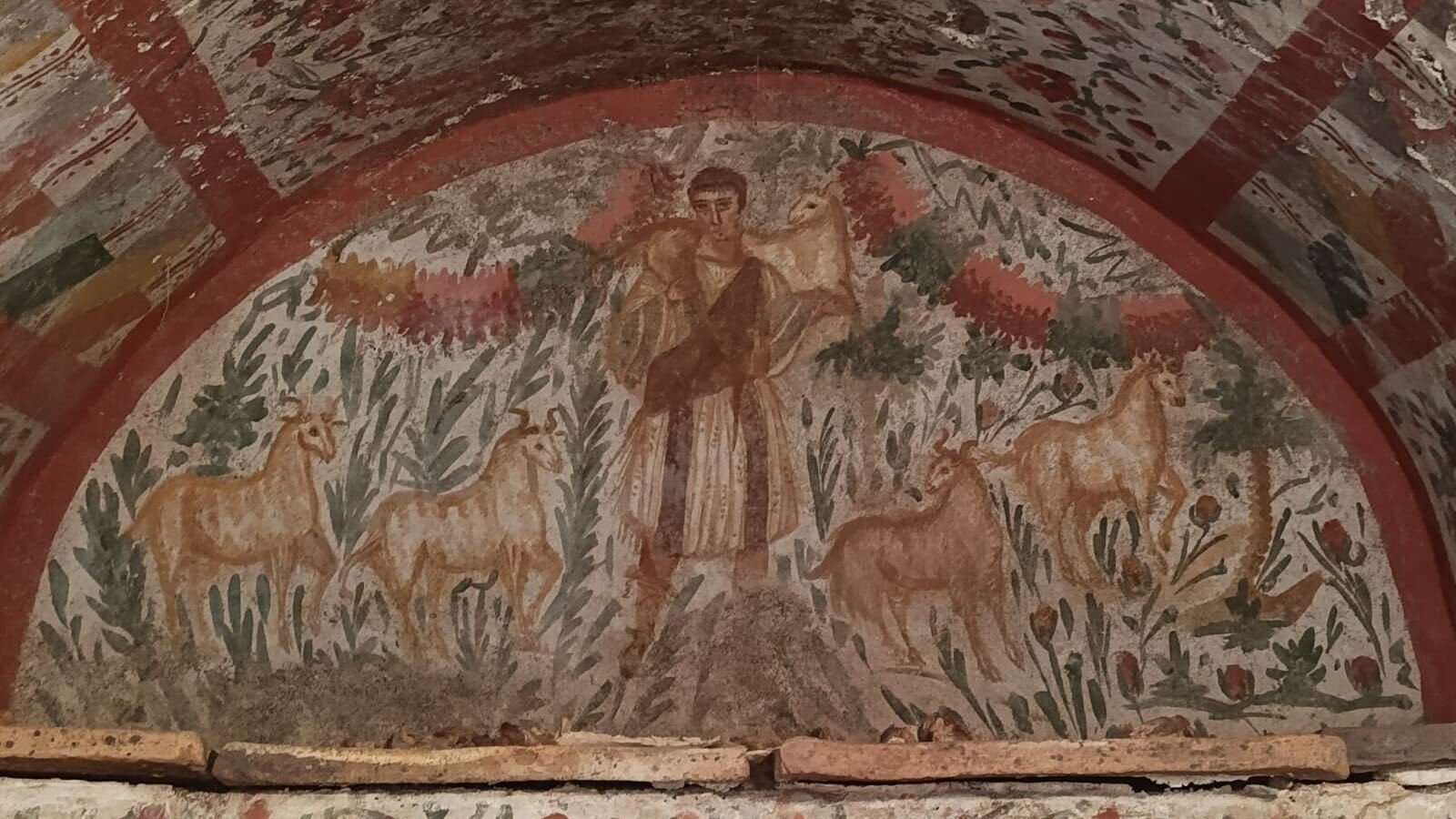
In a significant diplomatic gesture, Turkish President Recep Tayyip Erdogan unveiled a remarkable third-century Christian fresco to mark Pope Leo XIV’s inaugural foreign visit. The ancient artwork, discovered earlier this year in Iznik’s Hisardere Necropolis, represents one of the most exceptional early Christian archaeological finds in decades.
The fresco, dating to approximately 300 CE, depicts a beardless Christ as the Good Shepherd carrying a horned ram across his shoulders, flanked symmetrically by two goats. This portrayal represents a crucial transitional period between pagan and Christian artistic traditions. Turkish officials confirmed this specimen is the only known example of its kind outside Italy, with comparable depictions previously found only in Rome’s catacombs of Priscilla, Domitilla and Callixtus.
Archaeologists from the Iznik Museum and Turkish Ministry of Culture determined the burial chamber was actively used between the second and fifth centuries CE. Unlike other discovered painted tombs, this site features prominent human figures alongside traditional animal and vegetable motifs. The west wall portrays a married couple, likely the tomb’s occupants, depicted as aristocrats through their elaborate attire and adornments.
The papal visit coincides with the 1,700th anniversary of the First Council of Nicaea, which originally convened in what is now modern-day Iznik. This ecumenical council historically gathered bishops from across the Christian world to resolve foundational theological disputes. During his stay, Pope Leo will also tour the submerged remains of an ancient basilica in Lake Iznik, believed to be the actual site where the landmark council convened in 325 CE.
Experts note that Good Shepherd imagery was widely employed in Roman funerary art before becoming central to early Christian iconography. The symposium scene depicted within the tomb, while located in a Christian-era burial site, reflects persistent pagan funerary traditions symbolizing the afterlife as an eternal banquet.
Pope Leo and Ecumenical Patriarch Bartholomew of the Orthodox Church are expected to jointly commemorate the Nicaean Council anniversary in a demonstration of interfaith dialogue and historical recognition.