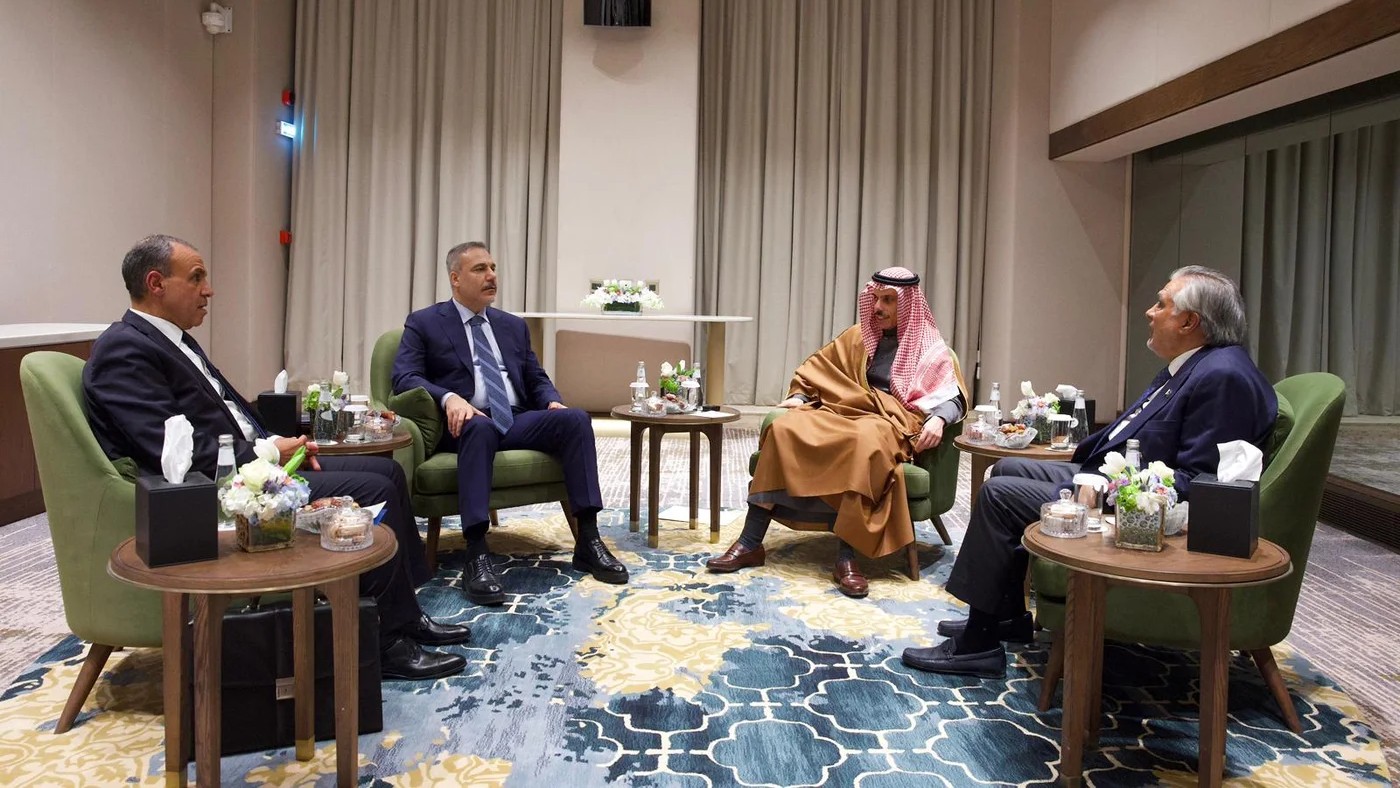
In a significant diplomatic development, the foreign ministers of Turkey, Saudi Arabia, Egypt, and Pakistan convened in Riyadh on Thursday to establish a groundbreaking regional security framework. The meeting, held alongside an Islamic countries summit, marked the first substantive discussions about combining these nations’ strategic capabilities to address regional challenges independently.
Turkish Foreign Minister Hakan Fidan articulated the initiative’s philosophy, emphasizing that regional powers must develop collective solutions to prevent external hegemony from imposing self-serving arrangements. ‘We are exploring how, as countries with a certain degree of influence in the region, we can combine our strengths to solve problems,’ Fidan stated on Saturday, underscoring the principle of regional ownership.
The emerging security platform represents a strategic pivot from Turkey’s earlier efforts to establish bilateral security arrangements. Since last year, Ankara has pursued a security pact with Pakistan and Saudi Arabia, with discussions reportedly ongoing for approximately twelve months. More recently, Turkish diplomatic sources confirmed efforts to incorporate Egypt into the arrangement, though officials clarify the agreement won’t mirror NATO’s mutual defense commitments but will instead facilitate enhanced cooperation in defense industries and broader security matters.
The ministerial discussions addressed pressing regional conflicts, including the escalating tensions between Israel and Iran, though the participating countries issued a statement notably critical of Tehran’s attacks on Gulf targets while making only brief reference to Israel’s ‘expansionist’ policies in Lebanon—a contrast to Ankara’s consistent characterization of Israel as the primary instigator of regional conflict.
Each nation brings distinct capabilities to the proposed alliance: Turkey’s advanced domestically-produced drone and missile systems, Pakistan’s nuclear deterrent, Saudi Arabia’s emerging technological hub status, and Egypt’s substantial conventional military forces and demographic weight as the Arab world’s most populous nation. The foundation for deeper Turkish-Egyptian cooperation was already established in February when both countries signed a bilateral military agreement during President Erdogan’s Cairo visit, accompanied by a $350 million defense export contract between Turkish arms manufacturer MKE and Egypt’s Ministry of Defense.