Turkish authorities are formulating contingency plans to establish a security buffer zone on Iranian territory should Tehran’s government face catastrophic collapse, according to exclusive reporting from Middle East Eye. This strategic consideration emerged during confidential briefings where senior foreign ministry officials outlined Ankara’s preparedness for multiple Iranian scenarios.
During Thursday’s parliamentary session, officials presented divergent accounts regarding the explicit use of “buffer zone” terminology. One participant confirmed the phrase was employed to describe preventive measures against potential refugee influxes, while another source noted officials emphasized extraordinary measures would be implemented within Iranian borders to manage displacement crises.
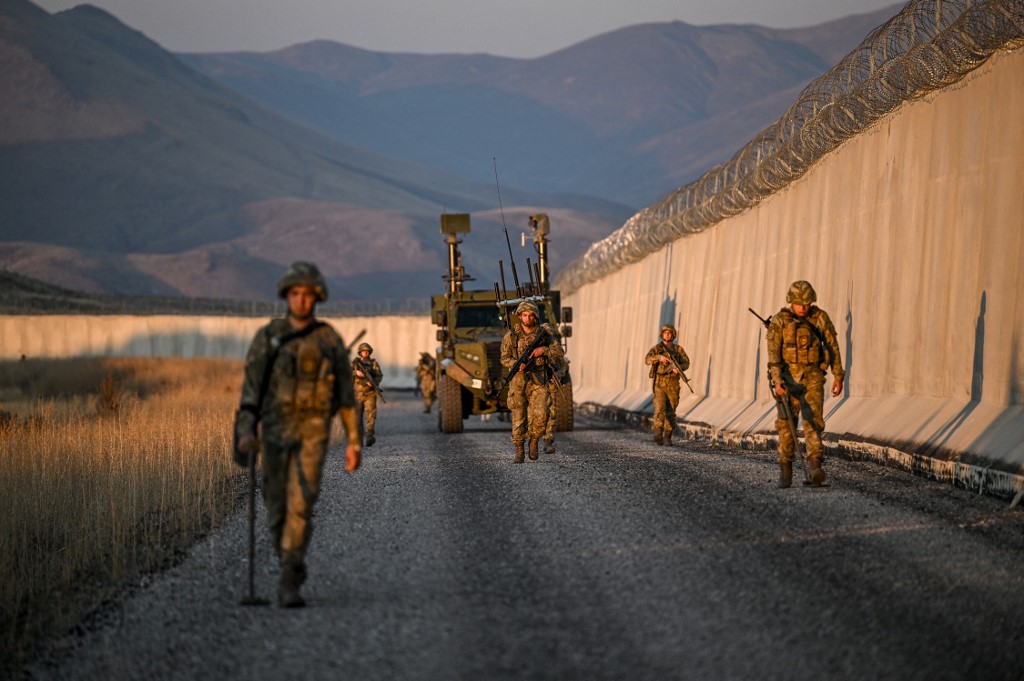
The border security enhancements already implemented include a sophisticated 560-kilometer barrier system featuring 246 surveillance towers, 380 kilometers of concrete walls, and 553 kilometers of defensive trenches. This infrastructure is supported by continuous drone and aerial monitoring capabilities.
Recent protests in Iran have resulted in significant casualties, with Turkish officials citing approximately 4,000 fatalities and 20,000 injuries during demonstrations triggered by economic deterioration and currency collapse. Despite some protester violence, evidence indicates Iranian authorities employed disproportionate force alongside internet blackouts.
Turkish Foreign Minister Hakan Fidan has explicitly opposed foreign intervention in Iran, urging diplomatic resolution through established channels. This stance contrasts with reported U.S. considerations of precision strikes against Iranian officials deemed responsible for protester deaths, accompanied by military deployments including the USS Abraham Lincoln carrier group to the region.
Ankara’s caution stems from direct experience with regional instability, having absorbed millions of refugees from neighboring conflicts in Iraq and Syria. Turkish society maintains heightened sensitivity toward refugee presence, with current policy shifting from previous open-door approaches to selective emergency admissions.
Complicating potential responses is Iran’s substantial Azerbaijani Turkish population exceeding 12 million, whose potential mass displacement could create domestic pressure for admission despite official policies.