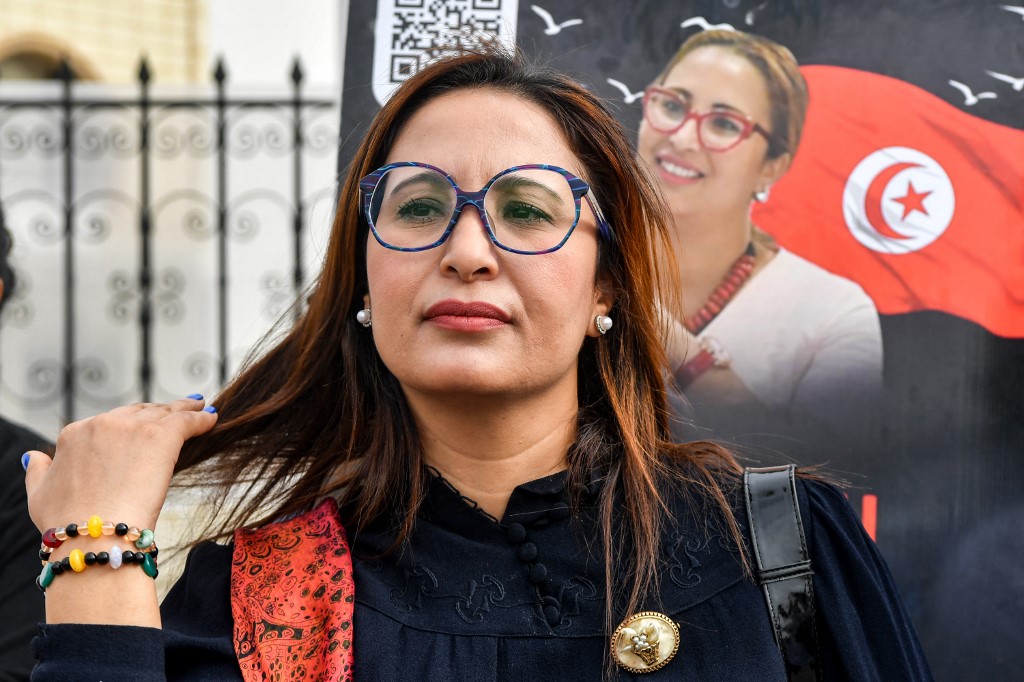
Prominent Tunisian opposition figure Chaima Issa has initiated a hunger strike in protest of alleged violent treatment during her arrest on Saturday, as reported by local media outlets. The human rights activist, according to her family, sustained a foot injury requiring medical attention during the detention process.
Issa’s arrest came to enforce a 20-year prison sentence delivered last Friday through a controversial mass trial appeal verdict. This judicial proceeding resulted in sentences ranging up to 45 years for dozens of government critics accused of “conspiracy against state security” and “affiliation with terrorist organizations.” The trial has drawn sharp condemnation from human rights organizations who characterize it as politically motivated and emblematic of a systematic campaign to suppress dissent.
The case involves 37 defendants, primarily detained since early 2023, who faced charges including meetings with foreign diplomats. The initial April trial concluded after merely three hearings without closing arguments, delivering severe sentences up to 66 years imprisonment. During Friday’s appeal, Issa’s sentence was increased from 18 to 20 years, mirroring similar enhancements for other notable opposition figures including Jawhar Ben Mbarek, Ghazi Chaouachi, Ridha Belhaj and Issam Chebbi.
Issa was apprehended during a downtown Tunis demonstration protesting the escalating suppression of dissent under President Kais Saied’s administration. Her lawyer, Samir Dilou, described to AFP how “plainclothes officers grabbed her and pushed her inside a vehicle” during the protest, questioning the necessity of such forceful methods given her previous compliance with judicial proceedings.
The current political climate traces back to President Saied’s 2021 constitutional coup that consolidated executive power. Since then, international and local NGOs have documented significant regression in rights and freedoms within the North African nation that sparked the Arab Spring. Numerous government critics have faced prosecution under terrorism charges and a 2022 presidential decree prohibiting “spreading false news.”
Issa, a journalist and activist who participated in the 2011 revolution that ousted longtime ruler Zine El Abidine Ben Ali, co-founded the Citizens Against the Coup collective and serves with the National Salvation Front (NSF). This primary opposition coalition, established around the Ennahda party that previously dominated post-revolution politics, has faced severe repression with its leader Rached Ghannouchi currently serving a cumulative 37-year sentence.
In a related development, co-defendant Jawhar Ben Mbarek suspended his 33-day hunger strike against what he termed “unjust” detention, citing encouragement from recent pro-democracy demonstrations. Mbarek’s health deteriorated severely during his strike, requiring eight hospitalizations and allegedly suffering violent force-feeding incidents that prompted formal torture complaints.
Tunisian political prisoners have consistently denounced prison mistreatment alongside judicial unfairness, regularly reporting humiliation and harassment within the correctional system.