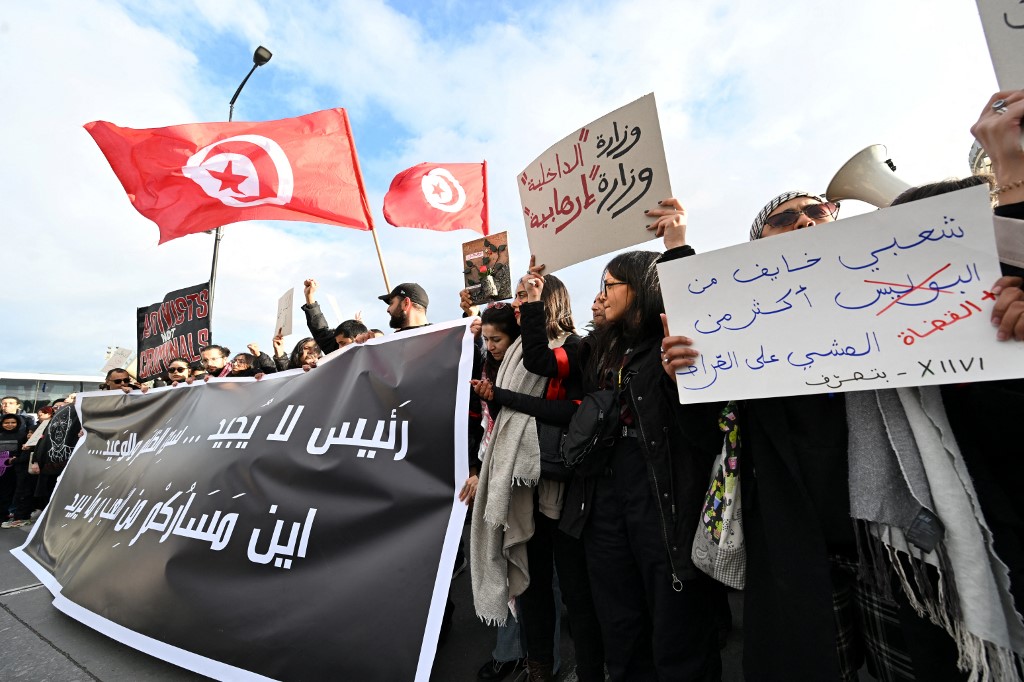
A Tunisian appellate court has confirmed severe prison sentences ranging from 10 to 45 years for approximately 40 opposition leaders and activists in a highly contentious case alleging conspiracy against state security and terrorist affiliations. The verdicts have drawn sharp international condemnation and raised serious concerns about judicial independence under President Kais Saied’s administration.
Among the most severe punishments, businessman Kamel Ltaief received a 45-year sentence (reduced from an initial 66 years), while opposition politician Khayam Turki was sentenced to 35 years. Surprisingly, several prominent figures—including Jawhar Ben Mbarek, Ghazi Chaouachi, Ridha Belhaj, Issam Chebbi, and human rights activist Chaima Issa—saw their sentences increased from 18 to 20 years on appeal.
The legal proceedings have been widely criticized by human rights organizations and international bodies. Volker Turk, the UN High Commissioner for Human Rights, denounced what he characterized as procedural violations and politically motivated prosecutions. Amnesty International’s Sara Hashash condemned the verdicts as ‘an appalling indictment of the Tunisian justice system,’ accusing the government of weaponizing judiciary mechanisms to suppress political dissent.
The case originated from allegations that defendants held meetings with foreign diplomats, which authorities interpreted as attempts to undermine national security. Most defendants have been detained since their arrests in spring 2023, with the initial trial concluding abruptly after just three hearings without permitting closing arguments.
In a concerning development, activist Jawhar Ben Mbarek has been on a hunger strike for one month protesting what he describes as arbitrary detention. Meanwhile, the court acquitted two defendants: Noureddine Boutar, director of private radio station Mosaique FM, and lawyer Lazhar Akremi.
The political context underscores these developments. Since President Saied’s 2021 power consolidation, which many characterized as a constitutional coup, Tunisia has experienced significant democratic backsliding. The European Parliament recently passed a resolution demanding the release of those imprisoned for exercising freedom of expression, which Saied rejected as ‘blatant interference.’
In a related development, lawyer and columnist Sonia Dahmani was conditionally released after 18 months’ detention under a presidential decree criminalizing ‘false information’ dissemination—a measure rights advocates argue is being applied with excessive breadth to silence critics.