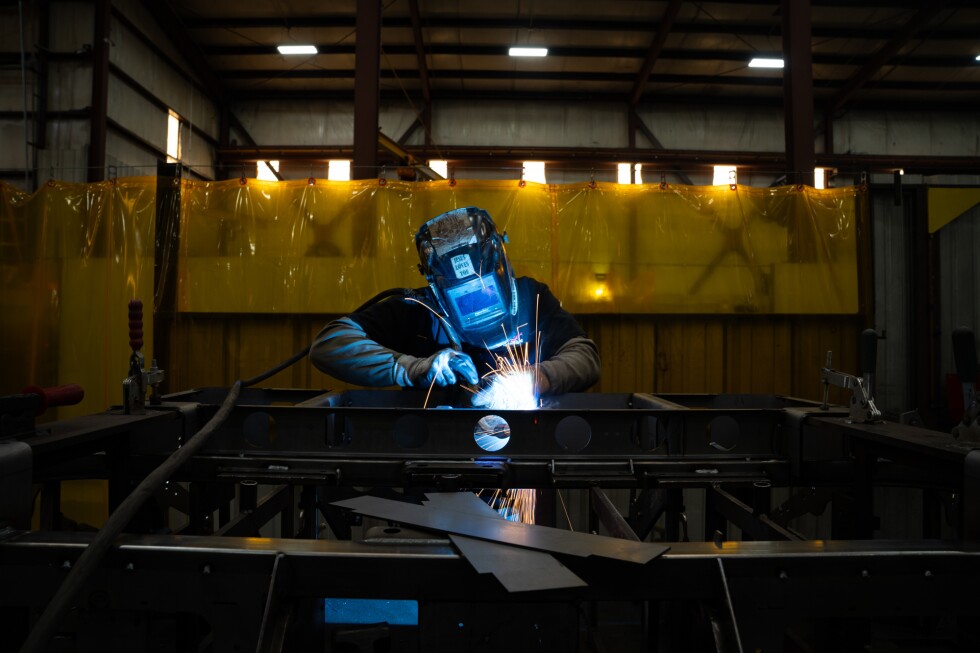
WASHINGTON — The implementation of tariff-centered economic policies under the Trump administration has generated severe unintended consequences for American manufacturing enterprises, contrary to their intended protective purpose. Jay Allen, an Arkansas-based manufacturer and initial supporter of President Trump, exemplifies this troubling trend as his industrial equipment company faces substantial operational challenges directly attributable to import taxes.
Allen Engineering Corp., which produces high-value concrete installation equipment, has experienced significant financial strain due to increased costs for essential imported components including engines, steel, gearboxes, and clutches. These tariff-induced cost escalations have forced the company to operate at a financial loss, reduce its workforce from 205 to 140 employees, and implement price increases of 8-10% on products that can reach $100,000 per unit.
Statistical evidence indicates a broader national pattern contradicting the administration’s manufacturing objectives. During President Trump’s first full year back in office, approximately 98,000 manufacturing jobs were eliminated nationwide. Additionally, American companies are currently pursuing litigation against the administration seeking over $130 billion in tariff reimbursements, while federal deficit projections continue to rise.
The White House maintains an optimistic outlook, with acting Council of Economic Advisers Chairman Pierre Yared emphasizing that factory revival requires time for production capabilities to develop fully. Administration officials point to elevated construction spending, increased factory construction hiring, and improved manufacturing productivity as indicators of eventual positive outcomes.
However, economic analysts note that current construction growth primarily stems from initiatives launched during the Biden administration, particularly the CHIPS and Science Act which provided substantial subsidies for computer chip manufacturing facilities. According to Skanda Amarnath of Employ America, manufacturing construction spending has actually declined during Trump’s presidency, with current activity largely reflecting completion of projects initiated under previous policies.
The fundamental uncertainty surrounding tariff implementation has created significant obstacles for manufacturing investment decisions. President Trump has enacted over 50 formal tariff actions alongside numerous informal threats, generating a complex landscape of announcements, reversals, exemptions, and legal challenges. This unpredictability discourages capital investment, as evidenced by Allen Engineering’s dilemma regarding a potential $20 million investment in domestic engine production amid uncertain trade policy longevity.
Academic analysis from University of Toronto economist Joseph Steinberg suggests that even under optimal conditions, manufacturing employment would require approximately a decade to recover to pre-tariff levels. The current environment, characterized by policy instability and limited international cooperation, falls substantially short of this ideal scenario.
Small and medium-sized manufacturers bear disproportionate burden from these policies, as they lack the lobbying influence and brand recognition of major corporations to mitigate tariff impacts. The Association of Equipment Manufacturers reports that America’s global manufacturing share significantly trails China’s, prompting calls for targeted tax credits and exemptions for components unavailable domestically at scale.
Steel tariffs implemented in March and increased to 50% in June have particularly affected equipment manufacturers. Glen Calder of Calder Brothers, a South Carolina-based asphalt equipment manufacturer, reported immediate 25% price increases on domestic steel preceding formal tariff implementation, with sustained elevated pricing thereafter.
Despite intended objectives to enhance competitiveness against China, U.S. manufacturing trade imbalances have worsened under current policies. China’s global trade surplus reached a record $1.2 trillion, highlighting structural limitations in the administration’s unilateral approach to trade policy. Lori Wallach of the American Economic Liberties Project notes that the avoidance of international cooperation and failure to build multinational coalitions has left American manufacturers at a competitive disadvantage in addressing fundamental issues like currency manipulation and subsidy enforcement.