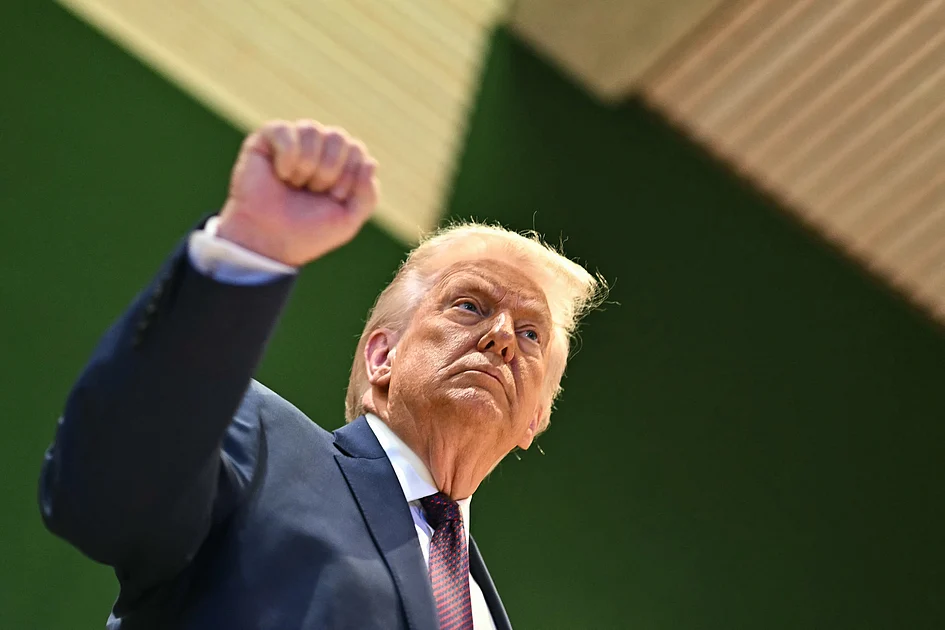
Washington witnessed the inaugural gathering of President Donald Trump’s newly established ‘Board of Peace’ on Thursday, an institution conceived with immediate focus on Gaza’s stabilization but designed with far broader geopolitical ambitions. The high-profile assembly brought together approximately two dozen world leaders and senior officials, notably including several of Trump’s authoritarian-leaning allies while conspicuously excluding traditional European democratic partners typically aligned with U.S. initiatives.
The board’s formation follows the Trump administration’s successful mediation of an October ceasefire in Gaza, achieved through collaborative diplomacy with Qatar and Egypt, which halted two years of devastating conflict. According to U.S. officials, the peace plan has now progressed to its second phase, prioritizing the disarmament of Hamas—the Palestinian group whose October 7, 2023 attack on Israel triggered massive military retaliation. Gaza’s Hamas-operated health ministry reports at least 601 casualties since the truce implementation.
Central to Thursday’s deliberations were substantial financial commitments exceeding $5 billion for Gaza’s reconstruction, where extensive infrastructure lies in ruins. President Trump has notably suggested developing resorts in the territory, drawing from his background as a property magnate. The meeting also advanced plans for an International Stabilization Force to ensure security, with Indonesia—the world’s largest Muslim-majority nation—expressing readiness to contribute up to 8,000 troops pending confirmation.
Israeli Prime Minister Benjamin Netanyahu emphasized the priority of disarming Hamas, specifically targeting AK-47 rifles as ‘the main weapon that has to go.’ Strategic affairs expert Jeremy Issacharoff acknowledged the complexity of disarmament while stressing that a credible pathway would determine the initiative’s viability. Meanwhile, Hamas spokesman Hazem Qassem urged the board to compel Israel to cease violations and lift its longstanding siege of Gaza.
The board’s operational framework grants Trump veto power and permanent leadership privileges even after leaving office, with permanent membership requiring a $1 billion contribution. The initiative has drawn criticism from analysts like Bruce Jones of the Brookings Institution, who described it as ‘a confused mix of ambition and narcissism, unleavened by any effort at intellectual coherence.’
The attendance roster reflected Trump’s diplomatic preferences, featuring Hungarian Prime Minister Viktor Orban and Argentina’s President Javier Millei, while traditional U.S. allies including France and Canada were notably absent. Japan remained undecided on membership, and Brazilian President Lula da Silva declined participation, criticizing the board as ‘a new UN where only [Trump] is the owner.’