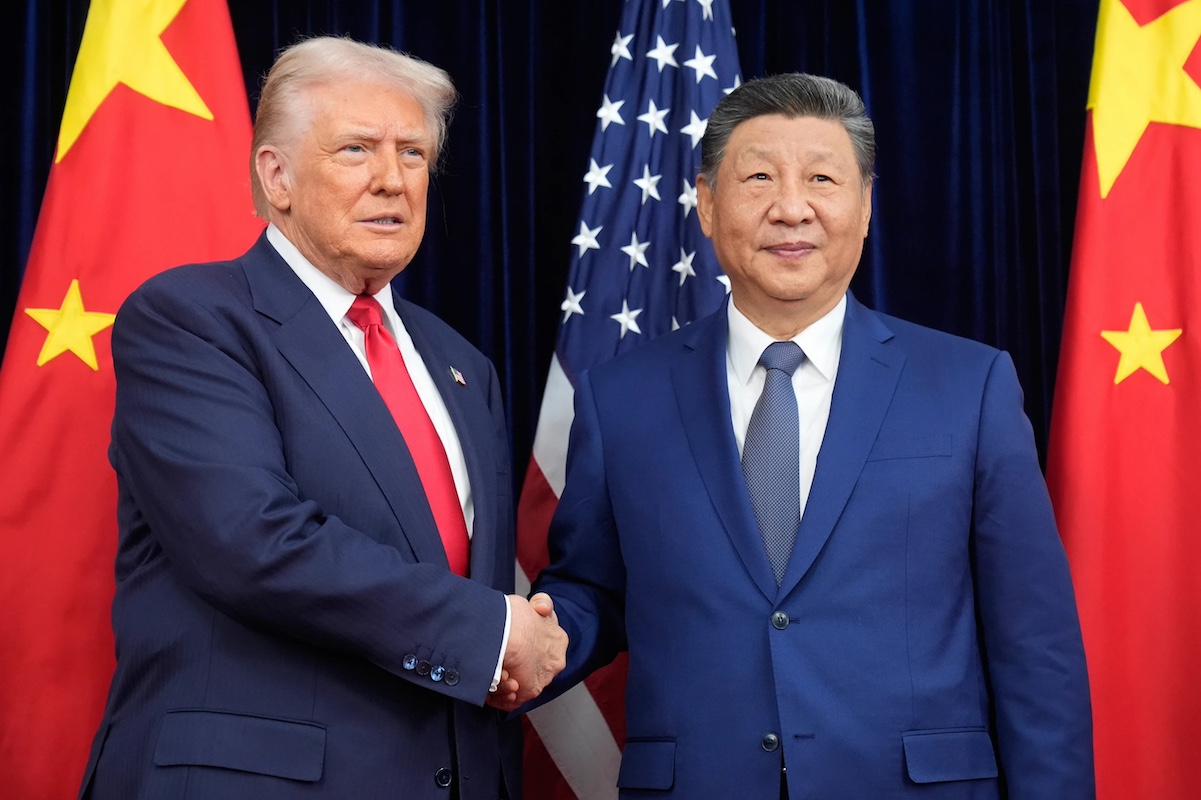
US President Donald Trump recently celebrated a trade agreement with Chinese President Xi Jinping, hailing it as a significant breakthrough. Trump announced a reduction in tariffs on Chinese goods to 47%, describing the meeting as “amazing.” However, the long-term impact of this agreement remains uncertain, with experts questioning its effectiveness in addressing the deep-rooted trade imbalances between the two nations.
The deal, characterized by vague terms and a lack of specific enforcement mechanisms, does little to alter the fundamental dynamics of the $659 billion trade relationship between the US and China. While the agreement includes measures such as increased soybean purchases and the flow of rare-earth minerals, it falls short of addressing the structural issues that contribute to America’s trade deficit with China.
Economists and analysts have expressed skepticism about the durability of the agreement. Ting Lu of Nomura Holdings noted that while the easing of tensions is positive, the rivalry between the two superpowers is likely to escalate in the future. Chang Shu of Bloomberg Economics echoed this sentiment, suggesting that the new reality of US-China relations is one of frequent disruptions and short-term fixes.
Goldman Sachs economist Jan Hatzius highlighted the unpredictability of the situation, stating that recent policy moves suggest a wider range of potential outcomes than previously anticipated. He suggested that the most likely scenario is a mutual pullback from aggressive policies and an indefinite extension of the tariff escalation pause reached in May.
Ali Wyne of the International Crisis Group observed that Trump views Xi as the head of a rival business rather than an imperial leader, which could lead to mutual restraint. However, Trump’s ambition to curb China’s rise lacks proportionality and could undermine long-term strategic goals.
Patricia Kim of the Brookings Institution emphasized that managing US-China relations requires ongoing strategic management rather than grand gestures. She noted that many of the core demands of both nations are irreconcilable, making a comprehensive agreement unlikely.
Meanwhile, China has been preparing for a post-Trump world by diversifying its trade relationships. Increased shipments to Europe, Southeast Asia, and the Global South have allowed China to mitigate the impact of US tariffs. Arthur Kroeber of Gavekal Dragonomics pointed out that Chinese exporters have developed workarounds, such as transshipment and relocating production to lower-tariff countries.
Despite these efforts, China’s Ministry of Commerce has criticized the US for overstretching national security concerns and imposing unilateral measures that harm China’s interests. The ministry reiterated China’s opposition to these actions, which have undermined the atmosphere of bilateral economic talks.
Trump’s trade policies, rooted in 1980s economic strategies, are increasingly out of sync with the global economy. As China invests in future technologies and the Global South forges its own path, the US risks losing its influence. Gilles Moec of AXA Investment noted that the world economy is splitting into competing groups, with companies reorganizing supply chains around countries with similar values or security concerns.
In conclusion, while Trump’s trade deal with China may provide temporary relief, it is unlikely to resolve the underlying tensions between the two nations. The global economic landscape is evolving, and the US must adapt to maintain its position in an increasingly fragmented world.