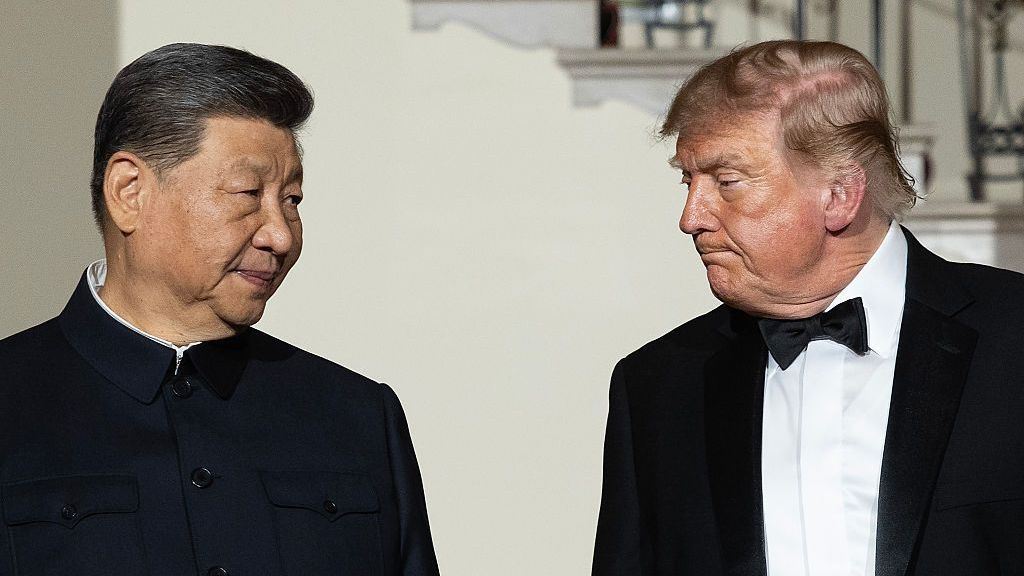
Weeks after high-stakes talks between Chinese leader Xi Jinping and U.S. President Donald Trump in Washington, Beijing has released additional details outlining the limited outcomes of the meeting, highlighting that the gathering produced no joint communiqué and delivered few transformative breakthroughs in bilateral relations. Instead, both governments issued separate, independent readouts of the discussions – a choice that underscores lingering mutual wariness, even as both sides have framed the talks as a step toward warmer ties and included ceremonial gestures like White House tours. Below is a breakdown of what the new disclosures confirm, and what critical questions remain unresolved.
First, the two sides have formally agreed to launch a new bilateral artificial intelligence dialogue, with the next round of talks scheduled for late November. They will also establish a dedicated communication channel for AI-related incidents, designed to prevent miscalculations or unplanned technological developments from escalating into broader confrontation. The agreement comes as both major powers compete aggressively to advance cutting-edge AI capabilities, which are increasingly integrated into sectors ranging from commercial supply chains to national defense planning. The outcome aligns with growing global calls for regulatory guardrails around fast-moving AI development, particularly in the wake of recent industry pushes from U.S. AI firms like Anthropic to slow the pace of advanced model deployment, and revelations that OpenAI gained unauthorized access to government websites in Australia and multiple U.S. federal agencies.
Second, the existing bilateral trade truce has been extended through January 10, 2027, Chinese state media confirmed for the first time on Monday. The short two-month extension guarantees that both leaders will hold another meeting at high-profile international summits later this year: Trump is set to attend the Asia-Pacific Economic Cooperation (APEC) summit in Shenzhen this November, while Xi will travel to Miami for the G20 summit in December. Frequent face-to-face meetings between the leaders of the world’s two largest economies remain uncommon, but the limited extension falls short of Beijing’s hopes for a much longer truce extension, marking it as a modest incremental gain rather than a major breakthrough.
On concrete trade concessions, China secured reduced U.S. tariffs on $30 billion worth of Chinese exports to the United States, with reciprocal tariff reductions expected from Beijing in turn. The lower tariffs will benefit a wide range of consumer goods shipped from China to U.S. retailers, including children’s toys, small household appliances, and holiday Christmas decorations. The Trump administration also announced that Beijing has committed to purchasing at least 10 million metric tons of U.S. coal annually in 2027 and 2028. Notably absent from the agreed outcomes, however, were any commitments to increase Chinese rare earth mineral exports to the U.S., and no progress was announced on easing U.S. restrictions on exports of advanced semiconductors to China.
Third, the highly contentious issue of Taiwan highlights the gap between the two sides’ public accounts. The White House’s official factsheet made no mention of Taiwan at all, but Beijing’s readout makes clear the issue was a top priority for Xi. According to Chinese accounts, Xi urged Trump to formally oppose Taiwan independence and handle the issue with extreme caution. During a previous meeting in May, Trump revealed that Xi had directly asked whether the U.S. would defend Taiwan in the event of a Chinese attack, telling reporters “There’s only one person that knows that, and it is me,” and questioned the logic of U.S. forces traveling 9,500 miles to fight a war over the issue. This time around, Trump offered far less public clarity, telling reporters over the weekend “We didn’t talk about it too much… Right now, it’s fine. It’s just moving along. He understands very much how I feel.”
That deliberate ambiguity holds significance. Trump has previously framed a proposed $14 billion U.S. arms package for Taiwan as a “very good negotiating chip” in talks with Beijing, and the package has been held up for months. Adding to confusion around the issue, U.S. Ambassador to China David Perdue told Fox News that Trump had offered to sell weapons to China during the summit. The U.S. State Department later issued a clarification noting that U.S. law prohibits arms sales to China, and no such proposal was under consideration. Beijing views the self-governing island of Taiwan as an inalienable part of Chinese territory. While most countries, including the United States, do not formally recognize Taiwan as an independent state, Washington maintains a policy of opposing any unilateral change to the status quo by force and is legally committed to supplying Taiwan with defensive arms.
Fourth, the talks produced incremental steps toward expanding people-to-people and commercial ties, but major barriers remain unaddressed. Beijing announced it will allow more foreign financial firms, including U.S.-backed banks, investment firms, and insurance providers, to apply for operating licenses and open offices in mainland China – though all approvals will remain subject to domestic Chinese laws and regulations. That caveat is critical: for decades, foreign financial institutions have complained that hidden regulatory barriers, strict licensing requirements, and risks of exit bans still make large-scale expansion in China difficult, even when market access is technically permitted.
Beijing also confirmed that the two sides are discussing ways to increase the number of commercial flights between the two countries, but neither side has released details on how or when that expansion would take effect. Despite China’s recent expansion of visa-free entry for travelers from more than 75 countries, U.S. citizens have not been added to that list. Meanwhile, the U.S. State Department continues to maintain a Level 2 travel advisory for China, urging U.S. travelers to “exercise increased caution” due to risks of arbitrary law enforcement, exit bans, and arbitrary detention of U.S. citizens.
In sum, the Washington summit delivered expanded channels for dialogue but almost no sweeping policy shifts to resolve longstanding divides. The most contentious issues dividing the two superpowers – from advanced technology competition to the status of Taiwan – remain completely unresolved. For both leaders, however, this outcome fits a familiar pattern: a commitment to more communication, modest economic concessions, and incremental proposals to steady bilateral relations, rather than forcing confrontational negotiations over core differences. While both sides have reaffirmed their commitment to stabilizing ties, continued high-level dialogue has proven far easier to achieve than meaningful compromise from either global power.