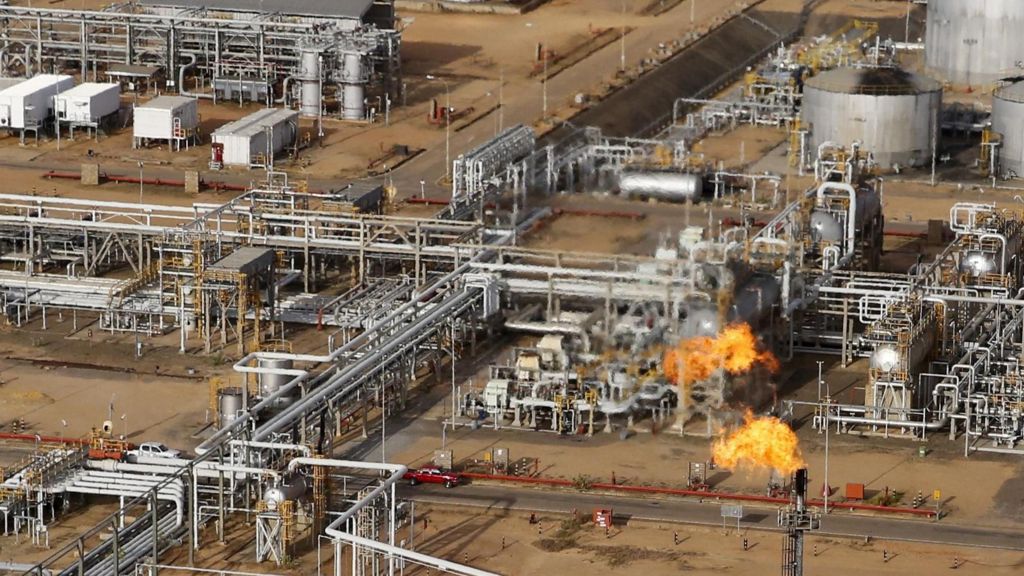
In a bold geopolitical maneuver, former President Donald Trump has declared intentions to harness Venezuela’s vast oil reserves following the capture of President Nicolás Maduro, proposing to fundamentally “run” the nation’s energy sector. His strategy envisions injecting billions of American corporate investments to revitalize the country’s crippled oil infrastructure, which he describes as “badly broken,” and ultimately generate revenue for Venezuela.
Venezuela possesses the world’s largest proven crude oil reserves, estimated at 303 billion barrels. However, current production tells a different story. Output has plummeted to a mere 860,000 barrels per day as of November, a stark decline from historical levels and representing less than 1% of global oil consumption. This collapse is largely attributed to decades of state mismanagement, underinvestment, and sweeping U.S. sanctions initially imposed in 2015 over human rights allegations.
Energy analysts and economists are casting significant doubt on the feasibility of Trump’s plan. Callum Macpherson, Head of Commodities at Investec, identifies infrastructure decay as the primary obstacle. Homayoun Falakshahi, a senior commodity analyst at Kpler, emphasizes that legal and political stability are paramount; no drilling agreements can be secured until a new, stable government succeeds Maduro. This would leave companies gambling billions on the future political climate.
The financial and temporal scale of the challenge is monumental. Experts at Capital Economics, including Group Chief Economist Neil Shearing, warn that restoring Venezuela’s former output would require tens of billions of dollars and potentially up to a decade of work. Consequently, any impact on global oil supply and prices in the near future would be negligible. Shearing further notes that even a return to production levels of 3 million barrels per day would not place Venezuela among the world’s top ten oil producers.
Currently, Chevron stands as the sole U.S. oil producer operating in Venezuela, doing so under a special license granted during the Biden administration. The company, responsible for approximately 20% of the country’s extraction, has stated its focus remains on employee safety and regulatory compliance. While other major firms have remained publicly silent, analysts suggest internal discussions are undoubtedly underway, weighing the enormous resource potential against the profound political and investment risks.