A severe transatlantic diplomatic crisis has erupted following President Donald Trump’s announcement of punitive tariffs against eight allied nations in response to their opposition to his proposed acquisition of Greenland. The unprecedented move, declared via Trump’s Truth Social platform on Saturday, threatens a 10% tariff on goods from Denmark, Norway, Sweden, France, Germany, the United Kingdom, the Netherlands, and Finland, effective February 1st, with potential escalation to 25% by June if no agreement is reached.
The announcement triggered immediate and forceful condemnation from European leaders. UK Prime Minister Keir Starmer denounced the tariffs as “completely wrong,” while French President Emmanuel Macron labeled them “unacceptable.” Swedish Prime Minister Ulf Kristersson explicitly stated, “We won’t let ourselves be blackmailed,” highlighting the collective European defiance against what many perceive as economic coercion.
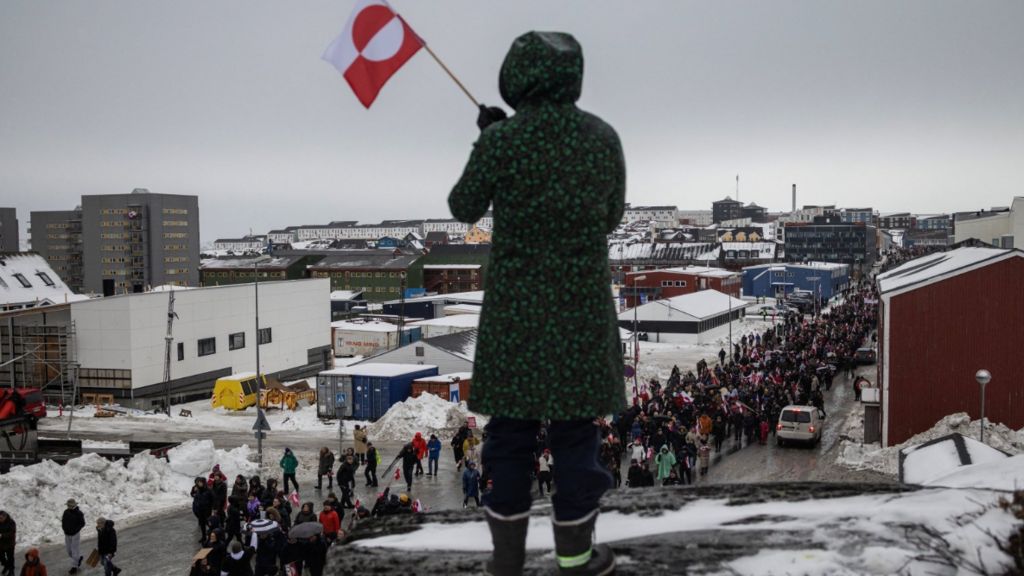
Simultaneously, thousands of protesters mobilized across Greenland and Denmark, waving placards with messages like “Hands Off Greenland” and “Greenland is not for sale.” Greenlandic Prime Minister Jens-Frederik Nielsen joined demonstrations in Nuuk, marching toward the U.S. consulate. Polls indicate approximately 85% of Greenlanders oppose joining the United States, reinforcing the territory’s desire for self-determination.
President Trump justifies the acquisition push by emphasizing Greenland’s strategic importance for U.S. national security, citing its resource wealth and critical location between North America and the Arctic for missile detection and regional monitoring. He has previously stated Washington would acquire the territory “the easy way or the hard way,” refusing to rule out military force.
The European response has extended beyond rhetoric. Several nations, including France, Germany, and the UK, have dispatched troops to Greenland on a ‘reconnaissance mission,’ arguing that Arctic security should remain a collective NATO responsibility. Furthermore, the tariff threat has jeopardized the recently negotiated EU-US trade deal, with German MEP Manfred Weber announcing that its ratification must now be put on hold.
This escalation comes despite recent diplomatic efforts, including the establishment of a high-level working group between U.S. and Danish officials, which many had hoped would de-escalate tensions. Instead, Trump’s actions have injected renewed urgency into the crisis, severely straining relations with key NATO allies and trading partners and creating one of the most significant diplomatic confrontations in recent transatlantic history.