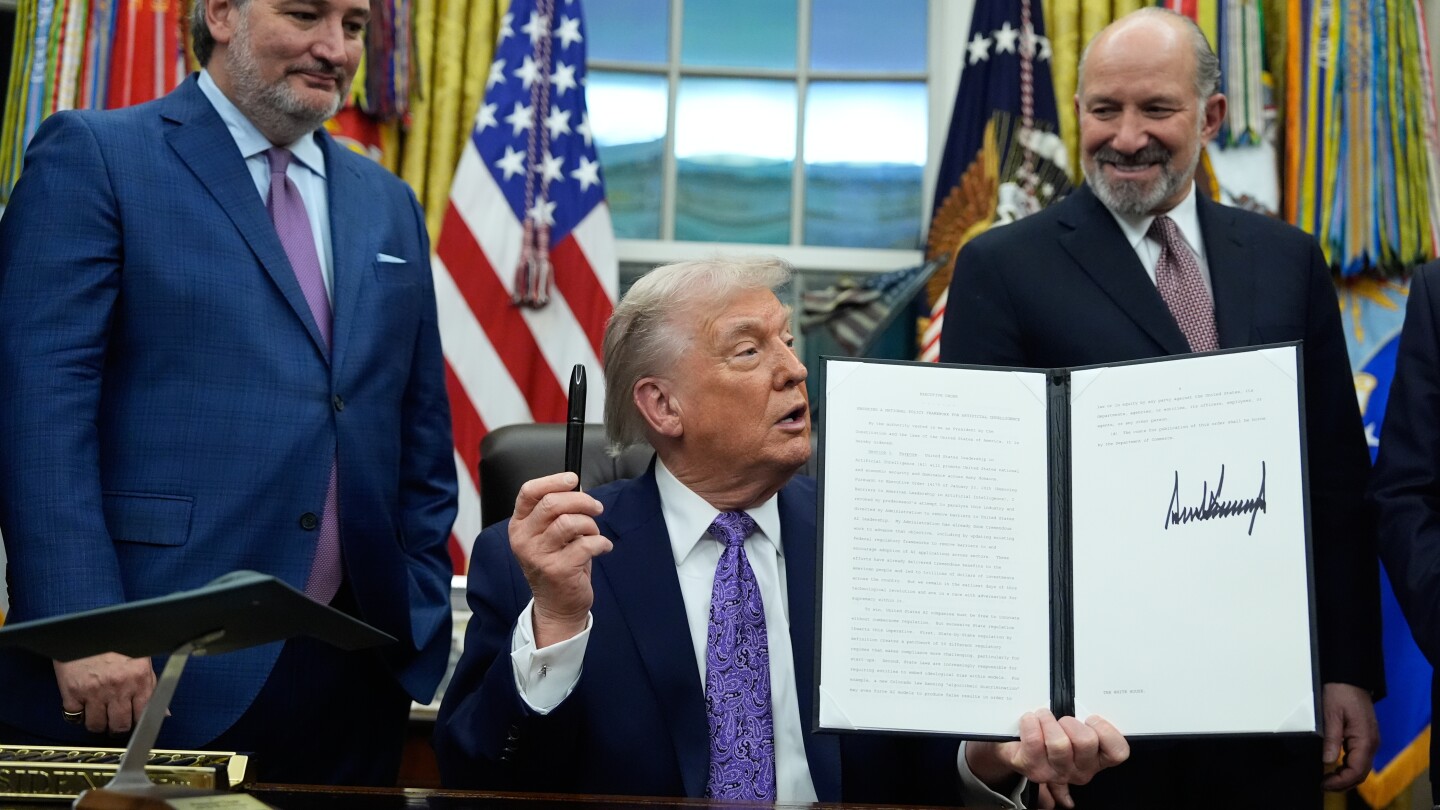
In a significant move to centralize artificial intelligence governance, President Donald Trump signed an executive order on Thursday establishing federal preemption over state-level AI regulations. The administration contends that fragmented state laws would create compliance obstacles for American companies competing against Chinese rivals in the global AI dominance race.
During an Oval Office briefing, President Trump emphasized the competitive dimension: ‘There’s only going to be one winner in artificial intelligence. China’s centralized approval system gives their companies a decisive advantage. If our innovators need 50 different state approvals, they cannot compete effectively.’
The order mandates Attorney General William Barr to establish a task force specifically charged with challenging existing state AI laws through judicial avenues. Concurrently, the Commerce Department will identify regulations deemed detrimental to AI development. States maintaining non-compliant regulations face potential restrictions on federal broadband deployment funds and other grant programs.
David Sacks, a venture capitalist overseeing Trump’s AI and cryptocurrency policies, clarified the administration’s targeted approach: ‘We will oppose the most burdensome regulatory examples but maintain support for reasonable child safety measures.’
This federal intervention responds to regulatory actions already implemented by four states—Colorado, California, Utah, and Texas—which have enacted comprehensive AI legislation governing private sector applications. These laws primarily address data collection limitations, algorithmic transparency, and discrimination prevention in consequential decisions affecting employment, housing, lending, and healthcare.
The state initiatives emerged from documented AI deficiencies, including demonstrated biases in gender and racial preferences within automated decision-making systems. Beyond comprehensive frameworks, numerous states have enacted targeted AI restrictions concerning election deepfakes, nonconsensual pornography, and government AI usage standards.
Civil liberties organizations and bipartisan congressional members have consistently advocated for stronger AI oversight, arguing current frameworks insufficiently address the technology’s societal impacts. The executive order establishes a clear federalist conflict between state consumer protection objectives and the administration’s national competitiveness agenda.