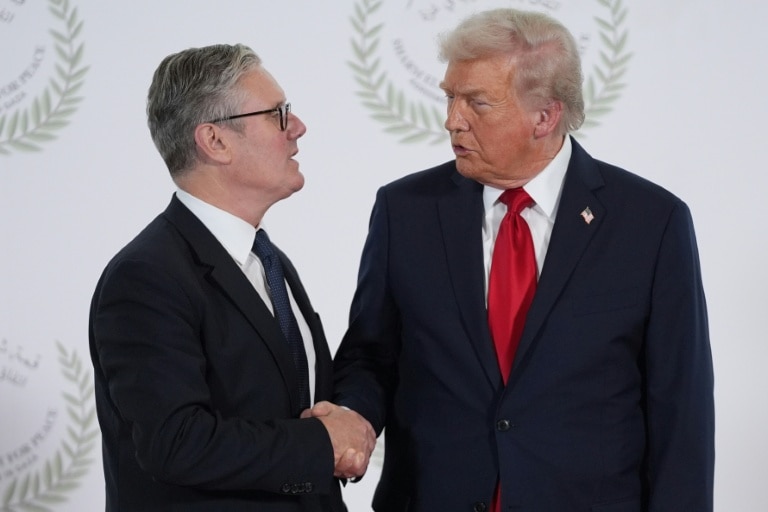
Former US President Donald Trump has delivered a stark assessment of American-British relations, declaring the historically robust alliance between the two nations is fundamentally diminished. Trump’s criticism directly targets British Prime Minister Keir Starmer, whom he accused of being uncooperative during recent US-Israeli military operations against Iran.
The diplomatic friction emerged when Starmer initially refused British involvement in Washington’s conflict with Iran, telling Parliament his government rejects the concept of ‘regime change from the skies.’ Though Starmer later authorized limited use of two British military bases for defensive purposes at US request, the hesitation provoked Trump’s ire.
In an interview with The Sun newspaper, Trump expressed disappointment: ‘This was the most solid relationship of all. I never thought I’d see that from the UK. We love the UK, but it’s just a much different kind of relationship.’
The tension occurs against a complex geopolitical backdrop. British officials remain haunted by the legacy of the Iraq War, with Government Minister Darren Jones explicitly referencing learned lessons from ‘the mistakes of Iraq.’ Starmer’s government insists any military cooperation must have clear legal basis and serve British national interests.
Meanwhile, security concerns escalate as Iranian-made drones attacked a Royal Air Force base in Cyprus, though officials confirmed the facility wasn’t being used by US bombers. UK media reports indicate the government is considering deploying HMS Duncan, a Type 45 destroyer recently trained in drone interception, to the region.
Foreign policy experts suggest Starmer faces a delicate balancing act. Richard Whitman of the University of Kent warned Trump’s comments might signal a ‘new, not-so-special relationship,’ while think tank director Evie Aspinall noted the critical importance of maintaining US cooperation regarding Ukraine and other global issues.
Despite the tensions, Starmer’s spokesman maintained that ‘the UK and US remain staunch allies,’ emphasizing decades of cooperation on national security and trade. The relationship, historically built on defense cooperation and intelligence sharing since World War II, now enters a potentially transformative phase.