The strategic significance of Greenland, the world’s largest island situated predominantly above the Arctic Circle, has catapulted it into the center of international geopolitical discourse. This mineral-rich autonomous Danish territory finds itself at the confluence of climate change, global security concerns, and economic competition among world powers.
Greenland’s geographical positioning northeast of Canada, with over two-thirds within the Arctic Circle, has made it strategically vital since World War II when U.S. forces occupied it to prevent Nazi control. The ongoing thinning of Arctic ice due to climate change is opening new shipping routes and access to previously inaccessible resources, reigniting international competition.
The island contains substantial deposits of rare earth minerals essential for modern technology, from smartphones to renewable energy infrastructure. This resource wealth has attracted significant attention from Western nations seeking to counter China’s market dominance in these critical materials.
U.S. military presence remains established through the Pituffik Space Base, operating under the 1951 Defense of Greenland Treaty with Denmark. This facility supports missile warning systems and space surveillance operations for both U.S. and NATO forces. Greenland also serves as a critical monitoring point in the GIUK Gap, where NATO tracks Russian naval movements in the North Atlantic.
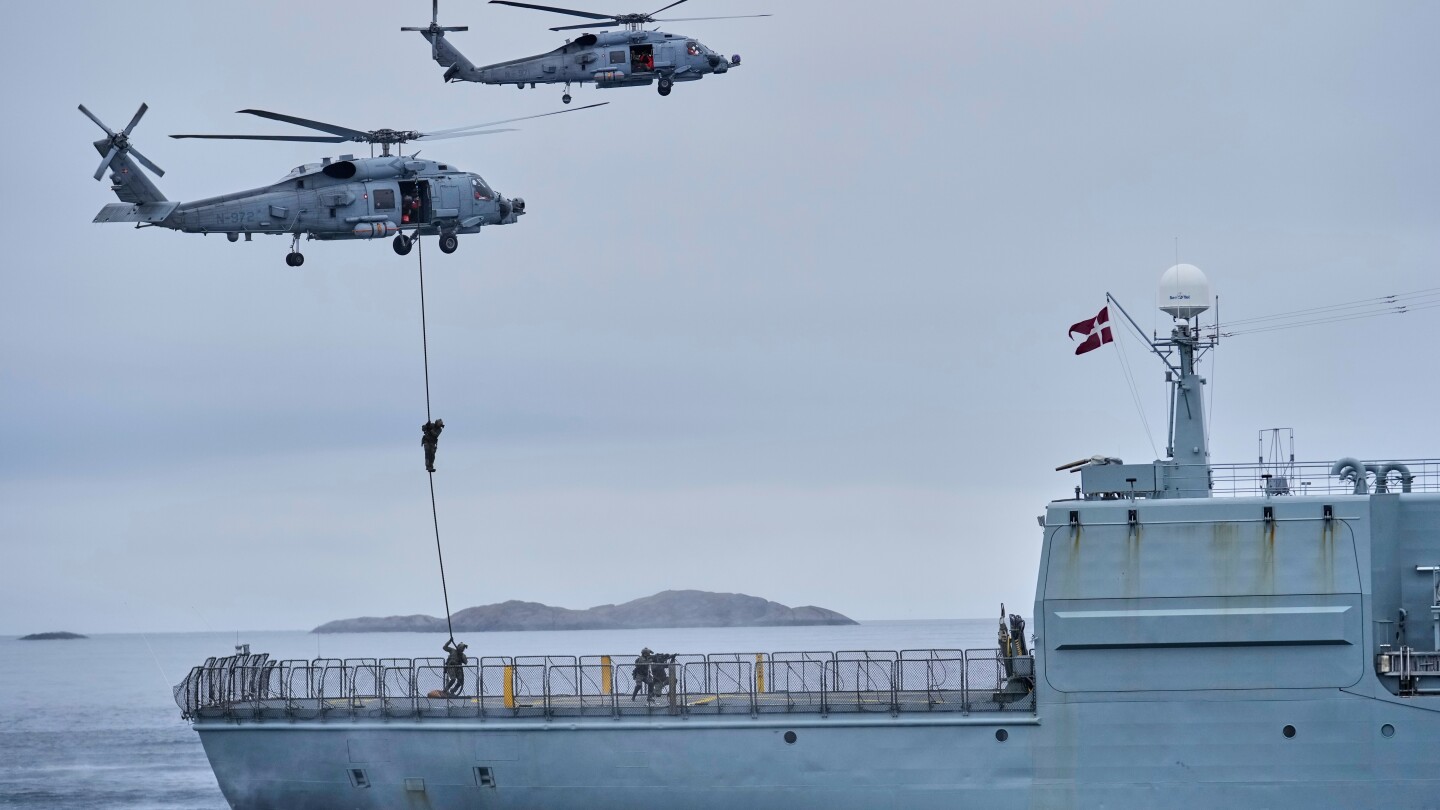
In response to growing regional tensions, Denmark has announced a substantial $2.3 billion investment to enhance surveillance and sovereignty capabilities in Greenland and the Faroe Islands. This includes deploying new Arctic naval vessels, long-range drones, and satellite capacity. The Danish Joint Arctic Command, headquartered in Nuuk, maintains sovereignty operations alongside the elite Sirius Dog Sled Patrol that conducts reconnaissance missions.
Recent years have seen increased geopolitical maneuvering, with China declaring itself a ‘near-Arctic state’ and proposing a ‘Polar Silk Road’ as part of its Belt and Road Initiative. Meanwhile, Russia has expressed concerns about NATO’s Arctic activities and pledged to strengthen its military capabilities in the region, particularly following its 2022 invasion of Ukraine.
The local population of approximately 56,000 predominantly Inuit people maintain their right to self-determination, with both the Greenlandic and Danish governments having rejected external acquisition attempts. Environmental challenges and strict regulations continue to complicate mineral development despite the island’s resource potential.