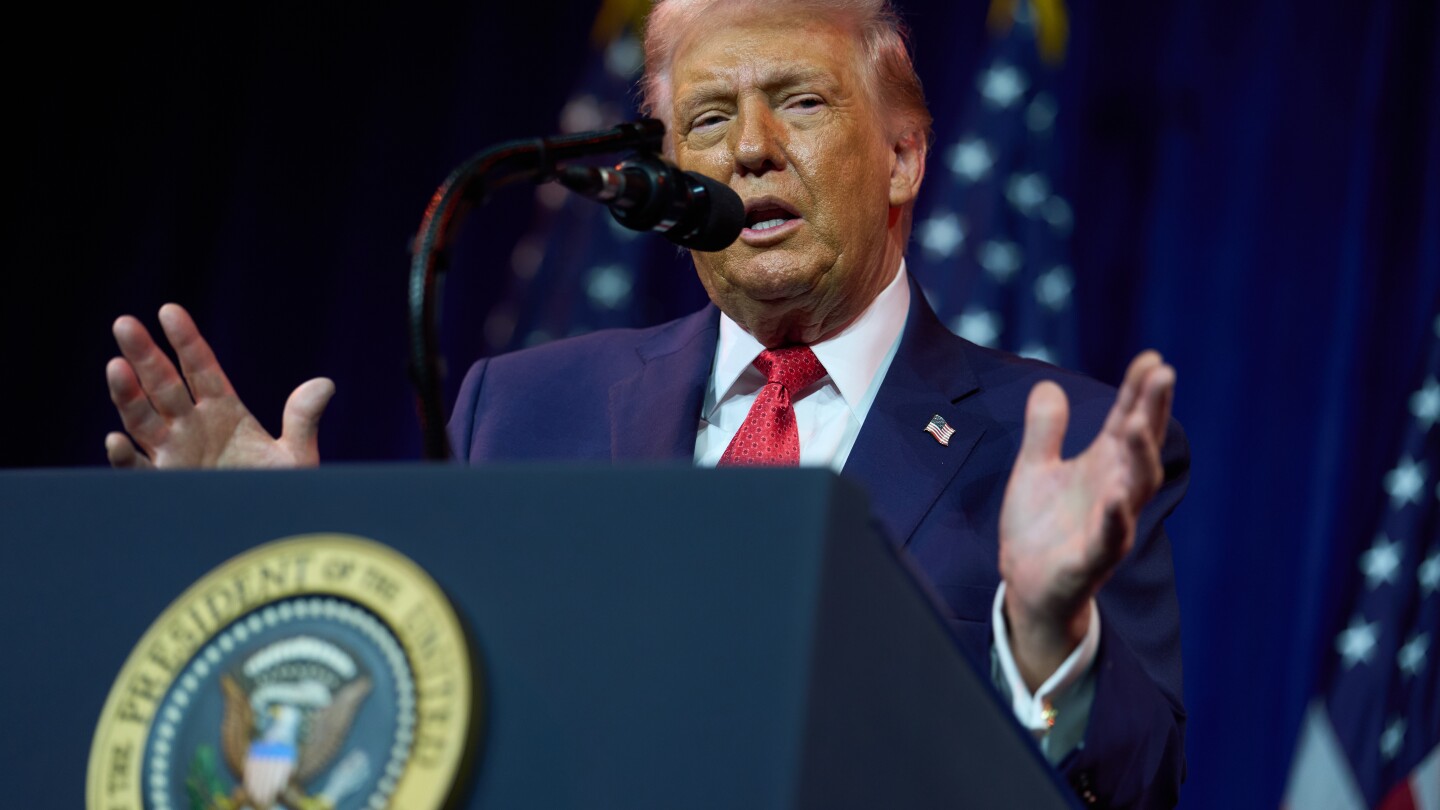
WASHINGTON — In a significant policy announcement, President Donald Trump has unveiled an ambitious proposal to escalate United States military expenditure to an unprecedented $1.5 trillion by 2027. The declaration, made via his Truth Social platform on Wednesday, frames this monumental budget surge as an essential response to contemporary global threats that characterize what he termed “troubled and dangerous times.”
The proposal arrives amidst a series of assertive geopolitical maneuvers by the Trump administration. These include a recent military operation aimed at apprehending Venezuelan leader Nicolás Maduro to face drug trafficking charges in the U.S., which has resulted in a continued massing of American forces in the Caribbean Sea. Furthermore, the President has expressed strategic interest in acquiring Greenland from Denmark for national security purposes and has hinted at potential military engagements in Colombia. Echoing this hardened stance, Secretary of State Marco Rubio issued a stark warning concerning Cuba, indicating a period of intensified foreign policy pressure.
President Trump justified the colossal funding increase, a significant jump from the 2026 budget of $901 billion, by stating it would enable the construction of a ‘Dream Military’ to ensure national safety and security. He attributed the financial feasibility of this plan to heightened revenue streams generated by his administration’s widespread tariff policies imposed on both allied and adversarial nations since his return to office.
Concurrently, the administration has adopted a confrontational posture toward the defense industry. President Trump explicitly threatened to sever Pentagon contracts with major defense contractor Raytheon unless it ceases its stock buyback programs and redirects profits toward expanding its weapons manufacturing infrastructure. This ultimatum, delivered on social media, criticized defense firms for perceived delays in critical weapons deliveries while simultaneously rewarding investors and executives with substantial dividends and salaries.
The financial markets reacted promptly to this aggressive rhetoric, with shares of leading defense contractors like Northrop Grumman, Lockheed Martin, and RTX Corp. (Raytheon’s parent company) experiencing notable declines. This series of announcements signals a profound shift in U.S. defense strategy, prioritizing massive budgetary expansion and demanding greater industrial capacity from private sector partners.