President Donald Trump’s State of the Union declaration that the U.S. “obliterated” Iran’s nuclear program stands in stark contrast to his administration’s current warnings about Tehran’s rapid nuclear reconstitution, exposing a fundamental contradiction in White House rhetoric. This paradoxical positioning emerges as the administration appears to be constructing new justifications for potential military action against Iran.
Senior administration officials, including Trump’s envoy Steve Witkoff, now assert Iran could be “a week away from having industrial grade bomb making material” – a claim experts find irreconcilable with earlier assertions of complete destruction. The discrepancy highlights what analysts describe as an increasingly concerning pattern of escalation.
The June 2025 joint U.S.-Israeli operation, dubbed “Midnight Hammer,” targeted three Iranian nuclear facilities at Fordow, Natanz, and Isfahan. While Trump initially celebrated the operation as concluding the Iranian nuclear threat, his own Pentagon assessed the strikes merely set back Iran’s program by up to two years. Current intelligence suggests no evidence of renewed uranium enrichment activities.
Recent weeks have witnessed a strategic pivot in administration rhetoric, with officials now emphasizing Iran’s ballistic missile capabilities as potential justification for conflict. Trump specifically referenced developing missiles that could threaten Europe and eventually reach U.S. territory, despite Defense Intelligence Agency assessments indicating Iran remains years away from viable intercontinental capabilities.
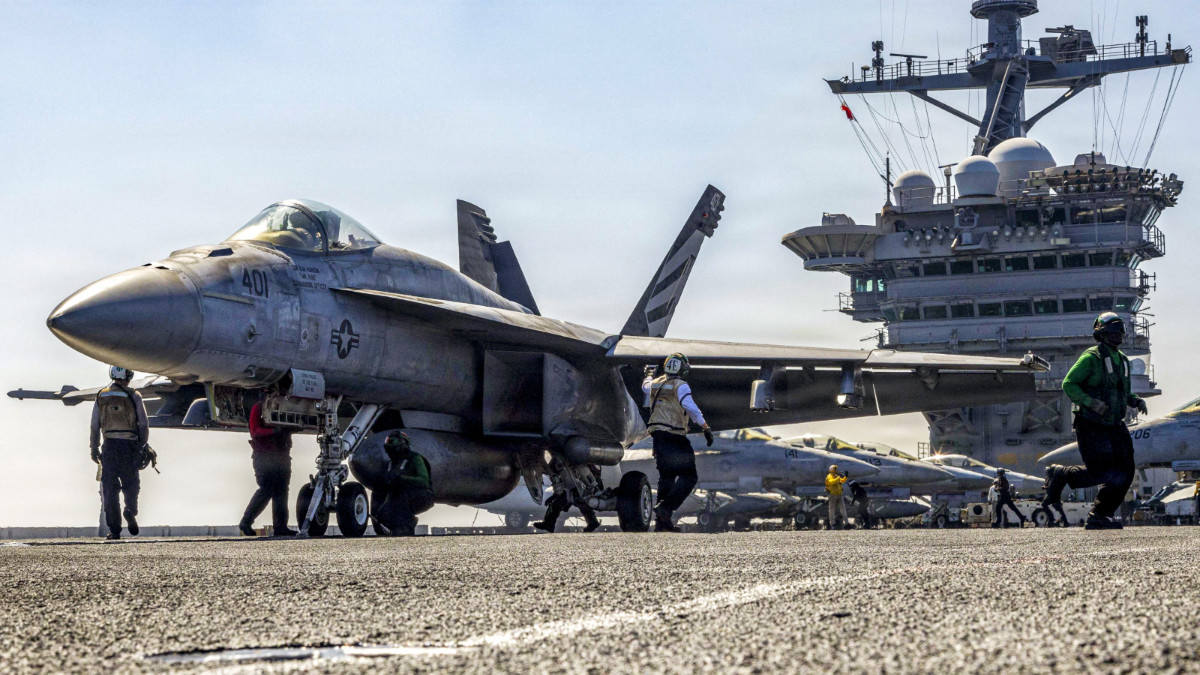
The military context reveals substantial U.S. force deployment to the region, including two aircraft carrier strike groups and advanced fighter squadrons – the largest concentration of American military assets in the Middle East since the 2003 Iraq invasion. This buildup began during Iranian domestic protests in January, with Trump encouraging demonstrators to “take over government institutions.
Political analysts point to significant Israeli influence, particularly following Prime Minister Benjamin Netanyahu’s December White House visit. The Israeli government, having successfully degraded Iran’s air defenses in previous operations, now reportedly seeks U.S. action against Iran’s missile programs, which proved effective during recent conflicts.
Domestically, the administration faces limited public appetite for conflict, with University of Maryland polling showing only 21% of Americans support war with Iran. Even among Republican voters, support barely reaches 40%. Despite this, experts suggest Trump’s personal commitment to avoiding perceived weakness, particularly comparisons to President Obama’s Syria policy, may drive escalation.
The administration’s negotiation posture, led by Witkoff and Jared Kushner, appears premised on Iranian capitulation rather than mutual compromise. This approach, combined with the regime change discussions reportedly occurring within administration circles, creates a dangerous environment where miscalculation could trigger conflict, potentially fulfilling the objectives of interventionist factions in Washington and Jerusalem.