For decades, U.S. presidents have quietly shaped political outcomes in other countries through covert channels, behind-the-scenes diplomacy, and carefully coded public statements. But in his second term, former President turned current President Donald Trump has upended longstanding American norms, throwing open the doors to overt, aggressive intervention in foreign electoral contests on a scale unmatched by any of his predecessors. From Eastern Europe to Latin America to East Asia, Trump has deployed the full weight of his office and the allure of U.S. economic power to elevate ideologically aligned far-right and conservative candidates, breaking with a centuries-old tradition of discreet U.S. non-interference in other nations’ domestic political processes.
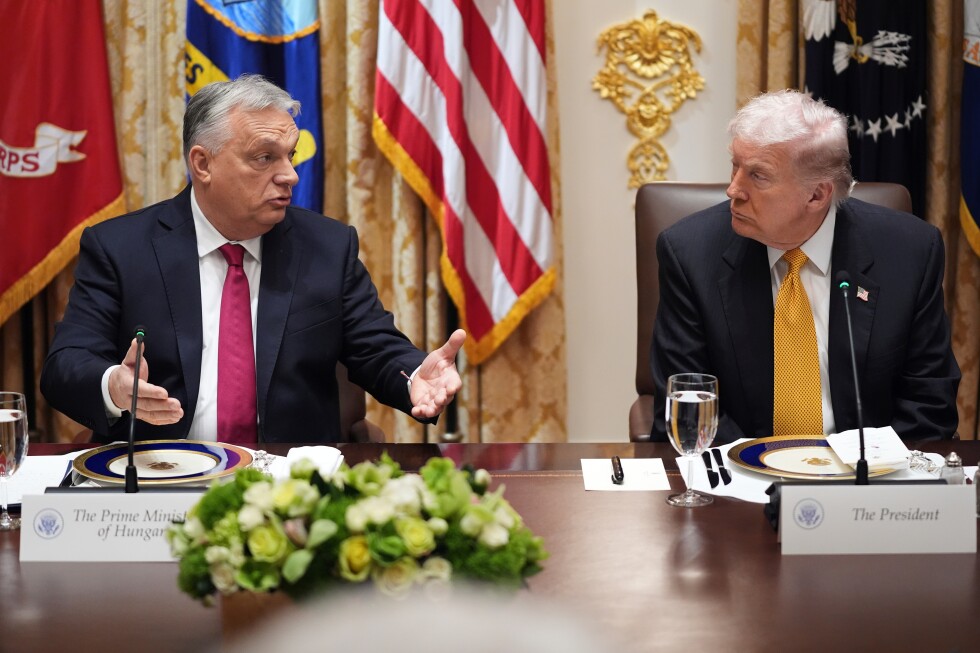
Trump’s most high-stakes test of this new approach will come on Sunday, when Hungarian voters head to the polls to decide whether Prime Minister Viktor Orbán, a longstanding Trump ally, will secure a fifth consecutive term in office. Orbán cemented his bond with Trump early, becoming the first European leader to endorse Trump’s 2016 presidential campaign, and remained loyal even during Trump’s four years out of office, making regular trips to Trump’s Mar-a-Lago resort in Florida and throwing his support behind Trump’s 2024 comeback bid. That loyalty has been rewarded repeatedly: Trump has shared multiple posts on his Truth Social platform urging Hungarians to vote for Orbán, delivered a pre-election video address to a Conservative Political Action Conference (CPAC) gathering in Budapest praising Orbán’s hardline policies on immigration and national sovereignty, and even arranged for a viral speakerphone appearance at a 1,000-person Orbán campaign rally during Vice President JD Vance’s recent two-day trip to the Hungarian capital.
Secretary of State Marco Rubio, who as a senator once raised public alarms about democratic backsliding under Orbán’s rule, has also put past concerns aside to formally endorse the prime minister, emphasizing his “very, very close personal relationship and working relationship” with Trump. During his Budapest visit, Vance made the administration’s support explicit, even as he criticized the European Union for what he framed as its own foreign election interference in Hungary. “Of course we’re going to work with whoever wins the Hungarian election because we love the people of Hungary and it’s an important relationship,” Vance told reporters. “But Viktor Orbán is going to win the next election in Hungary, so I feel very confident about that and about our continued positive relationship.”
Hungary is far from the only country where Trump has inserted U.S. political power directly into a domestic electoral contest. In Argentina, the Trump administration finalized a $20 billion currency swap line to prop up the country’s struggling financial markets ahead of key legislative elections, with Trump openly threatening to pull the assistance if pro-market far-right candidate Javier Milei’s coalition failed to win. “If he loses, we are not going to be generous with Argentina. OK?” Trump told reporters during a White House lunch with Milei. Milei’s coalition ultimately prevailed, and the assistance remained in place. In Honduras’ 2023 presidential election, Trump publicly backed conservative former mayor Nasry Asfura, warned that the U.S. would cut off financial assistance if Asfura lost, and pardoned former Honduran President Juan Orlando Hernandez—who shared Asfura’s party affiliation—shortly before voting day, overturning U.S. drug trafficking and weapons convictions against the former leader. Asfura went on to win the race. Trump has also publicly floated a pardon for Israeli Prime Minister Benjamin Netanyahu, who is facing ongoing corruption charges and a tough 2024 reelection contest, and backed hardline Japanese candidate Sanae Takaichi for prime minister.
Trump and his top officials have repeatedly used CPAC, a hub for global conservative activism, as a platform to elevate preferred foreign candidates. Last year, then-Homeland Security Secretary Kristi Noem spoke at a CPAC gathering in Warsaw, urging Polish voters to support conservative candidate Karol Nawrocki and implying that the future of U.S. military presence in the country could depend on the election result. Nawrocki won his race.
Trump has openly embraced his role as a global political kingmaker, framing his intervention as a natural extension of his success building influence within the U.S. Republican Party. “I love it when I give endorsements and people win,” Trump told a gathering of allied Latin American leaders earlier this year. White House spokeswoman Anna Kelly defended the administration’s approach, framing it as a model of transparency. “President Trump is a great American statesman who will speak or work with anyone, and he makes no secret about those he likes or supports,” Kelly said. “Many individuals who align with President Trump’s ideology are getting elected to top offices around the world because everyone wants to replicate his immeasurable success on behalf of the American people.”
Critics, however, argue that Trump’s blatant intervention has upended longstanding U.S. foreign policy norms, turning tools of statecraft that were once used to advance broad American national interests into vehicles for partisan political gain that erode the sovereignty of other nations. David Pressman, who served as U.S. ambassador to Hungary during the Biden administration, told reporters that Hungarian foreign policy on key issues like the war in Ukraine is now being shaped through a U.S. partisan lens, rather than as independent sovereign policy. “The impact of that is to really cheapen a relationship,” Pressman said.
James Lindsay, a distinguished senior fellow at the Council on Foreign Relations, noted that while past U.S. presidents have influenced foreign elections—often through covert action like the CIA’s 1954 coup that ousted Guatemalan President Jacobo Arbenz, or rare explicit endorsements like Bill Clinton’s public support for Boris Yeltsin in 1993—Trump’s open, widespread intervention is unprecedented. “Trump is just different than other presidents, and he’s viewed differently than other presidents, and that is a strength you can take advantage of,” Lindsay said.
Democratic critics go further, framing Trump’s intervention as a deliberate expansion of historical U.S. dominance in the Western Hemisphere. Sen. Tim Kaine, D-Va., pointed to the Trump administration’s December national security strategy, which outlined what it called the “Trump Corollary” to the 1823 Monroe Doctrine, a policy that has historically justified U.S. military intervention across Latin America. Kaine, who served as a missionary in Honduras during a period of deep covert U.S. involvement in the region, called the framework “poison language” that violates longstanding best practices for U.S. foreign policy. “America has been deeply involved in regime support, opposition and regime change in the Americas for centuries, and it is not a legacy that we should be proud of,” Kaine said.
The intervention has also sparked backlash from European leaders. Early in the second Trump term, Vance delivered a fiery speech at the Munich Security Conference where he criticized mainstream German parties for refusing to partner with the country’s far-right opposition, straining bilateral ties. German Chancellor Friedrich Merz later pushed back, noting that no U.S. official had any business weighing in on Germany’s domestic political dynamics. “I wouldn’t do it in America, either,” Merz said. As voters head to the polls in Hungary on Sunday, the result will offer a clear indication of just how much sway Trump’s public endorsement actually holds with foreign electorates, with independent polls showing Orbán trailing ahead of voting day—an outcome that would mark a major rebuke of the U.S. president’s global political ambitions.