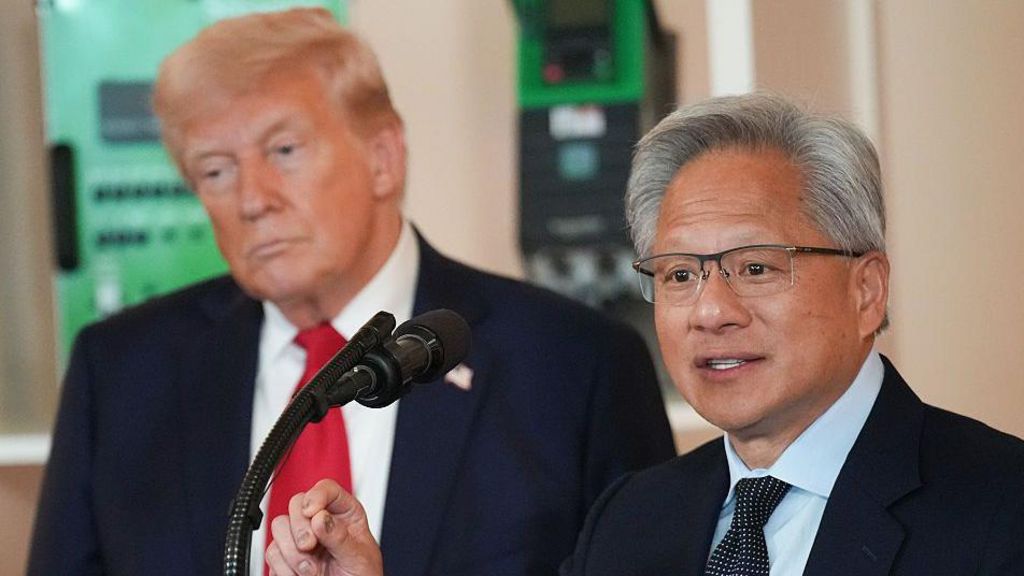
In a significant policy shift, the Trump administration has authorized NVIDIA Corporation to resume sales of its advanced H200 artificial intelligence chips to pre-approved commercial clients in China. The decision, announced via presidential social media channels on Monday, concludes months of intense lobbying efforts by NVIDIA CEO Jensen Huang, who personally advocated for the policy change during recent Washington engagements.
The conditional approval extends beyond NVIDIA to include other American semiconductor manufacturers such as AMD, effectively creating a regulated framework for advanced AI chip exports. This development represents a recalibration of earlier restrictions that had prohibited sales of cutting-edge semiconductor technology to Chinese entities due to national security considerations.
President Trump framed the decision as a strategic balance between economic interests and security priorities, stating: “We will protect National Security, create American Jobs, and keep America’s lead in AI.” The arrangement includes a revenue-sharing provision requiring NVIDIA to allocate 25% of its Chinese earnings to the U.S. Treasury, though specific implementation details remain unspecified.
NVIDIA, which has emerged as both the world’s leading chip manufacturer and most valuable company, welcomed the policy shift. In an official statement, the corporation noted: “Offering H200 to approved commercial customers, vetted by the Department of Commerce, strikes a thoughtful balance that is great for America.” Market response was immediately positive, with NVIDIA shares experiencing modest gains following the announcement.
The compromise follows a complex sequence of events that began in July when President Trump initially reversed the chip ban but imposed the revenue-sharing requirement. Beijing subsequently directed Chinese technology firms to halt purchases of NVIDIA products specifically engineered for the Chinese market, creating a standoff that threatened to cost American chipmakers substantial market share.
Geopolitical analysts note that the decision will likely face scrutiny from national security advocates in Congress. Researchers at Georgetown University’s Center for Security and Emerging Technology have documented how China’s military apparatus has utilized advanced American-designed chips to develop AI-enabled combat capabilities, raising concerns about technological transfer.
Senior research analyst Cole McFaul emphasized the security implications: “By making it easier for the Chinese to access these high-quality AI chips, you enable China to more easily use and deploy AI systems for military applications. They want to harness advanced chips for battlefield advantage.”
The White House has not yet provided comprehensive details regarding the approval mechanism or vetting criteria for Chinese customers, leaving implementation specifics to be determined through interagency processes.