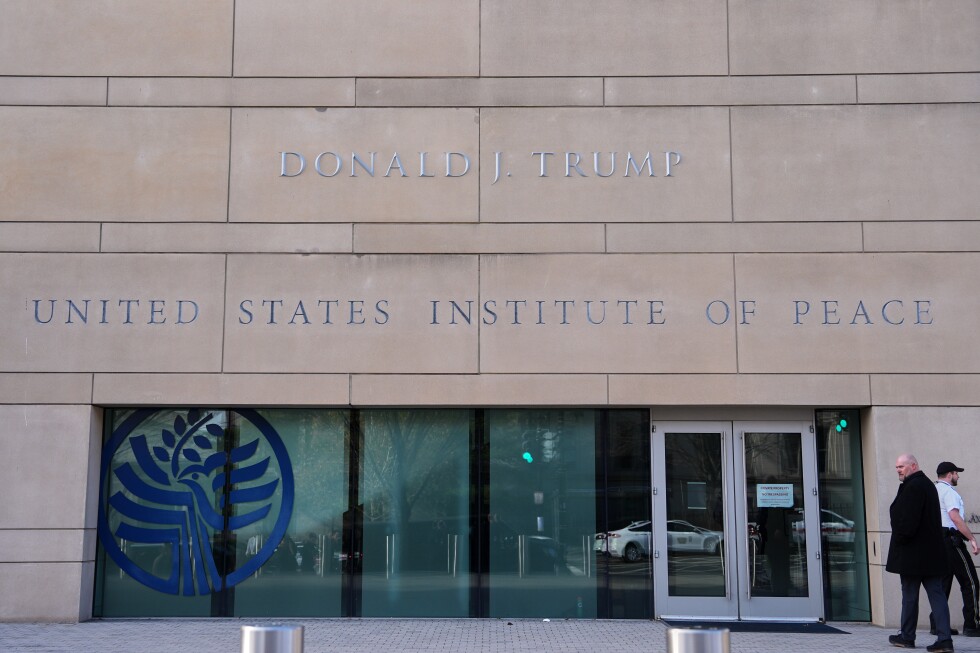
WASHINGTON — In a significant diplomatic gathering, President Donald Trump convened representatives from over two dozen nations for the inaugural meeting of his newly formed ‘Board of Peace’ on Thursday. The assembly focused on two primary objectives: mobilizing reconstruction efforts for war-devastated Gaza and establishing an international stabilization force for the territory, where a fragile ceasefire remains in effect.
Ahead of the meeting, Trump announced that board members had committed approximately $5 billion toward reconstruction initiatives—a substantial sum yet merely a fraction of the estimated $70 billion required to rebuild the Palestinian territory following two years of destructive conflict. Additionally, participating nations are expected to contribute thousands of personnel to international security and police forces aimed at maintaining stability in the region.
The board represents a cornerstone of Trump’s ambitious 20-point peace plan originally designed to resolve the Gaza conflict. However, since October’s ceasefire agreement, the president has expanded the board’s mandate beyond Middle Eastern peacemaking to include global conflict resolution—a development that has raised concerns among some international partners about creating a potential rival to the United Nations.
Despite more than 40 countries and the European Union sending representatives to the meeting, notable absentees from full membership include Germany, Italy, Norway, and Switzerland, who attended as observers. This cautious participation reflects broader international skepticism about the initiative’s scope and structure.
The timing of Trump’s meeting notably influenced international diplomacy, prompting the UN Security Council to reschedule its own high-level discussion on the Gaza ceasefire from Thursday to Wednesday. This adjustment avoided scheduling conflicts for diplomats who would have otherwise needed to be in two places simultaneously.
Central to Thursday’s discussions was the critical challenge of disarming Hamas and establishing an armed international stabilization force. Thus far, only Indonesia has made a firm commitment to contribute to this proposed security force. Indonesian President Prabowo Subianto pledged to collaborate with other Islamic nations invited by Trump to pursue lasting peace in Palestine, acknowledging significant obstacles while emphasizing the necessity of the effort.
The Trump administration defended the initiative against skepticism, with White House press secretary Karoline Leavitt describing it as ‘a legitimate organization’ and U.S. Ambassador to the UN Mike Waltz asserting that the board is action-oriented rather than merely discursive. However, analysts like Michael Hanna of the International Crisis Group suggested that allied skepticism is warranted, noting that many participating nations likely joined primarily to focus U.S. attention and leverage on Israel regarding Gaza’s future.