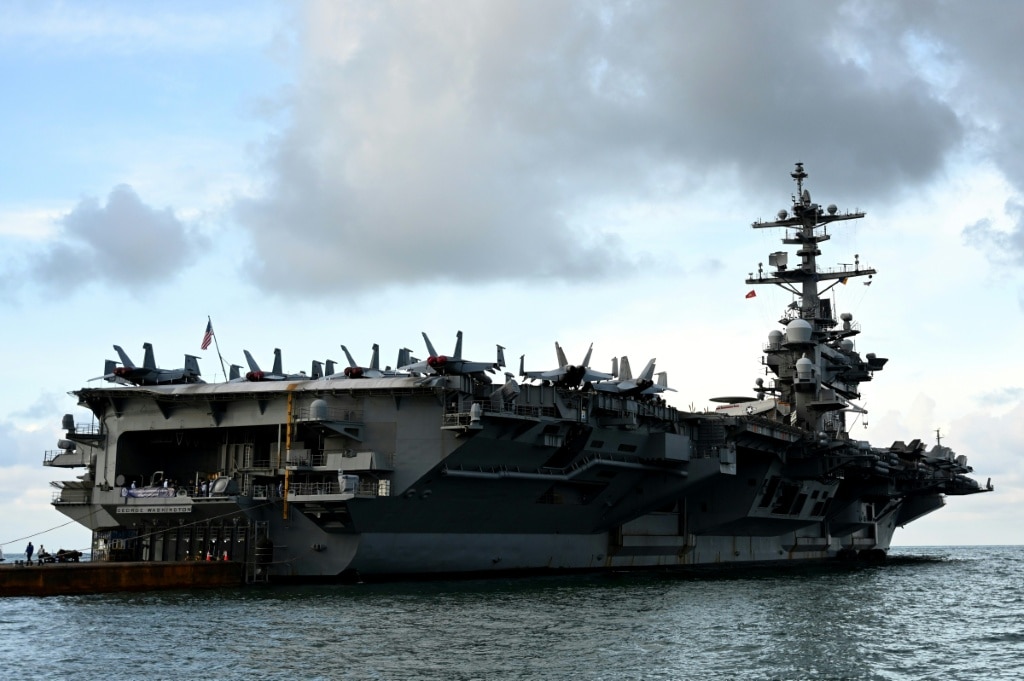
On Friday, U.S. President Donald Trump pushed back against mounting public concern over substandard living conditions and strained mental health among sailors serving aboard the USS Abraham Lincoln, a nuclear-powered aircraft carrier deployed to the Middle East amid ongoing tensions with Iran. The commander-in-chief also confirmed the vessel is scheduled for imminent rotation, set to be replaced by another similar carrier in the coming days.
When pressed by reporters on whether family members of the crew had raised alarms about conditions on the ship, Trump flatly denied the claims, stating, “no, they’re not.” He also rejected assertions that the Abraham Lincoln’s current deployment — which has now stretched into its ninth month at sea — has exceeded standard operational timelines, responding bluntly: “No, no, no, not nearly enough.”
The deployment timeline comes against a backdrop of prolonged stalemate between the United States and Iran over Tehran’s nuclear program and continued control of the strategically critical Strait of Hormuz, a chokepoint through which roughly a fifth of global oil shipments pass daily. The Abraham Lincoln originally departed Naval Air Station North Island in California in November 2025 for a scheduled deployment to the South China Sea, but was rerouted to the Middle East ahead of the U.S.-Israeli military strikes on Iran that launched on February 28.
In recent weeks, U.S. media outlets including specialized military publications have published multiple accounts from relatives of crew members detailing sharp declines in living conditions aboard the vessel. These reports have also been accompanied by claims of multiple suicide attempts among the ship’s company, prompting Democratic lawmakers to formally call for official congressional investigations into the situation.
Military defense experts have echoed concerns over the extended deployment. Jonathan Schroden, chief research officer at the independent Center for Naval Analyses, told Agence France-Presse that U.S. carrier strike groups are intentionally structured around six-month deployments, a timeline designed explicitly with “including sailor welfare” as a core guiding principle.