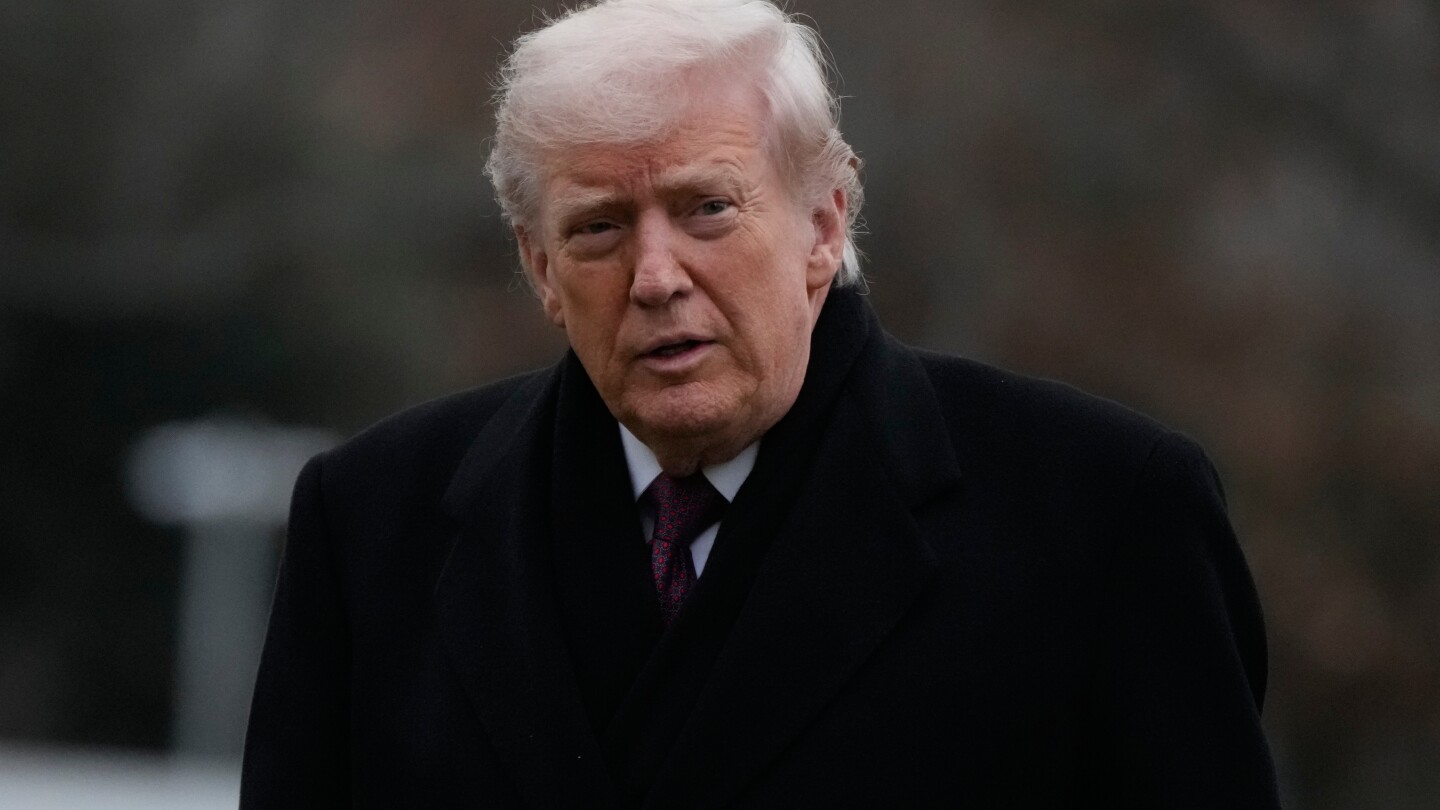
WASHINGTON — President Donald Trump intensified pressure on Venezuela’s socialist government Wednesday by demanding the return of U.S. oil assets nationalized under previous administrations, framing his newly announced naval blockade as justified response to what he termed “illegal seizure” of American energy investments.
The President explicitly connected Venezuela’s past appropriation of oil facilities to his current sanctions enforcement strategy, stating tankers violating U.S. restrictions would be intercepted. “They took all of our energy rights. They illegally took it,” Trump told reporters, referencing nationalization efforts that began in the 1970s and expanded under Hugo Chávez and Nicolás Maduro. “We want it back.”
This economic confrontation unfolds alongside narcotics allegations, with Trump asserting Venezuelan oil revenues fund drug trafficking operations targeting the United States. The administration’s multifaceted pressure campaign has recently included:
– Military seizures of sanctioned oil tankers near Venezuela’s coast
– Coordinated strikes against suspected drug trafficking vessels
– Consideration of potential land-based military options
– Diplomatic efforts to isolate Maduro’s government internationally
Stephen Miller, Trump’s deputy chief of staff, amplified the rhetoric by labeling Venezuela’s nationalization program “the largest recorded theft of American wealth and property” in a social media post, claiming expropriated assets subsequently funded terrorism and narcotics proliferation.
The historical context traces to incomplete compensation for nationalized assets, notably a 2014 international arbitration ruling ordering Venezuela to pay $1.6 billion to ExxonMobil. While Chevron maintains limited operations under U.S. waiver, most American energy interests remain unresolved.
Venezuela responded through diplomatic channels, with Foreign Minister Yván Gil denouncing tanker seizures as “piracy” in a letter to the U.N. Security Council obtained by The Associated Press. The communication demanded return of “kidnapped crew” and confiscated oil while seeking formal condemnation of U.S. actions.
Notably, administration officials clarified Trump’s reference to designating Venezuela as a foreign terrorist organization should be treated as rhetorical rather than literal policy, though the Justice Department had previously indicted Maduro on narcoterrorism charges.
Military analysts observe that interdiction operations and targeted seizures represent lower-risk alternatives to direct military confrontation while maintaining economic pressure on Caracas. The evolving situation continues to test international law boundaries regarding maritime sanctions enforcement and asset recovery claims.