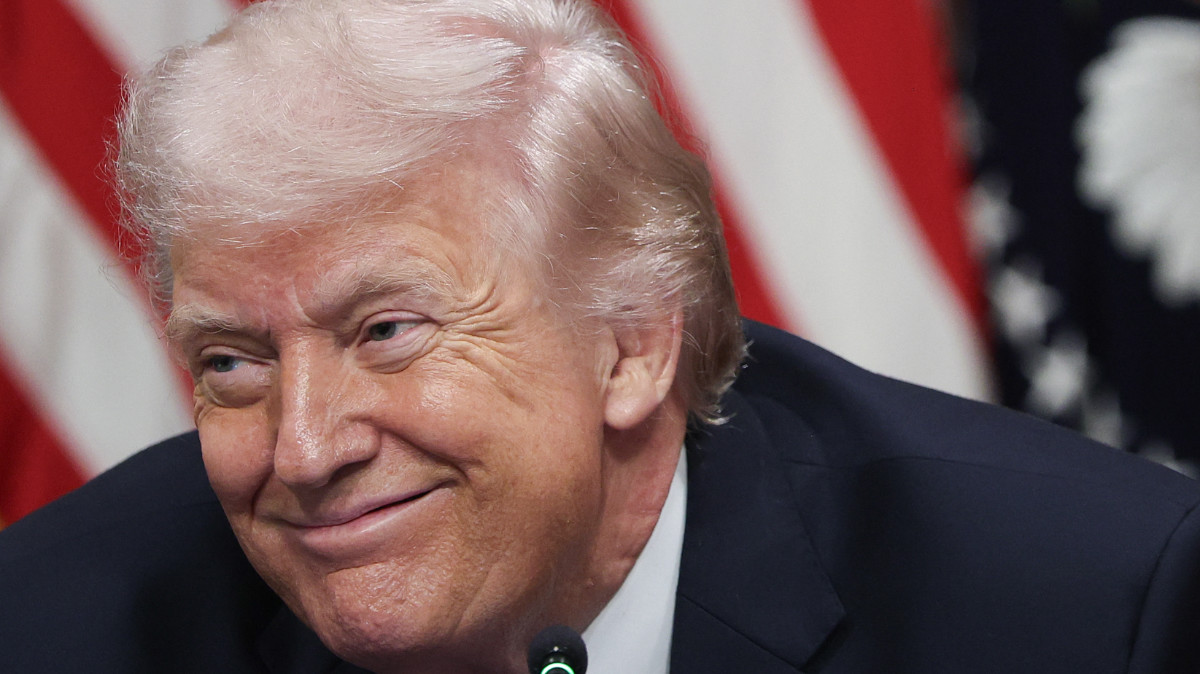
Former US President Donald Trump has asserted his necessity for direct involvement in selecting Iran’s next supreme leader, drawing parallels to his administration’s approach in Venezuela. In a recent interview, Trump explicitly rejected the potential succession of Mojtaba Khamenei, son of the deceased Supreme Leader Ali Khamenei, describing him as “unacceptable” and “a lightweight” who would not bring harmony to Iran.
Trump referenced the Venezuelan model where, following the alleged abduction of President Nicolas Maduro in a January nighttime operation, Vice President Delcy Rodriguez assumed leadership. Rodriguez, who had previously engaged with US officials and energy companies, was perceived as cooperative in facilitating access to Venezuela’s substantial oil and mineral resources. While maintaining Maduro’s security apparatus, the Trump administration successfully claimed control over Venezuelan oil exports.
Analysts interpret Trump’s statements as revealing his strategic vision for Iran—seeking a compliant leader who would cooperate with US interests despite fundamental differences between the nations. Iran’s political landscape differs significantly from Venezuela’s, with the Islamic Republic maintaining power since the 1979 revolution that ousted the US-backed Shah.
The succession process in Iran remains complex, with a three-person panel currently overseeing governance pending selection of a new supreme leader. This interim leadership includes moderate President Masoud Pezeshkian, hardline judiciary head Gholamhossein Mohseni Ejei, and senior cleric Alireza Arafi. However, experts speculate that regional military commanders may have assumed greater autonomy following degradation of Iran’s command structure through US and Israeli strikes.
Mojtaba Khamenei, aged 56 and widely regarded as a hardliner, has been reportedly promoted by the Islamic Revolutionary Guard Corps (IRGC) for the leadership position. His controversial history includes alleged involvement in the disputed 2009 election and subsequent crackdowns on protesters, which previously generated concern within Iran’s political establishment.