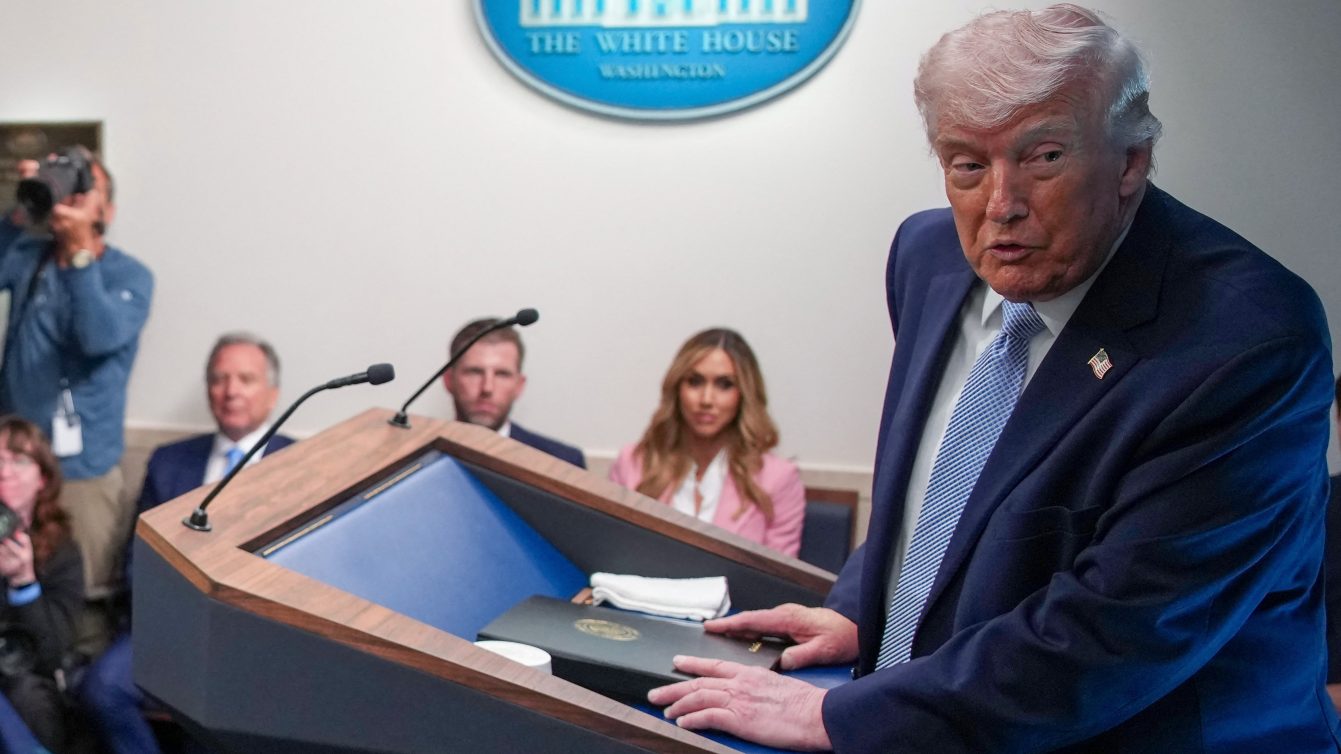
In a dramatic late-Tuesday announcement on his Truth Social platform, former and current U.S. President Donald Trump confirmed he has authorized a two-week suspension of all U.S. bombing raids and offensive military operations against Iran, framing the move as a bilateral ceasefire that hinges on Tehran reopening the strategically critical Strait of Hormuz to global maritime traffic. The pivot away from imminent large-scale conflict came directly after a last-minute diplomatic appeal from Pakistan’s top leadership, which had stepped in as a neutral mediator between the two adversarial nations.
Trump detailed that the decision to hold off on a planned major offensive, which he had threatened would destroy Iran’s “whole civilization” by the 8 p.m. EST deadline earlier that day, came out of consultations with Pakistani Prime Minister Shehbaz Sharif and Pakistan’s Chief of Army Staff Field Marshal Asim Munir. “Based on conversations with Prime Minister Shehbaz Sharif and Field Marshal Asim Munir, of Pakistan, and wherein they requested that I hold off the destructive force being sent tonight to Iran, and subject to the Islamic Republic of Iran agreeing to the COMPLETE, IMMEDIATE, and SAFE OPENING of the Strait of Hormuz, I agree to suspend the bombing and attack of Iran for a period of two weeks. This will be a double-sided CEASEFIRE,” Trump wrote in his post.
The U.S. leader added that the bulk of outstanding disputes between Washington and Tehran have already been resolved, noting that a 10-point peace proposal submitted by Iran serves as a viable foundation for formal negotiations. “The reason for doing so is that we have already met and exceeded all Military objectives, and are very far along with a definitive Agreement concerning Longterm PEACE with Iran, and PEACE in the Middle East. We received a 10 point proposal from Iran, and believe it is a workable basis on which to negotiate,” he added.
Shortly after Trump’s announcement, Iran’s Supreme Security Council confirmed that formal bilateral talks with the U.S. will kick off this Friday in the Pakistani capital of Islamabad, with the negotiations scheduled to run for up to 15 days. The Iranian body noted that Tehran shared its 10-point proposal with Washington via Pakistan’s diplomatic channel, and the upcoming discussions will cover core sticking points including unimpeded transit through the Strait of Hormuz, relief for crippling U.S. and international sanctions on Iran, and the full withdrawal of U.S. military forces from regional bases.
In its official statement, the Supreme Security Council framed the outcome as a “historic” victory for Iran in the ongoing conflict, saying the country’s resistance forced the U.S. to accept Tehran’s 10-point framework. The council emphasized that the launch of negotiations does not mark the formal end of hostilities, and laid out key terms of Iran’s proposal: binding guarantees of non-aggression from the U.S. and its allies, permanent full Iranian sovereignty over the Strait of Hormuz, and immediate sanctions relief. The statement also noted that Iranian forces and their allied armed groups have inflicted heavy losses on opposing forces, and urged domestic unity among Iranians as the details of a final agreement are negotiated.
Pakistan’s push for a ceasefire and negotiated settlement came as an 11th-hour intervention, after Trump gave Iran a stark deadline to cede control of the critical waterway, which carries roughly 20% of the world’s total global energy supplies. Just days earlier on Easter Sunday, Trump issued a profane, aggressive threat against Iran on social media, writing: “Open the fucking strait, you crazy bastards, or you’ll be living in hell…Praise be to Allah.” He doubled down on that warning Tuesday morning, reiterating that “a whole civilization will die tonight” if Tehran refused to meet his demands. Prior to the ceasefire announcement, multiple independent Iranian media reports confirmed that Israeli forces had launched strikes targeting Iranian steel and petrochemical facilities, amplifying tensions ahead of the deadline.
Before Trump’s announcement, Sharif publicly shared his appeal for a two-week negotiation window on the X social media platform, urging both sides to pause hostilities to give diplomacy a chance to resolve the crisis. “To allow diplomacy to run its course, I earnestly request President Trump to extend the deadline for two weeks,” Sharif wrote, adding that he also called on Iran to reopen the Strait of Hormuz to all commercial traffic during the ceasefire period. “We also urge all warring parties to observe a ceasefire everywhere for two weeks to allow diplomacy to achieve conclusive termination of war, in the interest of long-term peace and stability in the region,” he added. When the Pakistani appeal was first made public, White House press secretary Karoline Leavitt told AFP that Trump had been briefed on the proposal and a response would be forthcoming.
Earlier on Tuesday, a diplomatic development at the United Nations also shaped the crisis: Russia and China jointly vetoed a United Nations Security Council resolution put forward by Bahrain that would have authorized international military action to end Iran’s control over the Strait of Hormuz. Multiple conflicting reports emerged through Tuesday about the status of Pakistan-mediated talks, leading to initial uncertainty in global markets before Trump’s ceasefire announcement. U.S. stock markets traded mixed following the news of the diplomatic breakthrough, with the Dow Jones Industrial Average closing down 0.2% for the day while the Nasdaq Composite posted a small 0.1% gain.