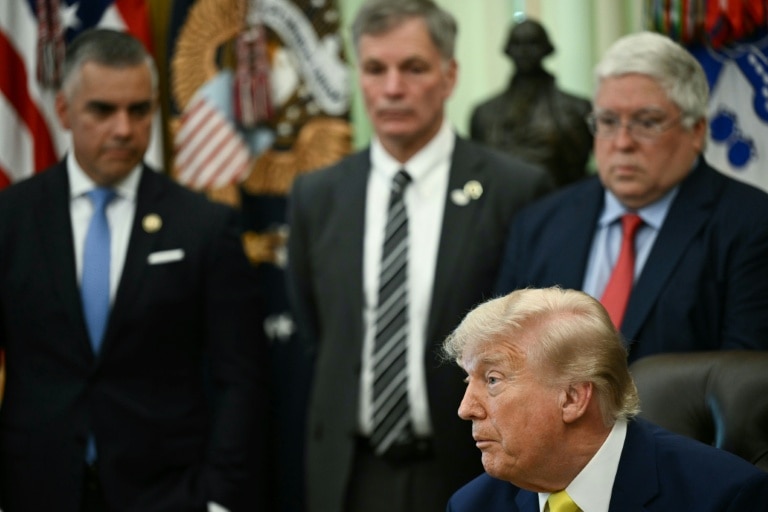
U.S. President Donald Trump made a sweeping policy announcement Thursday, invoking a 75-year-old Cold War-era emergency law to unlock $700 million in public funding for a nationwide slate of coal development projects, marking his most aggressive step yet to ramp up production and use of the world’s most carbon-intensive fossil fuel.
Under the plan, the allocated funding will support operations across 10 U.S. states, extending the lifespan of more than a dozen existing coal-fired power plants and 42 active coal mines. It also paves the way for construction of two brand-new coal facilities and a large-scale coal export terminal on California’s coast, which Trump says will have annual handling capacity of 12 million tons of the fossil fuel. To redirect funds toward the new projects, the Trump administration is shifting $200 million originally earmarked for climate change initiatives—with portions going to a coal plant in Maryland, and the two new facilities in Alaska and West Virginia respectively.
The funding drawdown is authorized through the Defense Production Act (DPA), a 1950 law that grants sitting U.S. presidents broad emergency authority over domestic industrial production. In remarks at the announcement, Trump framed the initiative as a win for working-class households, claiming it would cut energy prices and reduce cost-of-living burdens for all Americans. Echoing language he has used throughout his political career, he referred to coal as “clean, beautiful” — a characterization that directly contradicts established climate science that labels coal the largest single source of greenhouse gas emissions driving global warming.
This move is consistent with the Trump administration’s broader energy agenda, rolled out after he returned to the presidency last year. A long-time skeptic of anthropogenic climate change, Trump has repeatedly dismissed the scientific consensus that human activity causes global warming as a “hoax”, and has moved systematically to roll back decades of federal environmental regulations that restrict fossil fuel extraction and use. Thursday’s announcement is not the first pro-coal action his administration has taken in 2025: on February 11, he signed an executive order directing Defense Secretary Pete Hegseth to negotiate long-term coal supply contracts with domestic power plants. At that public White House event, Trump was surrounded by hard-hatted coal miners and celebrated as the “undisputed champion” of the U.S. coal industry. The very next day, he repealed the Environmental Protection Agency’s 2009 “endangerment finding”, a foundational regulatory ruling that has underpinned all federal U.S. climate policy for 16 years. That rollback is already facing legal challenge from a broad coalition of environmental and public health groups.
Industry and climate data underscores how far the Trump administration’s policy deviates from global trends. Analysis from energy research group Global Energy Monitor shows that while the world added more coal power capacity in 2025, overall coal consumption declined across most major economies — with the United States standing alone as the only large economy to register a substantial increase in coal-fired electricity generation. As of 2025, federal U.S. Energy Information Administration data puts coal’s share of domestic power generation at 17 percent.
The announcement comes as global climate leaders have issued renewed warnings about the risks of expanding coal use. Just last week, the United Nations warned that global average temperatures are on track to remain at or near record highs over the next five years. UN Climate Change Executive Secretary Simon Stiell reiterated that the primary driver of anthropogenic global warming is the continued burning of fossil fuels — with coal identified as the single largest contributor to rising temperatures. U.S. Energy Secretary Chris Wright defended the administration’s policy in comments on the initiative, framing coal as “a critical source of our electricity, also a critical source for our industry.”