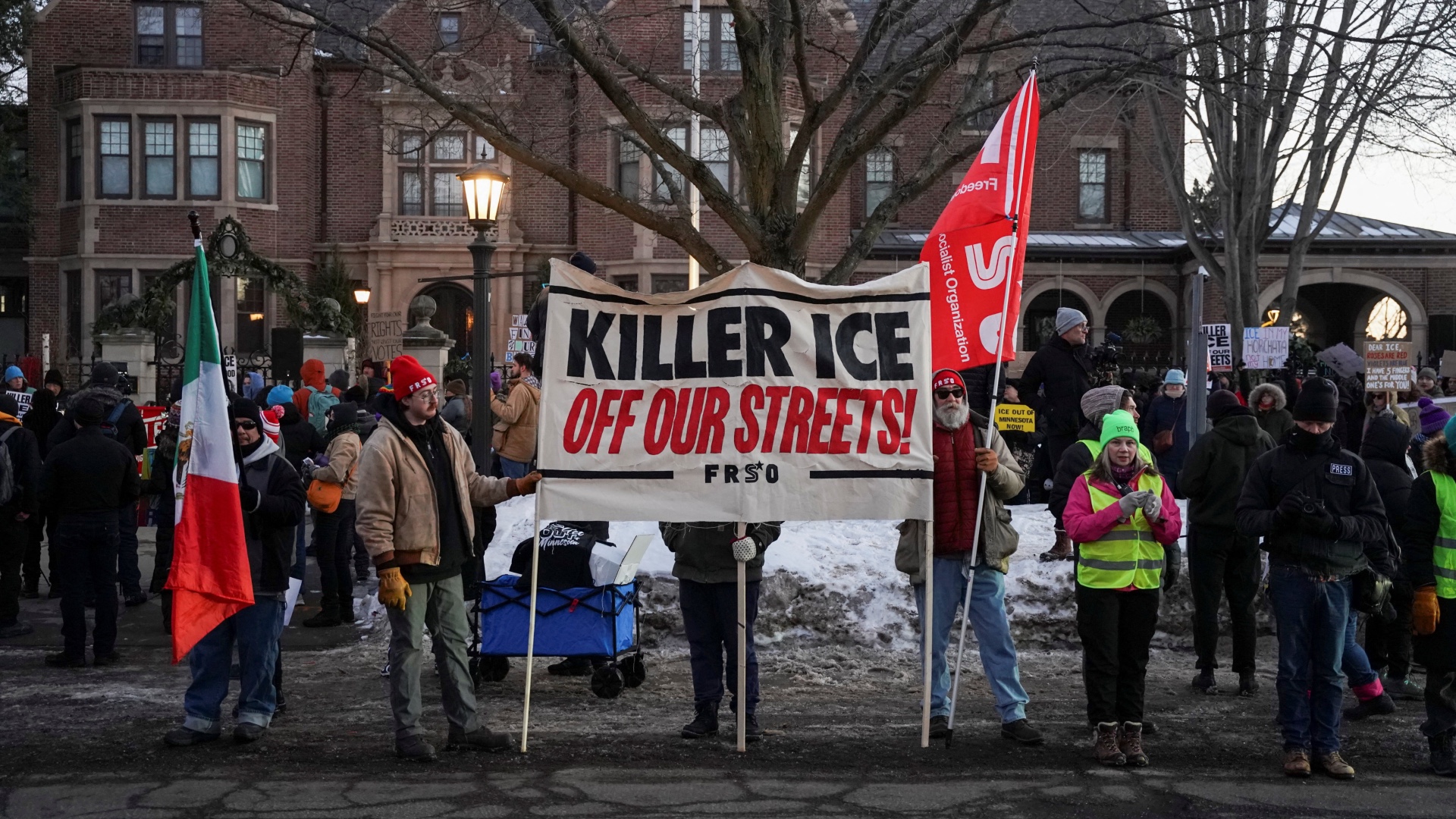
The Trump administration announced on Thursday the termination of a heightened immigration enforcement operation in Minneapolis, Minnesota, following two months of widespread protests, school closures, and the tragic deaths of two American citizens. The operation, which had drawn significant national criticism, will see a substantial drawdown of federal agents.
At a Minneapolis press conference, Border Czar Tom Homan stated that the de-escalation was already in progress. ‘I have proposed, and President Trump has concurred, that this surge operation conclude,’ Homan declared. ‘A significant drawdown has already been underway this week and will continue into the next.’ He attributed the decision to improved collaboration between local law enforcement and federal immigration authorities, establishing a new protocol where U.S. Immigration and Customs Enforcement (ICE) will take custody of immigrants arrested locally for criminal acts prior to deportation proceedings.
The operation had been marred by controversy since its inception. Viral videos depicted ICE agents, alongside personnel from Homeland Security Investigations and Enforcement and Removal Operations, employing aggressive tactics. These included apprehending individuals suspected of immigration violations in front of their children at schools and from construction sites. Notably, some of those detained were later confirmed to be U.S. citizens, a direct violation of federal law which prohibits immigration agents from holding Americans.
The fatalities of U.S. citizens Renee Nicole Good and Alex Pretti, who were legally observing and documenting ICE activities, became a focal point of national outrage. Acting ICE Director Todd Lyons acknowledged the deaths at a Senate hearing but declined further comment pending internal investigations. ‘In regards to every law enforcement operation, of course, we go back, we look at lessons learned… the ownership of that is mine,’ Lyons testified.
Minnesota officials responded with a mixture of relief and defiance. Democratic Governor Tim Walz, who had previously run for vice president alongside Kamala Harris, stated on social media, ‘The long road to recovery starts now.’ He later revealed that a phone call with President Trump and the subsequent deployment of Homan to Minneapolis had initiated negotiations to end the operation, though he criticized the administration’s delay, suggesting it was ‘in very Trumpian fashion, they needed to save face.’
Minneapolis Mayor Jacob Frey, known for his explicit demands for ICE to leave the city, celebrated the community’s resilience, writing that federal agents ‘thought they could break us, but a love for our neighbors and a resolve to endure can outlast an occupation.’
The political fallout for the administration has been significant, with approval ratings suffering due to widespread circulation of videos showing violent arrests. Critics of the operation pointed to internal Department of Homeland Security (DHS) documents revealing that only 14% of arrested immigrants had a record of violent crime, arguing that the majority were detained for civil infractions like visa overstays. Furthermore, tactics such as frequently transferring detainees to remote facilities in Texas and Louisiana—regions with conservative judiciaries aligned with administration policies—were condemned for isolating individuals from legal support and families, effectively coercing them into accepting deportation rather than pursuing their legal rights.
Since taking office 13 months ago, the DHS reports having detained or deported half a million people. The conclusion of the Minneapolis surge marks a significant retreat from one of the administration’s most aggressive domestic enforcement campaigns.