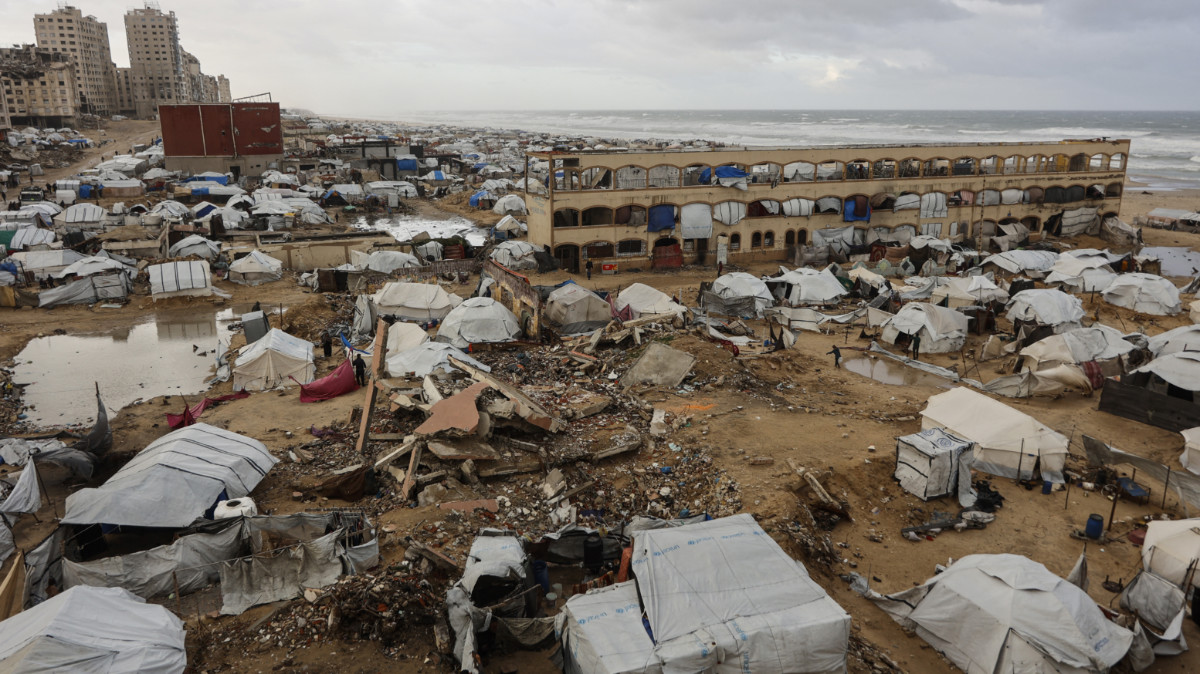
The United States has officially declared the commencement of the second phase of its Gaza ceasefire initiative, following a breakthrough agreement among Palestinian factions to establish a technocratic governing body for the embattled enclave. This development marks a critical transition from temporary truce to long-term demilitarization and reconstruction efforts.
US Special Envoy to the Middle East Steve Witkoff confirmed the advancement via social media, stating the move implements President Trump’s 20-Point Plan to resolve the Gaza conflict. The announcement came after Egyptian mediators secured consensus from majority Palestinian groups, including Hamas and Islamic Jihad, to back a Palestinian National Transitional Committee tasked with administrative control of Gaza.
The 15-member committee will be led by Ali Shaath, former Palestinian deputy minister for planning, with oversight from former UN Middle East peace coordinator Nickolay Mladenov. The Bulgarian diplomat recently convened with US officials, Palestinian Authority representatives, and Israeli Prime Minister Benjamin Netanyahu to coordinate the transition.
Phase two objectives include comprehensive demilitarization through disarmament of unauthorized personnel and launching reconstruction programs. Witkoff emphasized expectations for Hamas’s full compliance, including returning the final deceased hostage remains, warning of serious consequences for non-cooperation.
While Hamas has expressed willingness to transfer governing authority, it maintains its stance on retaining arms, citing Israel’s ongoing occupation of approximately 53% of Gaza territory. Negotiations have explored weapon decommissioning options, including storage arrangements and transfer of heavier arms to Arab and Muslim mediators, though Hamas insists on preserving personal weapons for its fighters.
Implementation challenges remain substantial. Potential UN-mandated peacekeeping forces from Arab and Muslim-majority nations have been hesitant to deploy, with Turkey’s proposed involvement rejected by Israel. Gulf states remain reluctant to fund reconstruction without guarantees against future Israeli military actions that could destroy rebuilt infrastructure.
The Trump administration’s reconstruction financing proposals include leveraging Gaza’s offshore gas reserves through partnerships with Israel and the UAE, though this would cover only a fraction of the estimated $70 billion required for full reconstruction.
Postwar planning, directed from Tel Aviv by appointees close to Jared Kushner, includes controversial proposals such as dividing Gaza with screened Palestinian communities in Israeli-occupied zones and developing luxury AI-industry linked properties. The new governance committee’s establishment may intensify scrutiny of Israel’s military presence, which under Trump’s plan should withdraw except for a buffer zone as Palestinian and international security forces assume control.
The conflict originated from Israel’s response to the October 7, 2023, Hamas-led attack, resulting in what UN experts describe as genocidal violence claiming over 71,400 Palestinian lives. Despite the US-brokered ceasefire establishing Israeli withdrawal to the ‘yellow line,’ violations have persisted with 439 Palestinian fatalities recorded in nearly 1,200 incidents involving airstrikes, shelling, and demolitions.