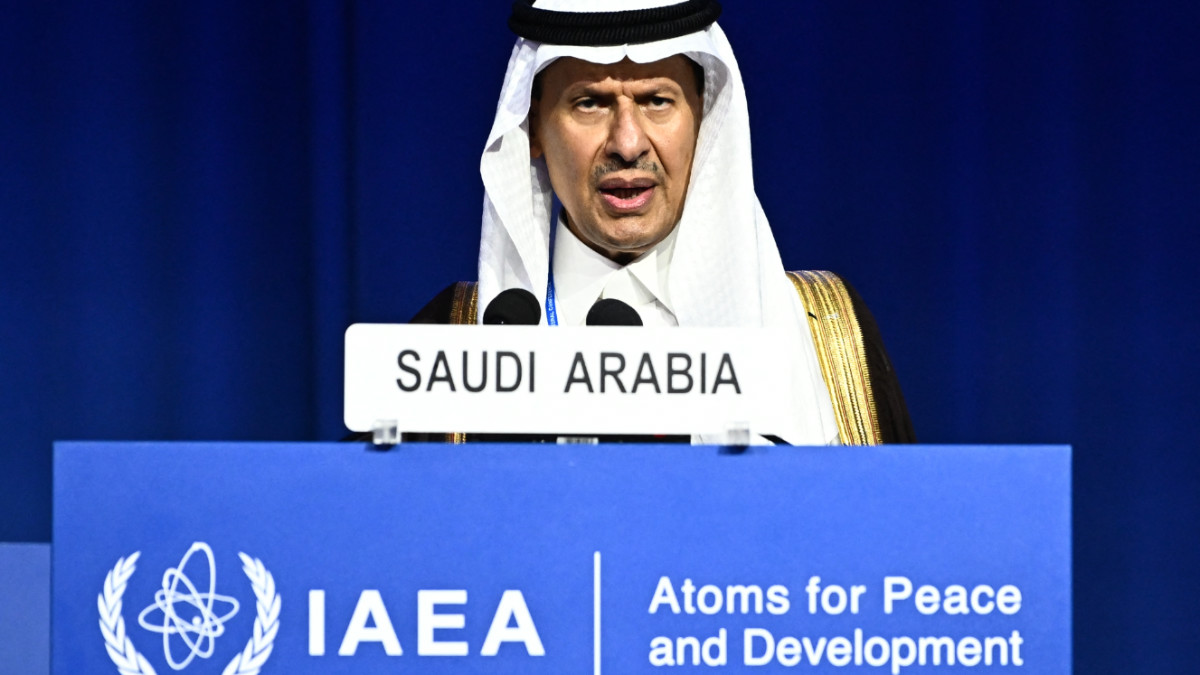
The Trump administration has formally notified Congress of its intent to pursue a civil nuclear agreement with Saudi Arabia that notably omits stringent non-proliferation safeguards traditionally required by the United States, according to a Reuters exclusive. This proposed ‘123 Agreement’ marks a significant departure from established US policy by not explicitly prohibiting the kingdom from enriching uranium or reprocessing spent nuclear fuel.
Unlike previous nuclear pacts with nations such as the United Arab Emirates (UAE), which made US cooperation conditional on a commitment to forgo enrichment, the preliminary document with Saudi Arabia stipulates only ‘additional safeguards and verification measures’ for the most sensitive areas of cooperation. This language leaves the door open for Riyadh to potentially develop domestic enrichment capabilities—a move analysts consider far more transformative for the region than the concurrent pursuit of advanced F-35 fighter jet sales.
US law mandates that a 123 Agreement must be in place before significant nuclear exports can be licensed. Furthermore, lawmakers have historically insisted that partners also adopt the ‘Additional Protocol,’ which grants the International Atomic Energy Agency (IAEA) enhanced inspection powers. The UAE, the only other Gulf state with a US nuclear partnership, signed this protocol in 2009. However, the Trump administration’s November notification to congressional committee heads indicated it is not pursuing this protocol with Saudi Arabia.
The administration’s report positions US industry at the forefront of Saudi Arabia’s civil nuclear development. The finalized agreement could be submitted to Congress as early as February 22nd, triggering a 90-day review period. During this time, both the House of Representatives and the Senate would need to pass resolutions of disapproval to block the pact in its current form.
This diplomatic approach underscores President Trump’s deal-centric foreign policy, which often prioritizes economic exports over the non-proliferation concerns of the traditional foreign policy establishment. The concession on enrichment appears to be a key to securing the deal, aligning with Saudi Crown Prince Mohammed bin Salman’s ambition to capitalize on the kingdom’s vast uranium reserves. Energy Minister Prince Abdulaziz bin Salman has publicly stated the intent to enrich and sell uranium, framing it as both an economic imperative and a matter of national pride.
The nuclear negotiations are part of a broader suite of potential deals with Riyadh. Concurrent discussions on F-35s have involved assurances to lawmakers regarding the maintenance of Israel’s Qualitative Military Edge (QME), with sources indicating the proposed sale involves a lower-grade variant of the jet. Simultaneously, Saudi Arabia is exploring alternative defense partnerships, including a fighter jet co-production deal with Turkey and potential investment in a UK-Italy-Japan next-generation fighter program.