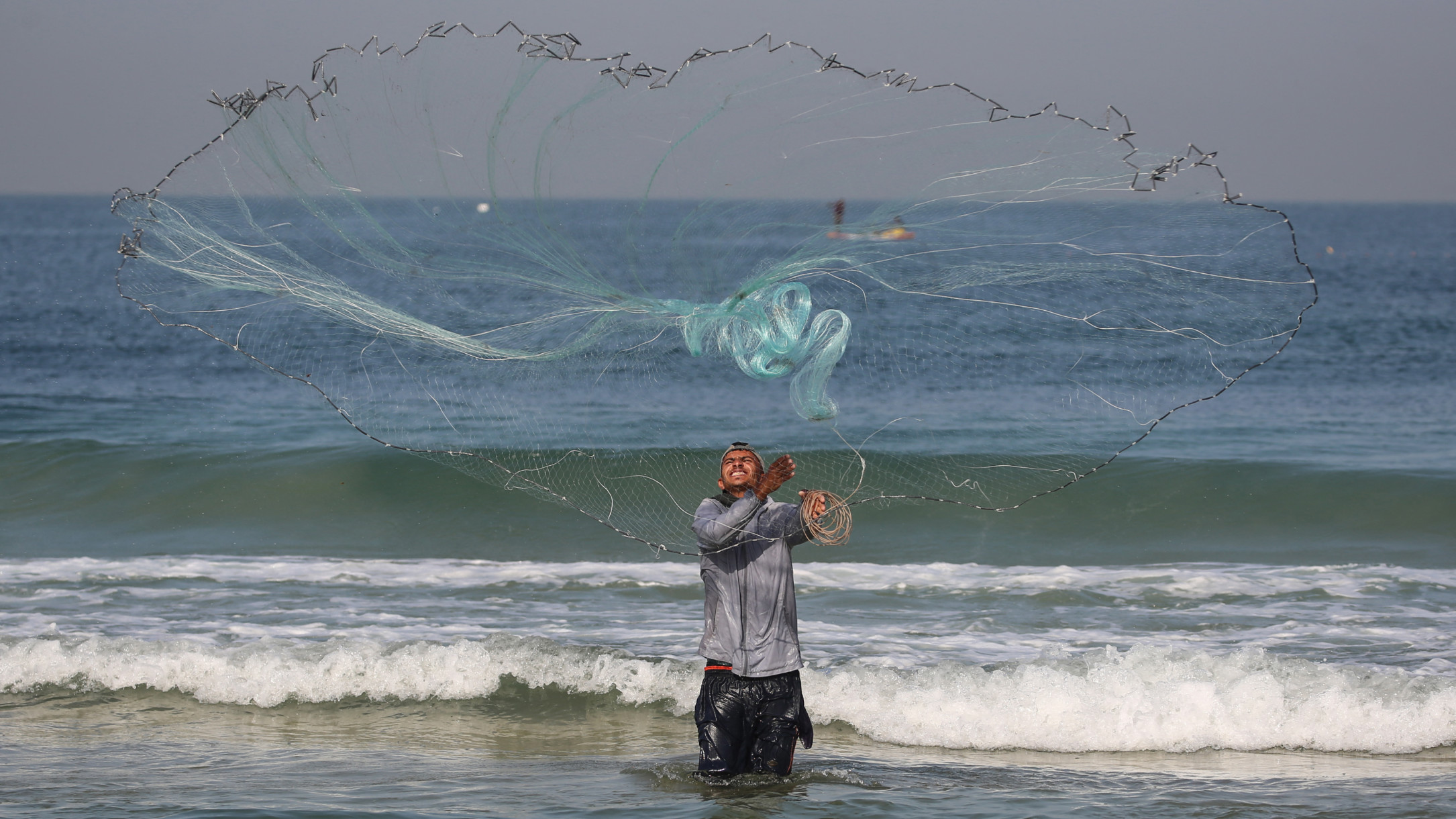
Ismail Farhat, a Gaza fisherman, endured over two months of brutal detention and torture by Israeli forces after being apprehended at sea—a testament to the systematic targeting of Palestinian fishermen amid Israel’s complete naval blockade of the Strip.
Despite having his original fishing boat destroyed in previous Israeli bombardments, Farhat continued venturing out on a small handmade punt to feed his family. On October 8, his routine fishing expedition turned into a nightmare when an Israeli naval vessel intercepted him near Deir al-Balah in central Gaza.
According to Farhat’s account to Middle East Eye, soldiers forced him to strip and swim to their vessel before subjecting him to repeated interrogations. After initially being released, he was abruptly recaptured minutes later when soldiers called him by name and ordered him back into the water.
“They began insulting and beating me,” Farhat recounted. “As usual, they accused every fisherman of being affiliated with Hamas. They told me I was Hamas and pretending to be a fisherman.”
Farhat was transported to the notorious Sde Teiman detention facility, where approximately 150 Palestinian detainees were held under severe conditions. For 50 consecutive days, he remained handcuffed around the clock, forbidden from speaking, leaning, or sleeping on anything but iron mesh. Any unintentional movement resulted in punishment, including forced standing for hours.
Medical care was virtually nonexistent. Requests for painkillers were routinely denied, with detainees subjected to lengthy procedures for even single doses of medication. Farhat described nighttime raids by commando units throwing stun and smoke grenades at prisoners, who were often forced to remain kneeling.
His experience reflects a broader pattern of systematic suppression of Gaza’s fishing industry. According to Zakaria Bakr, head of the Fishermen Union Committees in Gaza, Israeli forces have destroyed over 95% of Gaza’s fishing sector through killing fishermen, destroying boats, and targeting vital infrastructure including storage facilities, the ice factory, Gaza Port, and the fish market.
The Palestinian Fishermen Syndicate reports at least 230 fishermen killed since October 2023, with 65 shot dead while actively working at sea. Despite theoretical rights to access up to 20 nautical miles under the Oslo Accords, Israel has imposed a complete naval closure reducing the permitted fishing area to zero.
Before the war, approximately 4,500 registered fishermen operated in Gaza, with another 3,500 working under temporary permits or in related sectors. Today, only 400-500 remain, using makeshift platforms reconstructed from destroyed boats and refrigerator doors. Daily catches have plummeted from pre-war levels of up to 15 tonnes to just 16 kilograms collectively.
“No one is allowed to enter the sea,” Bakr stated. “This is collective punishment.”
Farhat was released on December 16 as part of ceasefire negotiations between Israel and Palestinian factions, but countless fishermen remain detained without charge, their families deprived of both livelihoods and loved ones in what human rights organizations describe as a deliberate strategy of maritime suppression.