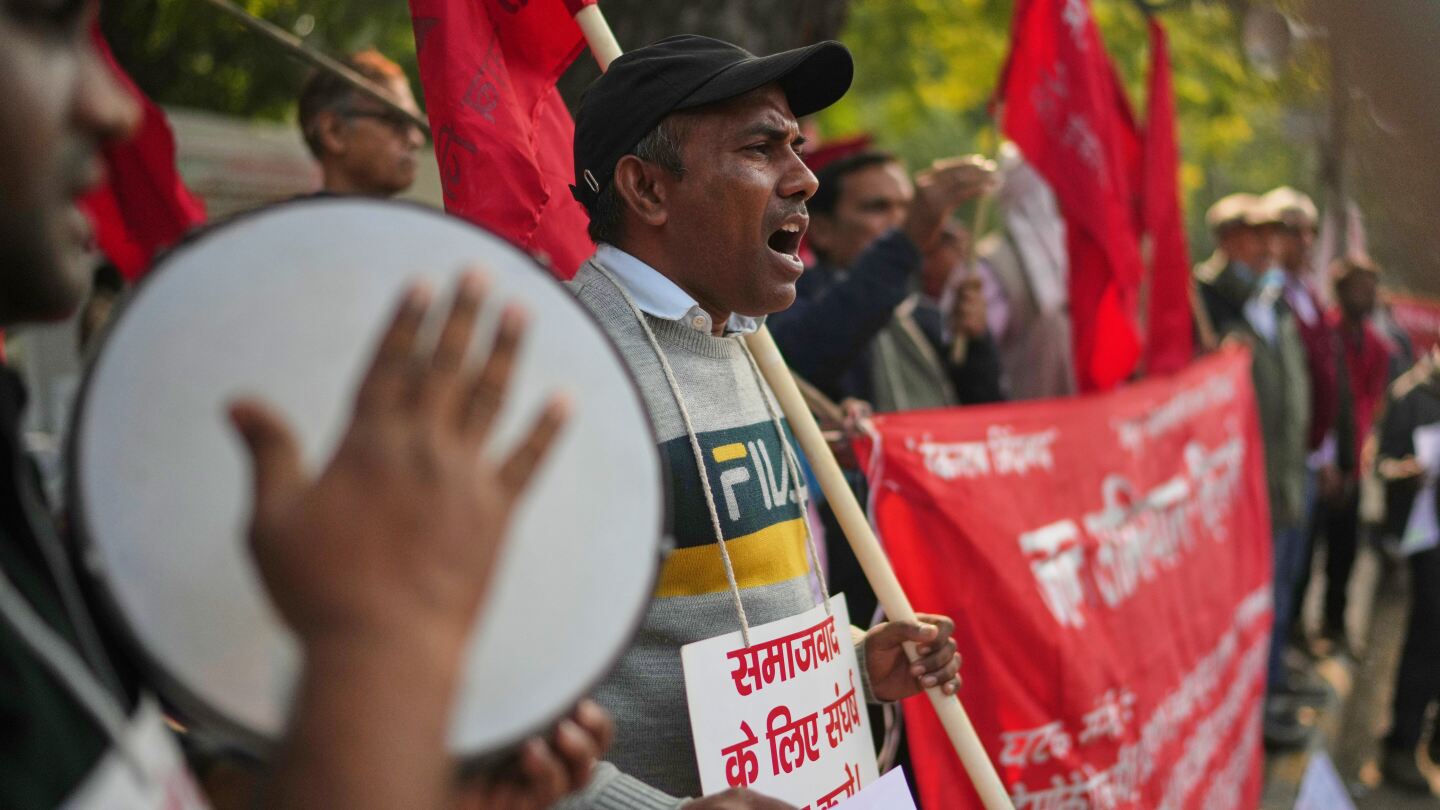
In a significant show of dissent, a coalition of 10 major Indian trade unions organized nationwide protests on Wednesday, vehemently opposing the government’s implementation of new labor codes. The unions labeled the reforms as a “deceptive fraud” against workers, arguing that the changes undermine job security, weaken collective bargaining, and increase employer control. Demonstrations erupted across various regions, with millions of laborers and farmers voicing their concerns over the sweeping overhaul. This marks the first coordinated labor action since the codes came into effect last week, highlighting the escalating tensions between unions and the government regarding economic reforms. While the government claims the new framework modernizes outdated laws, enhances efficiency, and expands social protections, unions contend that it strips essential safeguards and disproportionately favors employers amid rising job insecurity. Tapan Sen, general secretary of the Centre of Indian Trade Unions, accused the government of bulldozing workers’ rights and masking the move with misleading claims of benefits for laborers. The four new codes—covering wages, industrial relations, social security, and occupational safety—replace 29 existing labor laws. The government asserts that the consolidated structure simplifies compliance, reduces fragmentation, and improves access to social security and safety norms. However, unions argue that the reforms are skewed in favor of employers, citing provisions that facilitate layoffs, expand fixed-term employment, and impose stricter conditions for forming unions or organizing strikes. Amarjeet Kaur, general secretary of the All India Trade Union Congress, likened the reforms to a regression to the colonial era, where workers’ voices were suppressed. The government has yet to formally respond to the protests but maintains that the codes are essential to attract investment and create formal jobs in the long term.