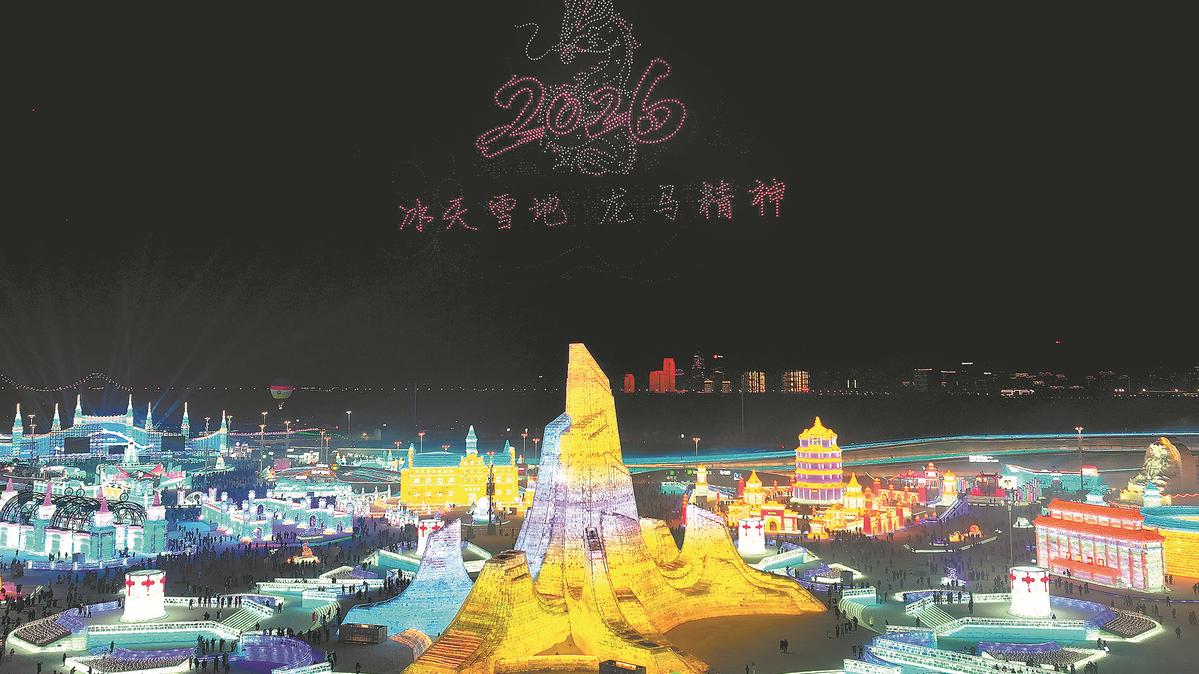
The 42nd Harbin International Ice and Snow Festival commenced with breathtaking pyrotechnics and illuminations along the Songhua River banks on Monday evening, marking the spectacular inauguration of Northeast China’s premier winter extravaganza. This legendary celebration, originating as a modest ice lantern exhibition in 1985, has evolved into one of the globe’s four major ice and snow festivals, standing alongside Japan’s Sapporo Snow Festival, Canada’s Quebec Winter Carnival, and Norway’s Oslo Holmenkollen Ski Festival.
The festival serves as Harbin’s signature winter attraction and primary driver for seasonal tourism, extending through February to coincide with traditional Chinese holidays including Spring Festival and Lantern Festival. Organizers have unveiled ten premium ice and snow tourism itineraries alongside scheduling more than 200 cultural, athletic, and economic activities throughout the duration.
Central to the festivities is the Harbin Ice and Snow World, a sprawling 1.2-million-square-meter theme park operating for its 27th consecutive season. The expanded facility utilizes over 400,000 cubic meters of frozen resources, representing a 20% increase from previous installations. As daylight fades, cutting-edge 3D projection mapping and augmented reality technologies transform crystalline structures into a chromatic wonderland, creating an ethereal ice palace atmosphere.
Visitors can experience diverse winter activities including traditional ice fishing, cross-country skiing, snow soccer, and an unprecedented 521-meter ice slide—the longest such attraction ever constructed at the venue. Meanwhile, the 38th Sun Island International Snow Sculpture Art Expo showcases approximately 260 sculptural groups carved from 120,000 cubic meters of snow, featuring highlights like the 23.8-meter ‘Mr Snowman’ and charming panda sculptures.
International participants including Spanish sculptor Albert Marcet have returned for competitive events, with Marcet’s team aiming to surpass their previous special prize achievement in the 28th China Harbin International Snow Sculpture Competition. ‘The ice and snow park left a strong impression on me,’ Marcet remarked after the opening ceremony.
The festival’s core programming includes five major events such as the Asian speed skating super endurance race, attracting nearly 2,000 domestic and international athletes, and the national public snow soccer challenge featuring regional rivalries. Preliminary data indicates robust attendance, with Harbin welcoming 1.4 million visitors on New Year’s holiday’s first day—an 11.4% year-over-year increase.
Tourists like Ru Xiaoqi from Nanjing reported advanced planning was necessary to secure access to popular attractions and accommodations. ‘The whole city demonstrates exceptional hospitality through bilingual signage and complimentary hot water services,’ Ru noted. ‘The attention to detail vastly exceeds expectations, making the experience thoroughly worthwhile.’